Tech & Wi-Fi
High-Speed Ferry Wi-Fi: Transforming Travel at Sea
High-Speed Ferry Wi-Fi: Transforming Travel at Sea ! Ferry passengers use onboard Wi-Fi near sea view Most American remote workers say reliable Wi-Fi makes or breaks their productivity when traveling overseas.
12 January 2026
High-Speed Ferry Wi-Fi: Transforming Travel at Sea
Most American remote workers say reliable Wi-Fi makes or breaks their productivity when traveling overseas. Mediterranean ferries and cruise ships now offer high-speed internet, but the technology powering your connection is nothing like what you find on land. Understanding these complex systems reveals how digital nomads and regular travelers can stay online, work efficiently, and keep in touch, even when crossing remote stretches of the Mediterranean.
Table of Contents
- Defining High-Speed Ferry Wi-Fi Technology
- Types of Onboard Maritime Connectivity Solutions
- How High-Speed Ferry Wi-Fi Works
- Key Features And Performance Benchmarks
- Costs, Package Options, And Limitations
- Risks, Alternatives, And What To Avoid
Key Takeaways
| Point | Details |
|---|---|
| High-Speed Ferry Wi-Fi | Advanced maritime Wi-Fi integrates satellite communications and wireless networking to maintain reliable connectivity during sea travel. |
| Types of Connectivity Solutions | Solutions include satellite networks, cellular extensions, and hybrid systems, each tailored for specific maritime conditions. |
| Performance Features | Maritime Wi-Fi offers bandwidth capacity for streaming and low latency, enabling real-time communications even in challenging environments. |
| Cost and Package Options | Wi-Fi packages vary in price and data activities, with options for social media use, basic browsing, streaming, and professional work. |
Defining High-Speed Ferry Wi-Fi Technology
High-speed ferry Wi-Fi represents a sophisticated technological solution designed to provide reliable internet connectivity in challenging maritime environments. Unlike traditional land-based networks, these advanced wireless systems integrate multiple communication technologies to ensure seamless digital access for passengers traversing oceanic routes.
The core of high-speed ferry Wi-Fi technology involves a complex integration of satellite communications and specialized wireless networking protocols. Maritime wireless networking technologies must overcome significant challenges including constant signal fluctuations, extreme bandwidth constraints, and unpredictable geographical coverage. These systems typically utilize a combination of technologies:
- Satellite communication links
- Advanced signal amplification equipment
- Multi-band wireless transmission capabilities
- Robust signal routing and load balancing mechanisms
The technological infrastructure supporting high-speed ferry Wi-Fi involves specialized hardware and software designed to maintain connectivity even in remote maritime regions. Signal transmission relies on strategically positioned satellite links, cellular network extensions, and onboard wireless access points that dynamically adjust to changing signal conditions. This approach ensures travelers can maintain internet access while experiencing minimal service interruptions during their maritime journey.
Pro tip: When booking ferry travel, always verify the specific Wi-Fi capabilities and potential coverage limitations to set realistic expectations about your internet connectivity.
Types of Onboard Maritime Connectivity Solutions
Onboard maritime connectivity represents a complex ecosystem of wireless technologies specifically designed to maintain digital access during sea travel. Connectivity solutions for maritime environments encompass multiple technological approaches that address the unique challenges of providing internet access across varying oceanic terrains.
These maritime connectivity solutions typically fall into three primary categories:
- Satellite Communications: Utilizing advanced Ka-band or Low Earth Orbit (LEO) satellite constellations
- Cellular Network Extensions: 4G and 5G technologies operating near coastal regions
- Hybrid Connectivity Systems: Integrated networks combining multiple transmission technologies
Satellite communications remain the most robust solution for maintaining internet connectivity in open sea environments, offering consistent coverage where traditional cellular networks cannot reach. These systems leverage sophisticated satellite technologies that dynamically adjust signal strength and transmission protocols based on geographical location, vessel movement, and atmospheric conditions. Modern maritime satellite networks can deliver broadband speeds comparable to land-based connections, enabling passengers to stream content, conduct video conferences, and maintain professional workflows while traversing oceanic routes.
The technological complexity of hybrid connectivity systems allows seamless transitions between different network types. As vessels move from coastal cellular coverage to open ocean satellite transmission, these intelligent systems automatically switch transmission protocols, ensuring uninterrupted internet access. This technological approach addresses the primary challenge of maintaining consistent digital connectivity in an inherently dynamic maritime environment.
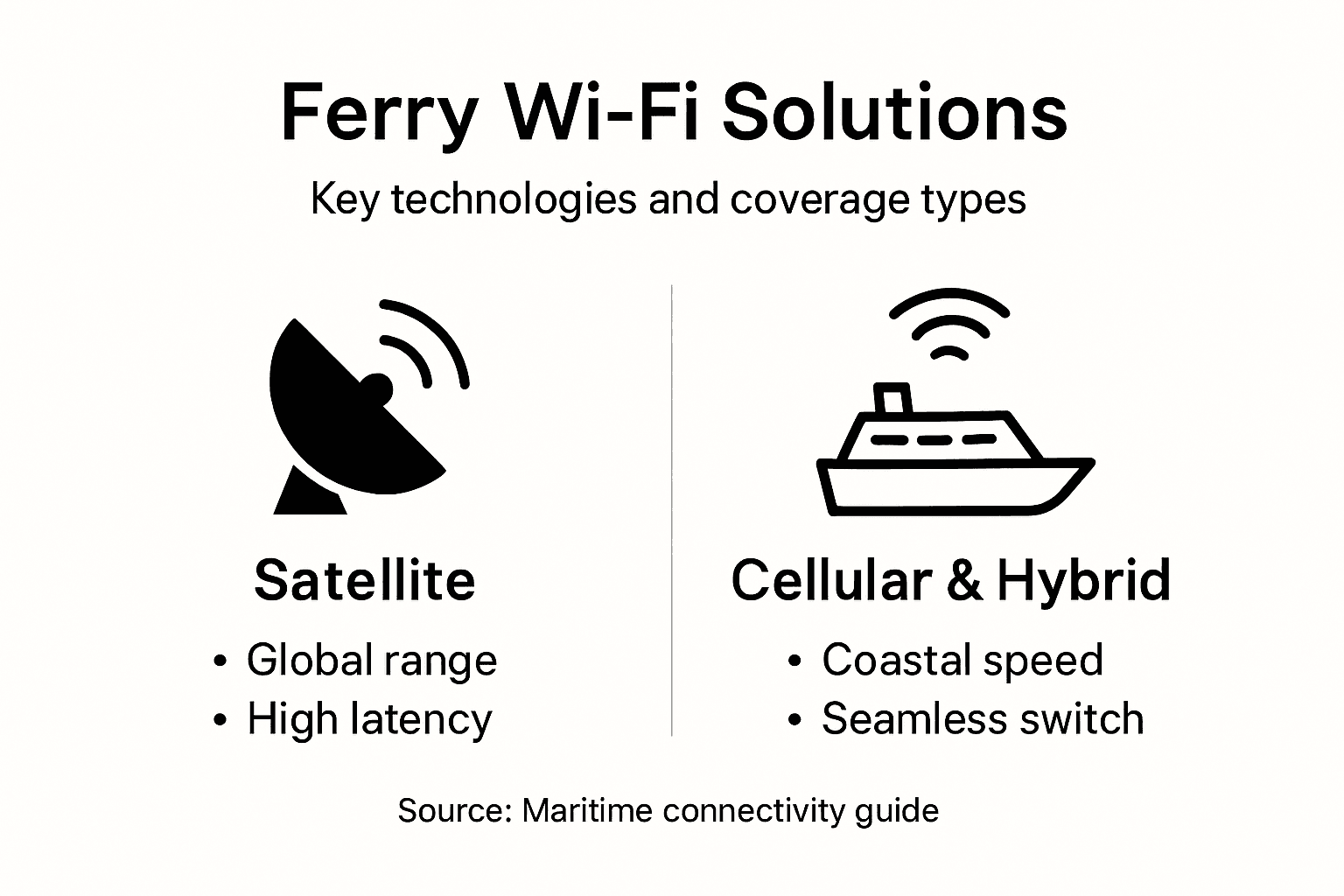
Here’s a summary of major maritime connectivity solutions and their typical use cases:
| Connectivity Solution | Ideal Coverage Area | Speed Potential | Best For |
|---|---|---|---|
| Satellite Networks | Open ocean routes | 10–50 Mbps | Remote travel, work |
| Cellular Extensions | Coastal zones | Up to 100 Mbps | Social use near shore |
| Hybrid Systems | All maritime areas | 10–100 Mbps | Seamless streaming, business communications |
Pro tip: When selecting ferry travel, inquire about specific onboard Wi-Fi technologies to understand potential internet performance and coverage limitations during your journey.
How High-Speed Ferry Wi-Fi Works
High-speed ferry Wi-Fi operates through a sophisticated network of technological components designed to overcome the challenging maritime communication environment. Satellite network technologies enable continuous internet connectivity by integrating multiple transmission strategies that adapt to the unique conditions of sea travel.
The core infrastructure of maritime Wi-Fi systems involves several critical technological components:
- Satellite Communication Antennas: Specialized equipment mounted on vessel exteriors
- Signal Routing Processors: Advanced hardware managing bandwidth allocation
- Wireless Access Points: Distributed network nodes throughout the ferry
- Adaptive Transmission Protocols: Software managing signal optimization
Signal transmission begins with satellite communication antennas that establish a continuous link with orbiting networks. These antennas utilize advanced tracking mechanisms to maintain a stable connection, compensating for vessel movement, ocean conditions, and atmospheric interference. The onboard signal routing processors intelligently distribute available bandwidth, ensuring each passenger device receives adequate internet speed for streaming, professional work, and communication needs.

The most advanced maritime Wi-Fi systems implement intelligent handoff protocols that seamlessly transition between different network types. As a ferry moves from coastal cellular coverage to open ocean satellite transmission, these systems automatically adjust signal routing, maintaining uninterrupted internet access. This technological approach addresses the primary challenge of providing consistent digital connectivity in a constantly changing maritime environment.
Pro tip: Check your ferry’s specific Wi-Fi capabilities before departure to understand potential internet performance and prepare appropriate digital work or entertainment strategies.
Key Features and Performance Benchmarks
High-speed ferry Wi-Fi represents a technological breakthrough in maritime digital connectivity, offering passengers unprecedented internet access during sea travel. Wi-Fi performance capabilities demonstrate remarkable stability and flexibility across complex maritime environments, addressing the unique communication challenges of oceanic routes.
The key performance features of advanced maritime Wi-Fi systems include:
- Bandwidth Capacity: Supports simultaneous streaming and professional work
- Low Latency: Enables real-time video conferencing and communication
- Adaptive Signal Routing: Maintains connection through varying geographical conditions
- Flexible Access Plans: Customizable internet packages for diverse user needs
Performance benchmarks reveal impressive technical capabilities that set maritime Wi-Fi apart from traditional connectivity solutions. Modern systems consistently deliver download speeds ranging from 10-50 Mbps, sufficient for high-definition video streaming, professional video conferences, and seamless web browsing. These performance metrics are particularly remarkable considering the challenging electromagnetic environment of maritime travel, where signal stability is continuously compromised by vessel movement, atmospheric conditions, and geographical variations.
The most advanced maritime Wi-Fi technologies offer tiered connectivity packages designed to meet varying passenger requirements. These range from basic social media access to comprehensive internet plans supporting professional remote work, gaming, and high-bandwidth entertainment. Pricing models have been strategically developed to provide competitive and transparent options, ensuring passengers can select packages that precisely match their digital communication needs during sea travel.
Pro tip: Before your voyage, review the ferry’s specific Wi-Fi package options to select the most appropriate plan for your digital communication requirements.
Costs, Package Options, and Limitations
Maritime Wi-Fi connectivity presents a complex landscape of pricing strategies and technological constraints that directly impact passenger digital experiences. Connected ferry Wi-Fi market reveals intricate pricing models designed to balance technological infrastructure costs with passenger affordability and service quality.
Typical maritime Wi-Fi package options are structured across several tiers:
- Social Media Package: Limited access to messaging and social platforms
- Basic Browsing Plan: Standard web browsing and email
- Streaming Tier: High-bandwidth option supporting video streaming
- Professional Remote Work Package: Comprehensive internet access with priority bandwidth
The pricing architecture reflects the significant technological investments required to maintain satellite and cellular network infrastructure in maritime environments. Costs typically range from $5 to $30 per voyage, with variations based on route duration, data volume, and connection speed. These pricing structures must account for substantial backend technology expenses, including satellite bandwidth, signal routing equipment, and continuous network maintenance across challenging oceanic terrains.
Below is a quick reference table outlining ferry Wi-Fi package types and their suggested user profiles:
| Package Type | Typical Price Range | Suitable For | Included Data Activities |
|---|---|---|---|
| Social Media Package | $5–$10 per voyage | Messaging/social users | Messaging and photo sharing |
| Basic Browsing Plan | $10–$15 per voyage | Casual web access | Web surfing, email |
| Streaming Tier | $15–$25 per voyage | Entertainment-seeking users | Video, music, HD content |
| Professional Remote Work Plan | $20–$30 per voyage | Business travelers | Video calls, large file transfers |
Significant technical limitations persist in maritime connectivity, despite advanced technological interventions. Satellite-dependent systems experience inherent challenges such as signal latency, potential weather-related disruptions, and variable bandwidth availability. Hybrid communication systems attempting to mitigate these issues by combining cellular and satellite technologies offer more consistent performance, though they cannot completely eliminate environmental connectivity constraints. Passengers should anticipate occasional signal fluctuations and understand that maritime internet will rarely match the reliability of land-based networks.
Pro tip: Purchase Wi-Fi packages in advance and download critical work or entertainment materials before boarding to minimize potential connectivity limitations during your maritime journey.
Risks, Alternatives, and What to Avoid
Maritime digital connectivity presents a complex landscape of technological challenges and potential security vulnerabilities that passengers must carefully navigate. Maritime wireless network risks encompass multiple dimensions beyond simple connectivity concerns, ranging from cybersecurity threats to service reliability challenges.
Key risks in maritime wireless networks include:
- Cybersecurity Vulnerabilities: Potential data interception points
- Signal Disruption: Environmental interference and satellite outages
- Bandwidth Limitations: Potential network congestion during peak usage
- Data Privacy Concerns: Unsecured public network environments
Alternative connectivity strategies have emerged to mitigate traditional maritime wireless limitations. Hybrid network solutions combining cellular 5G technologies near coastlines with advanced Low Earth Orbit (LEO) satellite systems provide more robust and flexible internet access. These innovative approaches leverage multiple transmission protocols, dynamically switching between network types to maintain consistent connectivity and minimize service interruptions.
Passengers and professionals should proactively avoid several critical pitfalls in maritime digital connectivity. Foremost, users must never connect to unsecured networks, use public Wi-Fi without virtual private network (VPN) protection, or assume maritime internet will match land-based performance standards. Sophisticated users understand the inherent limitations of maritime wireless technologies and prepare accordingly by downloading critical materials, maintaining offline work capabilities, and setting realistic expectations about internet reliability during sea travel.
Pro tip: Always activate your device’s VPN and download essential work or entertainment content before boarding to maximize your maritime digital experience.
Experience Seamless High-Speed Ferry Wi-Fi with Seafy
Traveling by ferry should not mean sacrificing your internet connection. As highlighted in the article “High-Speed Ferry Wi-Fi: Transforming Travel at Sea,” maintaining stable, fast, and reliable connectivity onboard is a real challenge due to satellite signal fluctuations, bandwidth limitations, and environmental disruptions. Passengers want uninterrupted streaming, smooth video calls, and dependable access for remote work. Seafy understands these pain points and integrates cutting-edge satellite technologies like Starlink to overcome those hurdles, delivering a secure and consistent wireless experience across major ferry lines such as Corsica Ferries and Grimaldi Lines.
Don’t let connectivity concerns hold back your next maritime trip. Explore how Seafy’s digital platform transforms your onboard experience with flexible Wi-Fi packages tailored to your needs. Whether you travel for leisure or work, enjoy reliable internet that adapts as you move from coastal zones to open sea. Visit Seafy today and unlock uninterrupted internet access on your next ferry journey.
Frequently Asked Questions
What technologies are used in high-speed ferry Wi-Fi?
High-speed ferry Wi-Fi combines satellite communications, advanced signal amplification, multi-band wireless transmission, and robust signal routing to provide reliable internet access at sea.
How does high-speed ferry Wi-Fi ensure reliable connectivity during a journey?
High-speed ferry Wi-Fi maintains connectivity through strategically positioned satellite links and onboard wireless access points, dynamically adjusting to changes in signal conditions and vessel movement to minimize service interruptions.
What types of connectivity packages are typically offered for ferry Wi-Fi?
Ferry Wi-Fi packages usually include options such as social media access, basic browsing, streaming for high-bandwidth use, and professional remote work plans, catering to different passenger needs.
What limitations should passengers expect when using high-speed ferry Wi-Fi?
Passengers may experience limitations such as signal latency, potential disruptions from weather conditions, and variable bandwidth availability. Internet performance on ferries rarely matches the reliability of land-based networks.