Tech & Wi-Fi
Impact of Wi-Fi on Ferry Travel Experience
Explore how ferry Wi-Fi transforms connectivity, remote work, and onboard entertainment for Mediterranean travelers. Learn about costs, packages, and technology.
19 February 2026
Impact of Wi-Fi on Ferry Travel Experience
Reliable Wi-Fi becomes a lifeline for Mediterranean travelers trying to work remotely or keep entertained during ferry journeys. Understanding the reality behind maritime Wi-Fi networks matters, especially since many passengers mistakenly believe onboard connectivity is as secure and fast as the networks at home. This article dispels common myths about ferry internet, clarifies how advanced systems work at sea, and outlines practical solutions for staying connected—helping you make informed decisions for your next voyage.
Table of Contents
- Defining Ferry Wi-Fi And Common Myths
- Types Of Onboard Wi-Fi Solutions
- How Maritime Wi-Fi Works At Sea
- Enhancing Passenger Experience And Expectations
- Costs, Pitfalls, And Alternatives For Travelers
Key Takeaways
| Point | Details |
|---|---|
| Understanding Ferry Wi-Fi | Ferry Wi-Fi relies on advanced satellite communication, differing significantly from traditional internet solutions that are more stable and predictable on land. |
| Common Misconceptions | Many passengers believe ferry Wi-Fi is always high-speed and secure, but it faces unique challenges like bandwidth limitations and increased security risks. |
| Types of Connectivity Solutions | Options for onboard Wi-Fi include satellite-based, cellular hybrid, and dedicated maritime systems, with varying costs and capabilities tailored to user needs. |
| Navigating Costs and Alternatives | Travelers should be aware of high onboard Wi-Fi costs and explore alternatives like prepaid data cards or offline preparation to manage expenses effectively. |
Defining Ferry Wi-Fi and Common Myths
Ferry Wi-Fi represents a sophisticated maritime connectivity solution enabling passengers to access internet services while traveling across water routes. Unlike traditional land-based networks, maritime Wi-Fi must overcome complex technological challenges like signal stability, bandwidth limitations, and geographic constraints.
The reality of ferry internet services differs significantly from common passenger misconceptions. Maritime Wi-Fi networks operate through advanced satellite communication technologies, not simply replicating standard terrestrial internet infrastructure. Research highlights that public Wi-Fi networks present significant security risks, particularly in maritime environments where connectivity is less predictable.
Common myths about ferry Wi-Fi include:
- Unlimited, high-speed internet is always available
- Security is equivalent to standard home or office networks
- All ferry routes offer consistent connectivity
- Wi-Fi is free and without performance restrictions
- Bandwidth remains constant throughout the journey
Passengers often overestimate the reliability and security of onboard internet services. The technological complexity of maintaining stable internet connections at sea involves sophisticated satellite communication systems, cellular network handoffs, and specialized maritime communication protocols.

The following table summarizes differences between ferry Wi-Fi and traditional land-based networks:
| Factor | Ferry Wi-Fi Networks | Land-Based Networks |
|---|---|---|
| Signal Stability | Prone to oceanic disruptions | Generally stable on land |
| Bandwidth Allocation | Dynamic, multi-user prioritization | Fixed, broad allocations |
| Security Challenges | Higher risk, specialized protocols | Lower risk, conventional protocols |
| Geographic Coverage | Requires satellite or cellular handoffs | Fixed infrastructure limits coverage |
Pro tip: Always use a virtual private network (VPN) when accessing public Wi-Fi to enhance your digital security and protect personal information.
Types of Onboard Wi-Fi Solutions
Modern maritime connectivity has evolved dramatically, offering travelers multiple Wi-Fi solutions tailored to different operational requirements. Advanced maritime Wi-Fi technologies now provide unprecedented flexibility and performance for ferry passengers and crew members.
The primary types of onboard Wi-Fi solutions encompass diverse technological approaches:
- Satellite-Based Networks
- Global coverage
- High bandwidth potential
- Works in remote maritime regions
- Cellular Network Hybrid Systems
- Uses multiple cellular providers
- Seamless signal transitions
- More affordable infrastructure
- Dedicated Maritime Communication Systems
- Specialized maritime frequency bands
- Enhanced security protocols
- Optimized for maritime environments
Most modern ferry Wi-Fi solutions integrate multiple connectivity technologies to ensure consistent internet access. Sophisticated maritime networks now support separate bandwidth allocations for different user groups, allowing precise control over network resources and performance.
These advanced systems enable distinct network segmentation, creating separate connectivity zones for:
- Passenger public internet access
- Crew operational communications
- Ship management and navigation systems
- Internet of Things (IoT) sensor networks
Advanced maritime Wi-Fi technologies can deliver nearly three times faster speeds compared to traditional shipboard communication systems, revolutionizing onboard connectivity.
Pro tip: Always verify the specific Wi-Fi capabilities of your ferry route before assuming continuous internet access during your journey.
How Maritime Wi-Fi Works at Sea
Maritime Wi-Fi represents a complex technological ecosystem designed to maintain continuous internet connectivity in challenging oceanic environments. Maritime communication systems integrate multiple connectivity technologies to overcome the unique challenges of providing reliable internet access at sea.
The primary connectivity methods include:
- Satellite Broadband Networks
- Global coverage
- High-bandwidth transmission
- Independent of coastal infrastructure
- Coastal Cellular Network Handoffs
- Leverage proximity to shore-based towers
- Provide initial connection zones
- Cost-effective signal acquisition
- Onboard Wireless Distribution Systems
- Internal network management
- Signal amplification
- Device connectivity optimization
Technological Integration involves sophisticated signal routing that seamlessly transitions between different communication platforms. This approach ensures passengers experience minimal interruption while maintaining stable internet connectivity throughout their maritime journey.
The technical infrastructure supporting maritime Wi-Fi includes several critical components:
- Satellite Communication Terminals
- Cellular Signal Receivers
- Onboard Network Routing Equipment
- Cybersecurity Monitoring Systems
Maritime Wi-Fi systems must continuously balance performance, security, and reliability in an inherently challenging communication environment.
Pro tip: Carry a portable battery pack and download essential content before leaving cellular coverage to maximize your internet experience.

Enhancing Passenger Experience and Expectations
Ferry travel has transformed from a simple transportation method to an immersive digital experience, with advanced Wi-Fi solutions revolutionizing passenger connectivity. Modern travelers expect seamless internet access that supports work, entertainment, and communication throughout their maritime journey.
Key expectations for onboard Wi-Fi include:
- Reliable Connectivity
- Consistent internet signal
- Minimal connection dropouts
- Sufficient bandwidth for multiple devices
- Performance Capabilities
- High-speed data transmission
- Support for streaming services
- Smooth video conferencing
- Flexible Usage Options
- Affordable data packages
- Transparent pricing models
- Easy purchase and activation
Digital Passenger Profiles vary widely, creating diverse connectivity needs. Business travelers require robust work environments, while leisure passengers seek entertainment and social media connectivity. This diversity demands sophisticated, adaptable Wi-Fi infrastructure that can simultaneously support multiple user requirements.
The impact of quality onboard Wi-Fi extends beyond simple internet access:
- Improves overall travel satisfaction
- Enables productive remote work
- Reduces passenger travel stress
- Provides real-time communication options
Onboard Wi-Fi is no longer a luxury, but an essential service that directly influences passenger perception and loyalty.
Pro tip: Download entertainment content and critical work files before boarding to supplement potential connectivity limitations.
Costs, Pitfalls, and Alternatives for Travelers
Ferry Wi-Fi connectivity presents travelers with complex financial and technological challenges, requiring careful navigation of available options. Affordable connectivity alternatives exist beyond traditional shipboard networks, offering travelers more flexible and budget-friendly communication strategies.
Common Wi-Fi costs and pitfalls include:
- Direct Onboard Expenses
- High per-minute or per-megabyte rates
- Expensive data package structures
- Limited bandwidth allocation
- Cybersecurity Risks
- Potential data breaches
- Unsecured public network vulnerabilities
- Personal information exposure
- Technical Limitations
- Inconsistent signal strength
- Bandwidth throttling
- Connection interruptions
Alternative Connectivity Solutions provide travelers with strategic options to manage communication needs. These range from prepaid satellite data cards to hybrid cellular systems that optimize cost and performance while maintaining reliable communication channels.
Travelers can explore multiple connectivity strategies:
Here’s a quick comparison of popular connectivity alternatives for ferry travelers:
| Alternative | Cost Impact | Coverage Area | Typical Use Case |
|---|---|---|---|
| Satellite messaging | Moderate per message | Global, at sea | Brief updates, emergencies |
| Prepaid data cards | Variable, prepaid | Regional or global | Extended browsing, work |
| Offline prep | Free, requires planning | Not dependent on Wi-Fi | Entertainment, documents |
| Port Wi-Fi hotspot | Free or low cost | Limited to port areas | High-bandwidth needs |
- Satellite messaging services
- Prepaid data packages
- Offline content preparation
- Port-based Wi-Fi hotspots
Maritime connectivity requires a balanced approach that considers cost, security, and practical communication requirements.
Pro tip: Download essential documents, entertainment, and communication apps before boarding to minimize reliance on potentially expensive onboard internet services.
Transform Your Ferry Travel with Reliable Onboard Wi-Fi
The article highlights how crucial stable and secure Wi-Fi is to enhancing the ferry travel experience amid common connectivity challenges at sea. Many travelers face intermittent signals, costly data, and security concerns that disrupt work, entertainment, and staying connected. Seafy understands these pain points and offers a seamless digital platform that delivers high-speed internet through trusted partnerships with leading ferry operators like Corsica Ferries and GNV. By leveraging advanced satellite technologies such as Starlink, Seafy ensures passengers and crew enjoy reliable coverage throughout their journey, empowering both leisure activities and remote work.
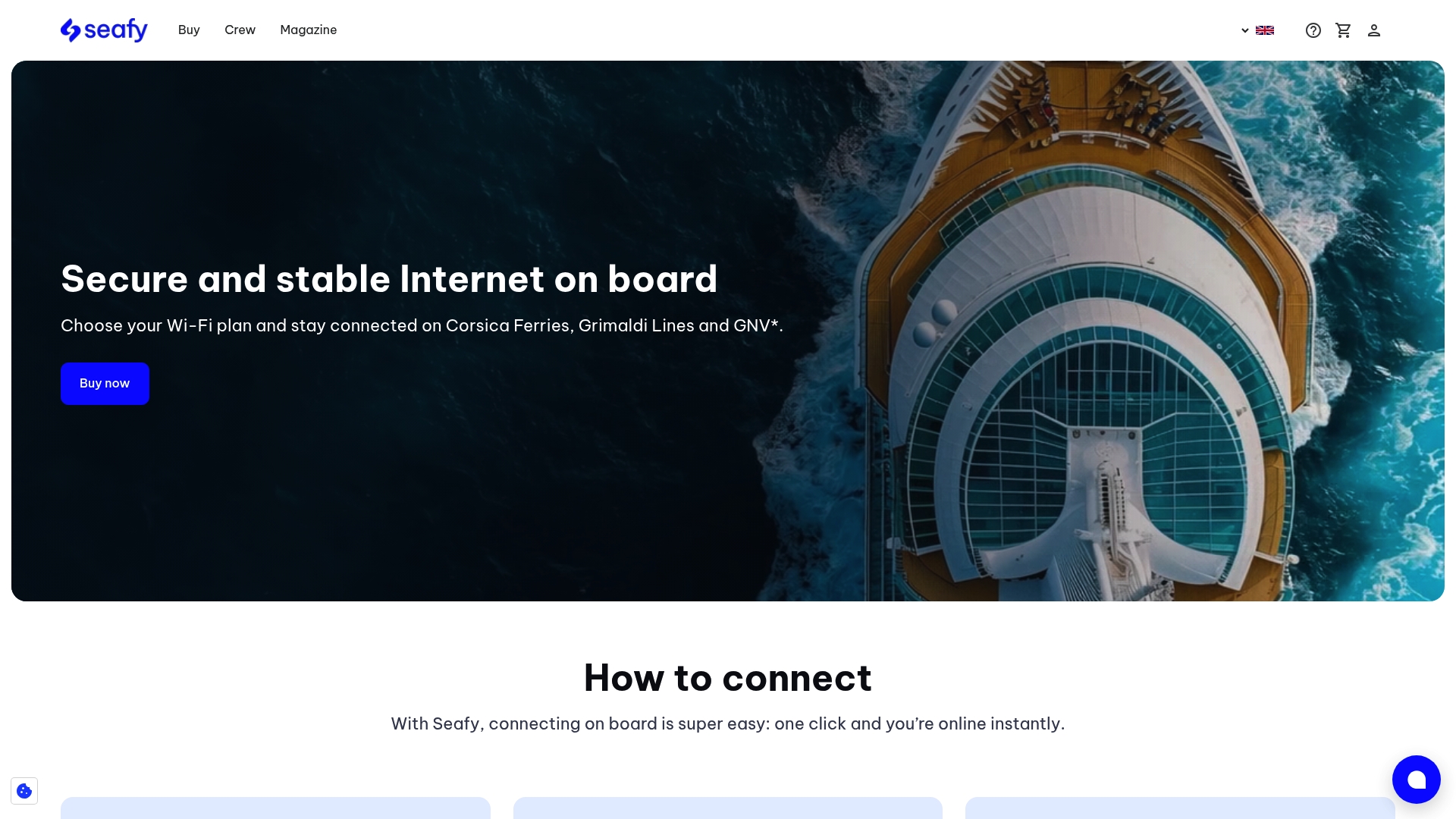
Experience the difference of truly dependable maritime Wi-Fi today. Visit Seafy to explore flexible Wi-Fi packages designed for the unique needs of ferry travelers. Stay connected effortlessly and reduce travel stress with a platform built specifically for your onboard digital lifestyle. Don’t let connectivity woes hold back your next trip. Take control now at Seafy and make your internet access as smooth as the ocean voyage itself.
Frequently Asked Questions
What factors affect Wi-Fi performance on ferries?
Various factors can impact Wi-Fi performance, including signal stability, bandwidth allocation, and the use of advanced satellite and cellular technologies. Maritime Wi-Fi must contend with oceanic disruptions, causing potential connectivity issues.
Is ferry Wi-Fi secure for online activities?
Ferry Wi-Fi networks can present significant security risks, as they face challenges unique to maritime environments. It is recommended to use a virtual private network (VPN) to enhance security while using public Wi-Fi onboard.
How can travelers enhance their Wi-Fi experience while on a ferry?
Travelers can enhance their Wi-Fi experience by downloading essential content and files before their journey, carrying a portable battery pack, and verifying the specific Wi-Fi capabilities of their ferry route to set realistic expectations for connectivity.
What alternative connectivity options are available for ferry travelers?
Alternative connectivity options for ferry travelers include prepaid satellite data cards, satellite messaging services, and port Wi-Fi hotspots. These alternatives can provide more flexible and budget-friendly communication solutions while at sea.