Tech & Wi-Fi
Why Offer Ferry Wi-Fi: Boosting Travel and Work
Why offer ferry Wi-Fi? Learn how onboard internet boosts passenger satisfaction, supports remote work, enhances crew welfare, and creates new revenue.
06 February 2026
Why Offer Ferry Wi-Fi: Boosting Travel and Work
Every remote professional knows the frustration of searching for dependable Wi-Fi while crossing the Mediterranean by ferry. Reliable connectivity is more than a convenience for digital nomads—it lets you keep up with work, video calls, and streaming without missing a beat. With onboard Wi-Fi now a critical service for 80 percent of travelers, understanding the technology behind maritime internet and the myths that surround it ensures you stay connected, productive, and entertained throughout your journey.
Table of Contents
- Wi-Fi on Ferries: Core Definition and Myths
- Passenger Needs and Modern Connectivity Expectations
- How Ferry Wi-Fi Works at Sea
- Benefits for Crew Welfare and Ship Operations
- Business Value and Competitive Advantages
- Costs, Challenges, and Technology Solutions
Key Takeaways
| Point | Details |
|---|---|
| Ferry Wi-Fi Enhances Connectivity | Modern ferry Wi-Fi provides high-speed internet access through advanced satellite systems, transforming maritime travel into a connected experience. |
| Changing Passenger Expectations | Today’s travelers demand reliable digital connectivity for work and leisure, viewing it as a fundamental service rather than a luxury. |
| Operational Benefits for Crews | Onboard Wi-Fi improves crew welfare and operational efficiency by enabling communication and access to professional development resources. |
| Importance of Infrastructure Investment | Ferry operators must invest in reliable Wi-Fi infrastructure to attract younger demographics and enhance passenger satisfaction in a competitive market. |
Wi-Fi on Ferries: Core Definition and Myths
Ferry Wi-Fi represents a sophisticated digital connectivity solution designed specifically for maritime travel, enabling passengers and crew to access high-speed internet while traversing open waters. Unlike traditional land-based internet services, maritime Wi-Fi must overcome significant technological challenges such as signal stability, bandwidth limitations, and geographic constraints.
At its core, ferry Wi-Fi is a satellite-based internet service that provides wireless network access on maritime vessels. This technology involves complex infrastructure including:
- Advanced satellite communication systems
- Marine-grade networking equipment
- Robust signal transmission technologies
- Specialized bandwidth management protocols
Contrary to popular misconceptions, modern maritime connectivity is not just about basic internet access. Maritime connectivity debates highlight critical social dimensions beyond simple technological implementation. Seafarers and passengers increasingly view internet access as a fundamental communication right, not a luxury.
Several persistent myths surround onboard Wi-Fi that deserve careful examination. Many travelers assume maritime internet will be slow, unreliable, or prohibitively expensive. However, technological advancements have dramatically transformed these perceptions, with providers now offering high-speed, affordable connectivity options.
Connectivity Myths vs Reality:
- Myth: Maritime Wi-Fi is always slow
- Reality: Modern systems deliver speeds comparable to land-based networks
- Myth: Internet access is too expensive for travelers
- Reality: Competitive pricing and flexible packages make connectivity affordable
- Myth: Wi-Fi reduces social interactions
- Reality: Connectivity actually enhances communication and social connections
Pro tip: Always check your ferry provider’s specific Wi-Fi capabilities and purchase options before boarding to ensure smooth digital connectivity during your maritime journey.
Passenger Needs and Modern Connectivity Expectations
Modern ferry passengers have evolved beyond traditional travel expectations, with digital connectivity now playing a central role in their journey experience. Onboard Wi-Fi has become a critical service for 80% of travelers, transforming maritime travel from a passive transportation mode to an active, connected environment.
Today’s travelers, particularly Millennials and Gen Z, demand comprehensive digital experiences that extend seamlessly across all aspects of their travel. Their connectivity expectations encompass multiple dimensions:
- Uninterrupted video conferencing capabilities
- High-speed streaming for entertainment
- Reliable social media access
- Ability to work remotely
- Instant communication with family and colleagues
These connectivity needs reflect a profound shift in how passengers perceive maritime travel. No longer simply a means of transportation, ferries are now viewed as mobile workspaces and entertainment zones. Passengers expect the same level of digital infrastructure they would find in cafes, airports, or home offices.
The post-pandemic landscape has further accelerated these expectations, with remote work and digital nomadism becoming mainstream. Travelers now prioritize destinations and transportation methods that offer robust, reliable internet connectivity. This means ferry operators must invest in advanced networking technologies, satellite communication systems, and flexible internet packages to remain competitive in a rapidly evolving market.
Key Passenger Connectivity Priorities:
- Speed and reliability
- Affordable access
- Multiple device support
- Secure connection
- Seamless user experience
Pro tip: Research and compare ferry providers’ Wi-Fi capabilities before booking to ensure your digital needs will be fully met during your maritime journey.
How Ferry Wi-Fi Works at Sea
Ferry Wi-Fi represents a complex technological ecosystem that transforms maritime connectivity through sophisticated satellite and terrestrial communication technologies. Multi-million dollar infrastructure investments enable reliable service across challenging maritime environments, creating a seamless digital experience for passengers and crew.
The core infrastructure of maritime internet connectivity involves multiple interconnected technological components:
- Satellite communication systems
- Marine-grade wireless networking equipment
- Advanced signal transmission technologies
- Bandwidth management platforms
- Shore-based and vessel-based antenna networks
These systems work in concert to overcome significant geographical challenges. Unlike traditional land-based internet, ferry Wi-Fi must function in dynamic environments with constant movement, signal interference, and extreme weather conditions. Sophisticated satellite technologies like Starlink provide the primary connectivity backbone, ensuring consistent internet access even in remote maritime regions.
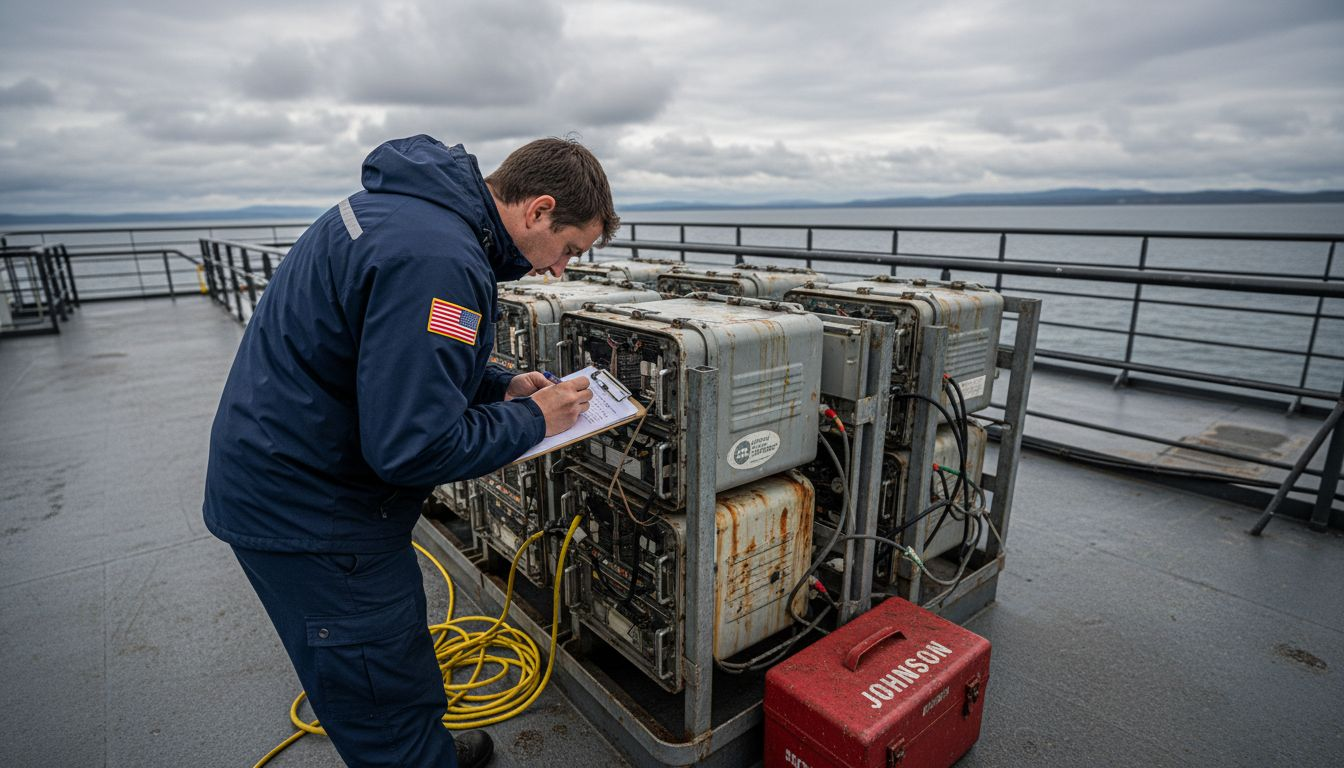
The technical process involves a complex chain of data transmission. Shore-based stations initially transmit signals to orbiting satellites, which then redirect these signals directly to vessel-mounted receivers. Advanced routing technologies dynamically manage bandwidth, prioritizing critical communication channels and distributing internet access efficiently among multiple users.
Here’s how ferry Wi-Fi infrastructure compares to traditional land-based internet systems:
| Characteristic | Ferry Wi-Fi | Land-Based Internet |
|---|---|---|
| Signal Source | Satellite and shore stations | Ground cables and cell towers |
| Connectivity Stability | Variable by weather and movement | Generally consistent |
| Coverage Area | Open sea, remote regions | Urban and suburban environments |
| Deployment Challenges | Maritime movement and interference | Terrain and urban obstacles |
| Typical Installation Cost | Multi-million dollar investment | Relatively lower, scalable costs |
Key Technical Components of Ferry Wi-Fi:
- Satellite communication hub
- Vessel-mounted signal receivers
- Wireless network distribution systems
- Bandwidth management software
- User authentication platforms
Pro tip: Check your ferry provider’s specific Wi-Fi technology to understand the quality and reliability of your potential internet connection before embarking on your journey.
Benefits for Crew Welfare and Ship Operations
Onboard Wi-Fi has transformed maritime professional environments, providing critical support for crew welfare and operational efficiency. Reliable connectivity significantly improves seafarer mental health by enabling essential communication with families and reducing professional isolation during extended voyages.
The digital welfare ecosystem for maritime professionals encompasses multiple critical dimensions:
- Personal communication with family members
- Access to mental health resources
- Professional skill development opportunities
- Entertainment and stress reduction
- Real-time operational communication
Modern maritime operations rely increasingly on digital connectivity to streamline communication, enhance safety protocols, and maintain crew morale. Internet access allows crew members to complete training modules, participate in online professional development courses, and stay updated with industry trends, effectively transforming vessels into mobile learning and professional development centers.
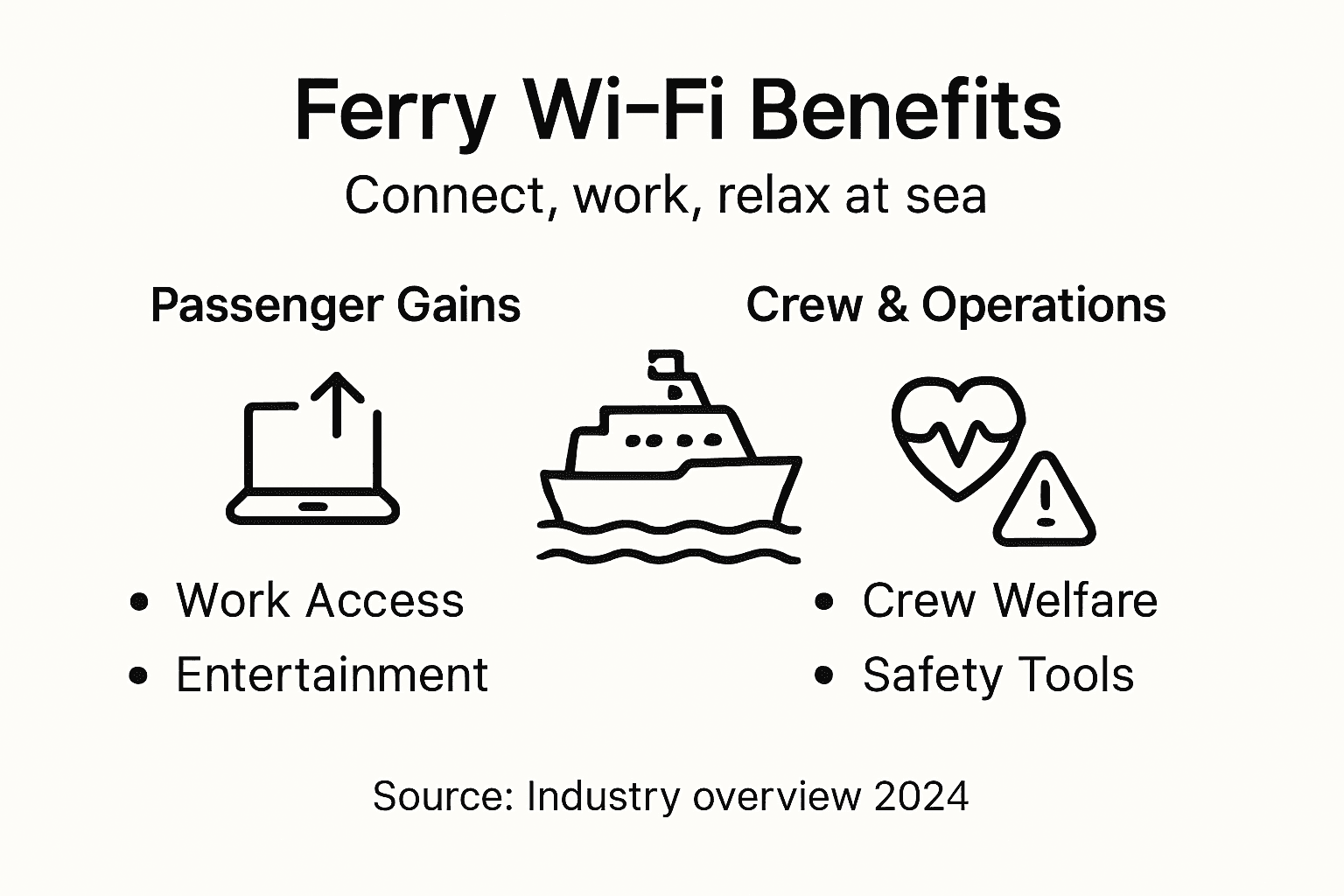
Ship operations benefit directly from advanced connectivity infrastructure. Digital platforms enable real-time data transmission, allowing precise tracking of vessel performance, maintenance requirements, and navigational updates. Crew members can instantly communicate with maritime management, share critical operational insights, and access cloud-based management systems that enhance overall operational efficiency.
Key Operational Benefits of Maritime Connectivity:
- Enhanced communication channels
- Real-time performance monitoring
- Improved safety protocols
- Professional development opportunities
- Streamlined administrative processes
Pro tip: Invest in comprehensive Wi-Fi solutions that balance crew welfare needs with operational communication requirements to maximize maritime professional productivity.
Business Value and Competitive Advantages
In today’s digital-first travel landscape, Wi-Fi has become a critical business differentiator for ferry operators, transforming maritime transportation from a simple transit service into an engaging, connected experience. By investing in robust digital infrastructure, ferry companies can unlock significant strategic advantages and create new revenue streams.
The competitive digital ecosystem for maritime businesses encompasses several key strategic dimensions:
- Attracting younger demographics
- Increasing passenger engagement time
- Creating additional service monetization opportunities
- Enhancing brand perception
- Differentiating from traditional competitors
Technological investment in onboard connectivity directly impacts customer acquisition and retention strategies. Millennials and Gen Z travelers expect seamless digital experiences across all travel modes, and ferry operators who meet these expectations can significantly improve their market positioning. Advanced Wi-Fi transforms the journey from a passive transportation experience into an active, productive environment where passengers can work, communicate, and entertain themselves.
Beyond passenger experience, digital connectivity creates substantial operational efficiencies. Real-time data transmission enables more intelligent fleet management, predictive maintenance scheduling, and enhanced safety protocols. Ferry companies can leverage integrated digital platforms to gather valuable passenger behavior data, optimize service offerings, and develop more targeted marketing strategies.
Key Business Transformation Opportunities:
- Enhanced passenger experience
- New digital service revenue streams
- Improved operational intelligence
- Targeted marketing capabilities
- Competitive market differentiation
Pro tip: Develop a comprehensive digital strategy that views onboard Wi-Fi as a strategic asset, not just a technical infrastructure investment.
Costs, Challenges, and Technology Solutions
Deploying maritime Wi-Fi infrastructure represents a complex technological and financial undertaking, with significant multi-million-dollar investments required for system-wide implementation. The technological landscape demands sophisticated solutions that balance technical constraints, operational costs, and passenger expectations.
The maritime connectivity investment framework involves multiple critical considerations:
- Initial capital expenditure
- Ongoing maintenance costs
- Satellite communication infrastructure
- Bandwidth management technologies
- Scalable networking solutions
- Cybersecurity protocols
Technical challenges in maritime connectivity extend far beyond traditional land-based internet deployment. Unique environmental factors like constant vessel movement, geographic signal variations, and extreme weather conditions create complex engineering requirements. Advanced satellite technologies such as Low Earth Orbit (LEO) constellations are emerging as game-changing solutions, providing more consistent and high-bandwidth connectivity compared to traditional maritime communication systems.
Funding and cost management strategies for ferry Wi-Fi typically involve hybrid models that balance operational expenses with revenue generation. Some approaches include tiered internet access packages, sponsored connectivity options, and integrated digital service monetization. These strategies help offset substantial infrastructure investments while providing flexible options for different passenger segments and budget constraints.
Here is a summary of main technology strategies for managing maritime connectivity costs and reliability:
| Strategy | Main Objective | Typical Result |
|---|---|---|
| Tiered access packages | Balance cost for users | Flexible pricing options |
| Sponsored Wi-Fi models | Offset operational expenses | Reduced direct user costs |
| Use of LEO satellites | Boost signal stability | Improved internet speed |
| Adaptive bandwidth tools | Dynamically allocate resources | Enhanced user experience |
| Pilot programs | Validate technology choices | Minimized investment risk |
Key Technology Investment Considerations:
- Satellite communication infrastructure
- Bandwidth management systems
- Cybersecurity protocols
- Scalable networking technologies
- Adaptive connectivity solutions
Pro tip: Conduct comprehensive pilot programs to assess real-world performance and validate technology investments before full-scale implementation.
Elevate Your Ferry Experience with Reliable Onboard Wi-Fi
The article highlights the growing need for fast and dependable internet access on ferries to meet the expectations of modern travelers and crew alike. Challenges such as signal stability, bandwidth management, and connectivity costs are real pain points for ferry operators and passengers who want seamless communication, remote work capabilities, and entertainment at sea. The shift towards viewing internet access as a fundamental right rather than a luxury calls for effective digital solutions designed specifically for maritime environments.
Seafy addresses these critical needs by providing a dedicated digital platform that partners with leading ferry lines across the Mediterranean to deliver high-speed, stable Wi-Fi through advanced satellite technology like Starlink. Whether you are a traveler seeking uninterrupted streaming and social connectivity or a professional requiring reliable remote work options, Seafy offers an intuitive portal to easily purchase and manage your onboard internet packages. The platform also supports crew welfare and operational efficiency by enabling secure communication and real-time data management.
Discover how you can transform your maritime journey by exploring Seafy’s innovative connectivity solutions.
Ready to enjoy stress-free internet during your next ferry voyage Visit Seafy now to learn about available Wi-Fi packages and stay connected regardless of where the sea takes you. Experience the future of maritime travel with convenient, affordable, and reliable onboard Wi-Fi today.
Frequently Asked Questions
What is ferry Wi-Fi and how does it work?
Ferry Wi-Fi is a satellite-based internet service designed for maritime travel, providing passengers and crew with high-speed internet access. It uses advanced satellite communication systems and marine-grade networking equipment to transform connectivity at sea.
What are the benefits of providing Wi-Fi on ferries?
Offering Wi-Fi on ferries enhances passenger experience by enabling connectivity for work, entertainment, and communication. It also supports crew welfare, allowing for better communication with family and access to professional development resources.
How does ferry Wi-Fi compare to traditional land-based internet?
Ferry Wi-Fi is different from land-based internet as it relies on satellite communication, making it subject to variable conditions like weather and movement. However, modern ferry Wi-Fi can deliver speeds comparable to those of land-based networks while overcoming unique maritime challenges.
What challenges do ferry operators face when implementing Wi-Fi?
Ferry operators face significant challenges such as high deployment costs, ensuring signal stability in dynamic maritime environments, and balancing bandwidth across multiple users. Advanced technologies like Low Earth Orbit (LEO) satellites are emerging as solutions to improve connectivity.