Tech & Wi-Fi
Role of Internet in Safety at Sea – Real Impacts
Explore the role of internet in safety at sea, including emergency response, real-time navigation, crew welfare, cybersecurity, and evolving regulations.
21 February 2026
Role of Internet in Safety at Sea – Real Impacts
Every Mediterranean voyage brings moments when passengers need to stream movies or answer work emails, but the real power of maritime internet goes far beyond casual browsing. Reliable connectivity at sea is a cornerstone of maritime safety and operational continuity, supporting everything from emergency response to navigation systems. Understanding how specialized shipboard networks function helps travelers appreciate the crucial role robust, secure internet plays in keeping both entertainment and safety front and center throughout the journey.
Table of Contents
- Defining Maritime Internet and Safety Connections
- Types of Shipboard Connectivity and Applications
- Emergency Response and Real-Time Navigation Benefits
- Crew Welfare, Communication, and Mental Health
- Cybersecurity Risks and Regulatory Requirements
Key Takeaways
| Point | Details |
|---|---|
| Maritime Internet | Connectivity at sea is crucial for real-time communication, navigation, and safety, making it integral to maritime operations. |
| Safety Operations | Reliable internet underpins emergency responses, enabling swift medical consultations, distress signal transmissions, and navigational updates. |
| Crew Welfare | Connectivity significantly reduces isolation for crew members, improving mental health and job performance while enhancing overall safety standards. |
| Cybersecurity Compliance | International regulations require robust cybersecurity measures on vessels to protect sensitive data and maintain safe operations, making cybersecurity a legal obligation. |
Defining Maritime Internet and Safety Connections
When you board a Mediterranean ferry or cruise ship, you’re entering an environment where internet connectivity and safety work hand-in-hand. Maritime internet is far more than streaming movies in your cabin—it’s a critical infrastructure supporting real-time communication, navigation, and emergency response.
Maritime internet refers to connectivity systems deployed specifically for ships at sea, enabling passengers and crew to access digital services while beyond traditional land-based networks. This requires satellite-based technology, onboard equipment, and secure portals to deliver reliable service across the vast Mediterranean.
The connection between internet access and maritime safety runs deeper than most passengers realize. When cyber threats target maritime systems, they don’t just disrupt Wi-Fi—they compromise navigation, communication protocols, and operational continuity that protect everyone aboard.
How Internet Connectivity Impacts Safety Operations
Well-functioning internet systems enable critical safety functions across multiple areas:
- Real-time navigation updates rely on satellite connectivity for accurate GPS positioning and route optimization
- Communication channels between bridge and ports depend on stable internet for weather alerts and emergency coordination
- Onboard medical services require internet access to consult with shore-based specialists during emergencies
- Distress systems need backup connectivity to ensure multiple transmission pathways reach rescue coordinators
- Crew coordination depends on instant internal messaging during operational incidents
You might not think about these systems during a normal sailing day, but they activate instantly when conditions change. A crew member experiencing a medical emergency can receive specialized guidance from a cardiologist in Barcelona through secure maritime networks. A ship captain receives storm warnings minutes earlier thanks to satellite connectivity.
The Safety-Connectivity Relationship
Think of maritime safety as a three-legged stool: people, procedures, and technology. Internet infrastructure is part of the technology leg, supporting the other two. When your onboard Wi-Fi connects you to video calls with family, that same underlying system carries encrypted bridge communications and vessel tracking data that maritime authorities monitor.
Security matters here. You’re connected to a network shared with navigation systems, crew communications, and operational databases. This is why secure maritime internet access requires encryption standards that protect both passenger experience and ship operations.
Reliable internet connectivity isn’t a luxury at sea—it’s infrastructure that enables navigation, emergency response, and crew coordination that protect everyone aboard.
Mediterranean ferries and cruise lines increasingly depend on robust internet systems because regulatory frameworks require documented communication channels for safety reporting. When you connect through official onboard services, you’re part of a monitored network that supports the vessel’s compliance obligations.
Pro tip: Use official onboard Wi-Fi networks provided by your ferry or cruise operator rather than public hotspots when managing sensitive information or staying in contact with emergency contacts, as these are encrypted and monitored for security threats.
Types of Shipboard Connectivity and Applications
Ships rely on multiple connectivity systems working together to keep operations running smoothly. Unlike your home internet, maritime vessels use layered networks designed for reliability, redundancy, and safety across diverse applications.
Shipboard connectivity encompasses several distinct systems, each serving different purposes. Passengers use one network for entertainment and communication, while crew members access operational systems for navigation and vessel management. Understanding these separate but interconnected systems reveals why maritime internet is so specialized.

These systems aren’t randomly installed—they’re designed according to strict standards. Resilient and efficient shipboard system installations require careful integration of power distribution, communication networks, and automation systems that support navigation, control, and safety operations.
Primary Connectivity Types at Sea
Modern vessels deploy several connectivity methods, each with specific strengths:
- Satellite communication provides global coverage when ships operate far from coastal infrastructure
- Cellular networks deliver faster speeds when vessels stay within range of land-based towers
- Ship-to-shore networks enable real-time operational data exchange with port facilities and company headquarters
- Internal onboard networks connect passenger systems, crew communications, and operational controls
- Backup systems ensure redundancy so critical functions continue if primary connectivity fails
You might board a Mediterranean ferry and notice Wi-Fi works differently at various points during your journey. Near ports, you experience faster cellular-based connectivity. As the ship sails farther offshore, the system seamlessly transitions to satellite-based internet without your awareness.
Here’s a quick overview of maritime connectivity types and their practical uses:
| Connectivity Type | Typical Coverage | Main Users | Key Application |
|---|---|---|---|
| Satellite Communication | Offshore, global waters | Crew, operations | Navigation, emergency response |
| Cellular Networks | Near coasts, ports | Passengers, crew | High-speed internet, entertainment |
| Ship-to-Shore Networks | Docked or near port | Management, crew | Data exchange, logistics |
| Internal Onboard Networks | Throughout vessel | Crew, passengers | Messaging, access controls |
| Backup Systems | All areas | Safety teams | Redundant emergency connectivity |
How Applications Use These Networks
Different onboard functions depend on different connectivity types. Navigation systems need low-latency, consistent satellite feeds for GPS accuracy. Crew can manage operational reports through internal networks. You stream entertainment and video call family using passenger-facing systems that balance bandwidth among hundreds of simultaneous users.
Multiple connectivity types working together create the reliability and redundancy that modern maritime operations demand.
Satellite internet powers the backbone of ship operations. Satellite internet enhances onboard life by providing constant connectivity even when vessels operate in remote waters far from traditional network infrastructure.
Onboard Wi-Fi systems connect to these core networks, distributing connectivity throughout passenger cabins and common areas. The infrastructure isn’t simple—it involves multiple antennas, specialized routers, and sophisticated load-balancing software that prioritizes critical ship operations while delivering passenger service.
Crew members depend on secure internal networks separate from passenger systems. These networks handle sensitive operational data, weather routing, cargo management, and emergency communications without interference from passenger traffic.
Pro tip: Connect to official onboard Wi-Fi during critical moments like departures and approaches to ports, as these times demand stable connectivity for navigation and operational communications that benefit all passengers and crew.
Emergency Response and Real-Time Navigation Benefits
When a medical emergency strikes aboard your Mediterranean ferry or a storm develops suddenly at sea, internet connectivity becomes literally lifesaving. Real-time communication and navigation data flowing through maritime networks enable rapid response that can mean the difference between a successful rescue and tragedy.
Emergency response at sea depends entirely on reliable, continuous connectivity. Coast guard coordinators need real-time vessel position data. Ship captains receive updated weather routing instantly. Medical personnel can consult specialists on shore in minutes. None of this happens without robust internet infrastructure.
Navigational systems feeding vessels constant GPS updates, weather alerts, and route optimization data represent the digital backbone of modern maritime safety. When these systems work seamlessly, crews make better decisions faster.
How Real-Time Data Saves Lives
Consider what happens during a medical emergency on a cruise ship. A passenger experiences chest pain in their cabin at 2 a.m., far from any hospital. The ship’s doctor needs specialized guidance immediately. Through secure maritime internet, that doctor accesses real-time consultation with a cardiologist in Barcelona, receiving specific treatment instructions within minutes. This capability exists only because reliable connectivity reaches beyond coastal waters.
AI-driven systems improve navigation awareness and enable faster response times during maritime emergencies by analyzing complex situations and suggesting optimal courses of action to decision-makers.
Navigation benefits from real-time data continuously:
- Weather routing updates receive ship position data every few minutes, allowing captains to adjust course to avoid dangerous conditions
- Collision avoidance systems depend on constant data about nearby vessel positions transmitted through maritime networks
- Route optimization algorithms analyze real-time conditions to save fuel and time while maintaining safety margins
- Distress beacon coordination requires instant communication between vessels and rescue coordinators
- Crew communication during emergencies must reach all relevant personnel simultaneously through reliable networks
When a fellow passenger requires emergency evacuation, coordination happens at speed impossible without modern connectivity. The ship communicates with rescue helicopters, nearby vessels, and coast guard stations simultaneously. Position data updates in real-time so rescuers know exactly where to respond.
Coordinated Response Systems
Navigation strategies for maritime emergency response emphasize rapid coordination among multiple vessels and response units, requiring instant communication and shared situational awareness across maritime networks.
This coordinated approach works because internet connectivity enables information sharing that would be impossible otherwise. A ferry experiencing engine trouble can receive immediate assistance from nearby merchant vessels because automated systems instantly broadcast distress signals with precise coordinates.
Real-time navigation and emergency response systems save lives by enabling instant communication, shared awareness, and coordinated action across maritime networks.
Your safety during any maritime journey depends on these invisible systems operating continuously. When you board that Mediterranean ferry, hundreds of data streams flow constantly—position, weather, operational status, crew communications—all feeding decision-makers with current information.
Pro tip: Familiarize yourself with your vessel’s emergency procedures and communication protocols before departure, and ensure your cabin phone number is registered with the ship so crew can reach you instantly if emergency coordination requires passenger notification or movement.
Crew Welfare, Communication, and Mental Health
Crew members spend months away from family, working in isolation aboard vessels crossing the Mediterranean. Without reliable internet connectivity, the psychological toll becomes severe. This isn’t a minor quality-of-life issue—crew mental health directly impacts operational safety and job retention across the maritime industry.

Crew isolation represents one of the most pressing challenges in modern shipping. A ferry captain managing a route between Italy and Greece sees their family for a few weeks annually. Deck officers miss their children’s birthdays and school events. Communications officers work 12-hour shifts without consistent contact with loved ones. Internet connectivity bridges this gap, transforming isolation into manageable separation.
Internet connectivity reduces crew isolation and loneliness, directly improving mental health outcomes and operational efficiency aboard vessels.
How Communication Prevents Mental Health Decline
When crew members can video call family regularly, psychological stress decreases measurably. Reliable connectivity enables crew to maintain meaningful relationships despite months at sea. A steward working a six-month Mediterranean contract can watch their child’s school performance, stay involved in family decisions, and feel emotionally connected despite physical distance.
The benefits extend beyond personal wellbeing:
- Reduced psychological stress from isolation lowers anxiety and depression rates among seafarers
- Improved morale directly correlates with better job performance and operational decision-making
- Higher crew retention keeps experienced personnel aboard, reducing costly turnover
- Better operational safety occurs when crew members feel mentally supported and engaged
- Faster incident recovery happens when crews have emotional resources to handle emergencies calmly
Without internet access, crew members experience cumulative mental strain. After months without video contact with family, even experienced sailors report depression and emotional exhaustion. When they can message children daily and video call weekly, that psychological burden lightens dramatically.
Building Comprehensive Wellness Programs
Internet connectivity alone doesn’t solve all crew mental health challenges, but it forms the foundation for comprehensive support. Vessel operators increasingly recognize that robust connectivity enables access to mental health resources—counseling services, peer support groups, and wellness programs delivered digitally.
A crew member experiencing anxiety can access online counseling through secure maritime networks. Another struggling with homesickness can join virtual support groups with seafarers aboard other ships. These interventions become possible only when reliable internet infrastructure exists.
Reliable internet connectivity enables crew to maintain family bonds, access mental health support, and feel valued—transforming maritime employment from isolating to sustainable.
Modern ferry and cruise operators understand that crew wellbeing directly affects passenger safety. When crew members feel supported and mentally healthy, they perform better during emergencies, make clearer decisions under pressure, and maintain higher safety standards throughout their shifts.
Many operators now provide crew access to communication systems equal to their own operational needs. This represents a shift in maritime culture—recognizing that crew mental health isn’t a luxury but a safety imperative.
Pro tip: If you’re sailing as crew, use available connectivity during off-watch periods to maintain regular contact with family—even brief daily messages reduce isolation and help you stay emotionally grounded during extended contracts.
Cybersecurity Risks and Regulatory Requirements
When you connect to onboard Wi-Fi on a Mediterranean ferry, you’re joining a network that faces sophisticated cyber threats. Ships aren’t isolated anymore—they’re digitally connected to the world, which means they’re vulnerable to the same attacks that target any internet-connected system, plus unique maritime-specific threats.
Cybersecurity in maritime isn’t optional. International maritime authorities now mandate that vessels implement cyber risk management integrated directly into their safety systems. Ships must protect navigation data, crew communications, passenger information, and operational systems from attackers who could compromise vessel safety and passenger security.
The stakes are higher at sea than on land. A cyberattack disrupting navigation systems could cause a collision. Compromised communication channels might delay emergency response. Stolen passenger data creates liability and trust issues for cruise operators and ferry lines.
Understanding Maritime Cyber Threats
Maritime vessels face multiple attack vectors that land-based organizations don’t encounter. Ships operate across international waters with limited IT support, making them attractive targets for cybercriminals seeking valuable operational data or passenger information.
Common threats include:
- Ransomware attacks targeting ship operations that demand payment to restore systems
- Data breaches exposing passenger and crew personal information stored onboard
- Navigation system interference attempting to spoof GPS signals and redirect vessels
- Network intrusions from crew members using unsecured personal devices on vessel networks
- Supply chain attacks where infected software updates compromise critical systems
You might assume your personal Wi-Fi connection is separate from operational systems. It’s not. Passenger networks often share infrastructure with crew and operational systems, creating potential pathways for attackers to reach sensitive vessel controls.
This table summarizes critical maritime cybersecurity threats and required defenses:
| Cyber Threat | Potential Impact | Essential Defense |
|---|---|---|
| Ransomware Attacks | Disrupted operations, lost data | Real-time monitoring, backups |
| Data Breaches | Theft of personal information | Encryption, access control |
| GPS Spoofing | Navigation errors, collisions | Signal authentication, alert systems |
| Network Intrusions | System compromise, downtime | Device vetting, firewall protection |
| Supply Chain Attacks | Spread of malware onboard | Verified software updates, audits |
Regulatory Framework and Compliance
International Maritime Organization guidelines now require vessels to address cyber risks through formal management systems. Maritime cybersecurity updates require integration into safety management systems according to IMO Resolution MSC.428(98) and national regulatory standards.
Ship operators must now document cyber risk assessments and implement controls across all digital systems. This includes passenger-facing Wi-Fi infrastructure, which means your ferry or cruise ship has legal obligations to protect your data and maintain secure connectivity.
Key regulatory requirements include:
- Formal cyber risk management policies integrated into safety systems
- Staff training on cybersecurity protocols and threat recognition
- Regular security assessments and vulnerability testing
- Incident response plans for cyber emergencies
- Documentation and auditing of security measures
Regulatory requirements transform maritime cybersecurity from voluntary best practice into mandatory safety infrastructure that protects passengers and crew.
Reputable ferry and cruise operators invest heavily in cybersecurity because regulatory compliance demands it. When you board an established Mediterranean cruise ship, that vessel has undergone formal cyber risk assessments and maintains documented security programs.
National maritime authorities now inspect vessels for cybersecurity compliance as rigorously as they inspect structural safety. Operators failing to meet standards face penalties, operational restrictions, and liability exposure.
Pro tip: Use strong, unique passwords for onboard Wi-Fi portals and avoid connecting to unencrypted public networks on the ship; stick with official operator-provided Wi-Fi that maintains security standards required by international maritime regulations.
Enhance Your Safety at Sea with Reliable Maritime Connectivity
The article highlights the critical link between stable internet and maritime safety. Whether you are a passenger or crew member on Mediterranean ferries or cruise ships, connectivity is essential for real-time navigation updates, emergency response, and crew wellbeing. The challenges of maintaining secure, uninterrupted access at sea demand expert solutions that balance performance with safety requirements.
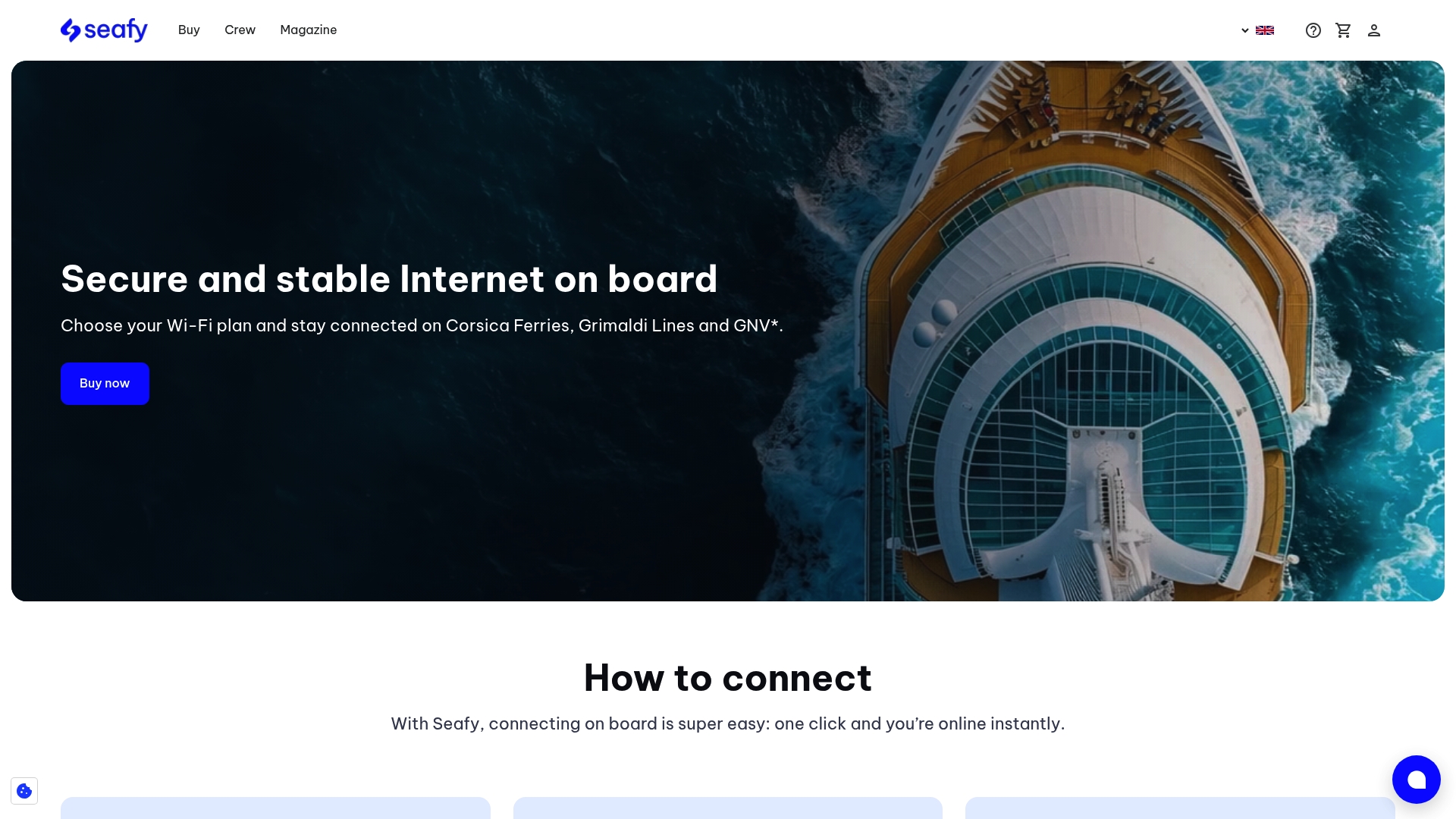
Seafy understands these vital needs. As a trusted digital platform, Seafy delivers seamless, high-speed Wi-Fi onboard partnered Mediterranean ferry lines like Corsica Ferries, Grimaldi Lines, and GNV. Our integration with advanced satellite technologies such as Starlink ensures that ship operations and passenger communications remain uninterrupted even far offshore. Choose Seafy for a secure, stable, and user-friendly connection that supports every aspect of your maritime journey from entertainment to emergency coordination.
Take control of your onboard connectivity now to experience the peace of mind that comes from reliable internet at sea. Explore our platform and activate your Wi-Fi package today at Seafy to stay connected, stay safe, and enjoy your journey fully.
Frequently Asked Questions
How does maritime internet contribute to safety at sea?
Maritime internet provides critical connectivity for real-time navigation updates, emergency communication, onboard medical consultations, and crew coordination, all of which enhance safety operations and response times during emergencies.
What types of connectivity systems are used on ships for safety?
Ships use a combination of satellite communication, cellular networks, ship-to-shore networks, internal onboard networks, and backup systems to ensure reliable internet access for both operational safety and passenger services.
How do internet connectivity and cyber threats impact ship safety?
Cyber threats targeting maritime systems can compromise navigation and communication protocols, putting both passengers and crew at risk. Therefore, secure maritime internet access is crucial to protecting vital operational systems and maintaining safety.
What role does internet connectivity play in crew welfare and mental health?
Reliable internet connectivity helps reduce crew isolation by enabling regular communication with family and access to mental health resources, which is essential for maintaining morale, safety, and job performance on long voyages.