Tech & Wi-Fi
Internet at Sea: Transforming Remote Work Efficiency
Explore the role of internet at sea for remote work on Mediterranean ferries. Learn about connectivity types, real-world use cases, risks, and solutions.
08 February 2026
Internet at Sea: Transforming Remote Work Efficiency
Smooth professional workflows can slip away the moment your ferry leaves the harbor and connectivity starts to lag. For remote workers crossing the Mediterranean, reliable internet isn’t just a convenience—it is vital for maintaining access to colleagues, critical documents, and real-time communication. This article explains the core concepts of remote work at sea, revealing effective techniques and essential technologies that help you stay productive while traveling between Greece, Italy, Spain, or any Mediterranean destination.
Table of Contents
- Remote Work at Sea: Core Concepts
- Connectivity Options and Maritime Technologies
- How Onboard Internet Enables Productivity
- Challenges and Limitations of Maritime Connectivity
- Risks, Costs, and Best Practices for Remote Professionals
Key Takeaways
| Point | Details |
|---|---|
| Maritime Connectivity is Essential | Advanced communication technologies are crucial for enabling effective remote work at sea, overcoming geographical limitations and operational challenges. |
| Invest in Robust Technologies | High-quality maritime-rated equipment and multi-protocol networking devices ensure stable internet connectivity, critical for seamless productivity. |
| Cybersecurity is a Major Concern | Remote maritime professionals must prioritize cybersecurity strategies to protect sensitive data against potential digital threats and vulnerabilities. |
| Develop Comprehensive Risk Management | A thorough risk management plan, including backup communication systems and continuous training, is vital for navigating the complexities of maritime work environments. |
Remote Work at Sea: Core Concepts
Remote work at sea represents a transformative approach to professional productivity, leveraging advanced maritime connectivity technologies to enable seamless professional operations while traveling. Unlike traditional office environments, maritime remote work demands specialized strategies and technological adaptations that address the unique challenges of working from a moving vessel.
The core concept of remote work at sea involves integrating distributed collaboration technologies that enable professionals to maintain high-performance work standards despite geographical limitations. This emerging work model relies on several critical technological and operational components:
- Robust satellite internet connectivity
- Advanced telecommunications infrastructure
- Real-time data sharing capabilities
- Portable computing equipment designed for maritime environments
Professionals engaging in remote work at sea must develop specialized competencies that extend beyond traditional remote work skills. Remote maritime operators require comprehensive technological and navigational expertise to successfully manage complex work environments with limited physical infrastructure.
The technological ecosystem supporting maritime remote work includes sophisticated hardware and software solutions designed to overcome communication challenges. These systems must provide stable internet connections, secure data transmission, and reliable communication channels that function effectively across varying maritime conditions.
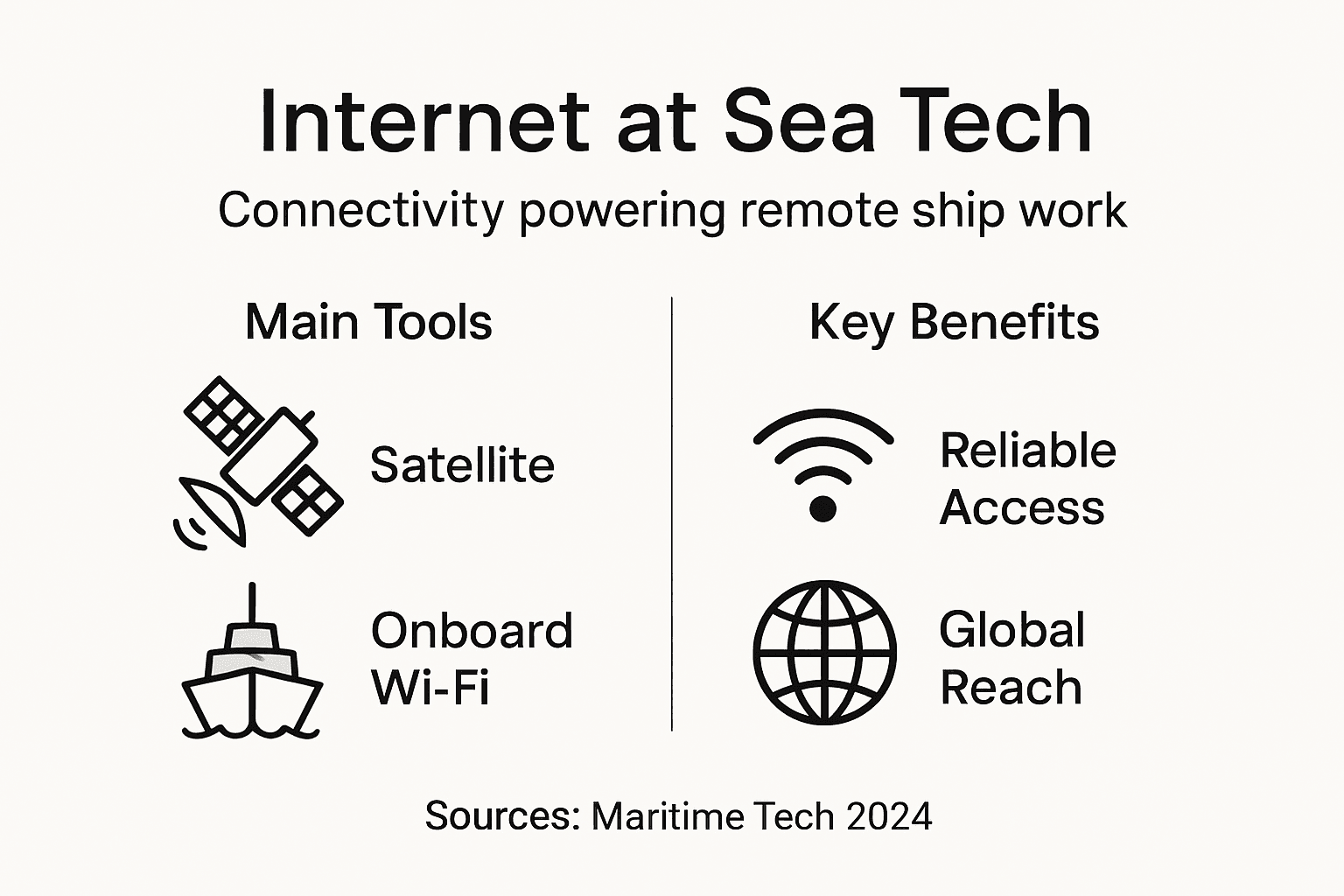
Pro tip: Invest in high-quality, maritime-rated networking equipment and backup communication devices to ensure continuous productivity during sea-based work sessions.
Connectivity Options and Maritime Technologies
Maritime connectivity has undergone a revolutionary transformation, driven by advanced technological solutions that address the unique challenges of internet access at sea. The maritime communication landscape now encompasses a complex ecosystem of interconnected technologies designed to provide reliable, high-speed internet across diverse oceanic environments.
Hybrid communication architectures have emerged as a critical innovation, combining multiple connectivity technologies to overcome traditional maritime communication limitations. These sophisticated systems integrate several key technologies:
- Satellite backhaul networks
- 5G multi-hop connectivity solutions
- Ship-to-ship relay technologies
- Edge computing infrastructure
- Advanced networking protocols
The evolution of maritime communication technologies is driven by increasingly complex professional and technological demands. Future maritime communication networks are expanding to support diverse use cases including intelligent transportation, smart ports, ocean monitoring, and maritime Internet of Things (IoT) applications.
Technological innovations are progressively addressing traditional maritime connectivity challenges by developing more resilient, adaptive communication systems. These solutions focus on improving bandwidth, reducing latency, and ensuring stable connections across unpredictable maritime environments, ultimately enabling professionals to work seamlessly while traveling across oceans.
Here’s a comparison of major maritime connectivity technologies and their business impact:
| Technology Type | Key Benefit | Typical Limitation | Business Impact |
|---|---|---|---|
| Satellite Internet | Global coverage | Higher latency, high costs | Enables work anywhere |
| 5G Multi-Hop | High speed, low latency | Limited to near coastline | Supports data-intensive apps |
| Ship-to-Ship Relay | Redundant connectivity | Depends on nearby vessels | Improves network reliability |
| Edge Computing | Real-time processing | Requires local resources | Boosts operational efficiency |
Pro tip: Research and invest in multi-protocol networking devices that can seamlessly switch between satellite, cellular, and maritime-specific communication channels to maintain consistent internet connectivity.
How Onboard Internet Enables Productivity
Onboard internet has transformed maritime professional environments, converting ships from isolated vessels into dynamic, connected workspaces. Modern maritime professionals now leverage sophisticated digital technologies to maintain seamless productivity across vast oceanic distances, fundamentally reshaping traditional work paradigms.
Digital connectivity strategies have become critical for enabling efficient remote work and maintaining operational effectiveness. These strategies encompass several key productivity-enhancing capabilities:
- Real-time communication with shore-based teams
- Instant access to critical operational data
- Remote collaboration and project management
- Continuous skill development and training
- Mental health support through personal communication channels
Ships are rapidly evolving into sophisticated floating offices, where reliable internet connectivity serves as the primary infrastructure for professional operations. Transformative onboard internet technologies enable professionals to perform complex tasks that were previously impossible during maritime travel, including detailed administrative work, real-time data analysis, and seamless team coordination.
The integration of advanced connectivity solutions has profound implications for workplace efficiency, safety, and professional development. By providing stable, high-speed internet access, maritime organizations can now support continuous learning, improve operational transparency, and create more engaging work environments that transcend traditional geographical limitations.
Pro tip: Develop a comprehensive digital workflow that includes offline work strategies and cloud synchronization to maximize productivity during potential connectivity fluctuations.
Challenges and Limitations of Maritime Connectivity
Maritime connectivity presents a complex landscape of technological and infrastructural challenges that significantly impact remote work efficiency. Despite rapid technological advancements, professionals working at sea continue to encounter substantial barriers that can disrupt communication, productivity, and operational reliability.
Maritime communication networks face multiple technological constraints that fundamentally limit their performance and reliability. These challenges encompass several critical dimensions:
- Limited terrestrial network coverage
- High latency in satellite communications
- Heterogeneous network architectures
- Extreme environmental conditions
- Fluctuating quality of service
- Inconsistent bandwidth availability
The economic and regulatory landscape further complicates maritime connectivity implementation. Persistent connectivity challenges include prohibitively expensive satellite bandwidth, complex regulatory environments, and significant infrastructure investments required to establish reliable global communication networks.
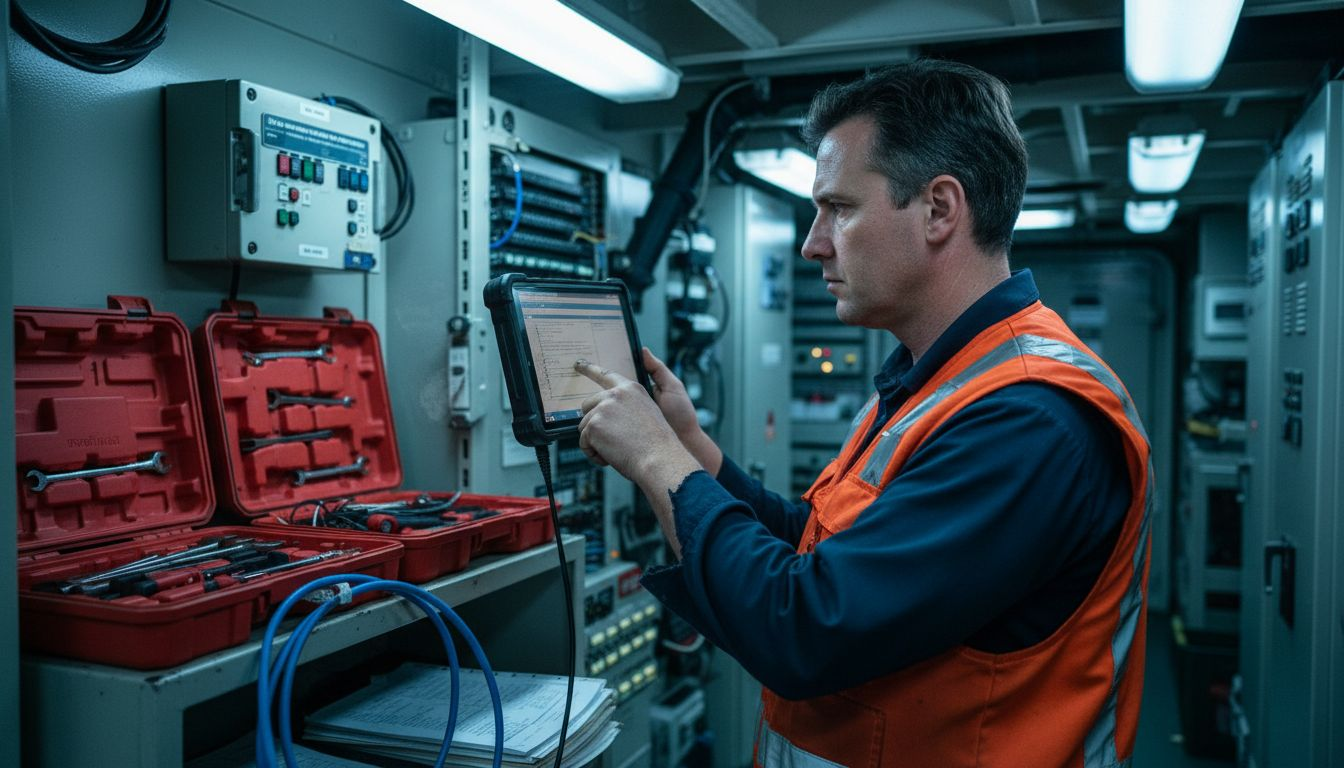
Cybersecurity represents another critical limitation, with maritime communication systems being particularly vulnerable to sophisticated digital threats. The unique nature of maritime environments—characterized by isolation, limited physical security, and complex technological ecosystems—creates multiple potential entry points for potential security breaches and operational disruptions.
Pro tip: Develop robust backup communication protocols and invest in redundant connectivity solutions to mitigate potential communication interruptions during maritime operations.
Risks, Costs, and Best Practices for Remote Professionals
Remote maritime professionals face a complex landscape of technological and financial challenges that demand strategic planning and sophisticated risk management approaches. Understanding the intricate balance between connectivity costs, operational risks, and technological solutions is crucial for maintaining productivity and professional effectiveness at sea.
Maritime communication technologies present significant economic considerations that directly impact remote work feasibility. The primary cost and risk dimensions include:
- High satellite communication bandwidth expenses
- Potential cybersecurity vulnerabilities
- Equipment investment requirements
- Performance variability across different maritime regions
- Operational continuity challenges
- Technology upgrade and maintenance costs
Cybersecurity risks represent a critical concern for maritime professionals, with interconnected systems creating multiple potential vulnerability points. Comprehensive cybersecurity strategies are essential to protect sensitive professional and organizational data from sophisticated digital threats.
Mitigating these risks requires a multifaceted approach that combines technological solutions, continuous training, and adaptive strategies. Professional remote workers must develop robust contingency plans, invest in reliable backup communication systems, and maintain a proactive approach to technological and security challenges.
Below is a summary of the most critical risks and cost factors for remote maritime professionals:
| Risk/Cost Factor | Description | Impact on Remote Work |
|---|---|---|
| Satellite Bandwidth Cost | Subscription fees, variable | Limits connectivity choices |
| Cybersecurity Threats | Hacking, data breaches | Risks loss of sensitive info |
| Upgrade/Maintenance | New tech investments | Drives long-term expenses |
| Regulatory Complexity | International compliance | Adds to operational workload |
Pro tip: Create a comprehensive digital risk management plan that includes encrypted communication protocols, regular security audits, and multi-layered network protection strategies.
Boost Your Remote Work Efficiency with Reliable Maritime Internet
The article highlights the critical challenges of maintaining stable and secure internet connectivity while working remotely at sea. Issues like high satellite latency, fluctuating bandwidth, and the necessity of seamless switching between communication protocols make maritime remote work complex and demanding. If you value uninterrupted productivity and efficient digital collaboration even on the move, addressing these connectivity pain points is key.
Seafy offers a proven solution tailored for ferry and cruise ship travelers and professionals who need consistent, high-speed Wi-Fi onboard. By partnering with leading maritime lines such as Corsica Ferries, Grimaldi Lines, and GNV, and integrating cutting-edge satellite technologies like Starlink, Seafy ensures you stay connected through an easy-to-use portal with flexible Wi-Fi packages. This supports your work and communication needs, minimizing downtime caused by connectivity challenges discussed in the article.
Experience the future of maritime connectivity and transform your digital work life at sea. Visit Seafy to explore how we help you overcome the connectivity challenges of remote maritime work.
Internet at Sea Solutions
Discover Seamless Onboard Wi-Fi
Enhance Your Remote Work Experience
Stay productive and connected wherever your maritime journey takes you. Act now to explore personalized Wi-Fi packages with Seafy and never let poor connectivity hold back your remote work goals again.
Frequently Asked Questions
What are the primary technologies enabling remote work at sea?
The primary technologies supporting remote work at sea include robust satellite internet connectivity, advanced telecommunications infrastructure, real-time data sharing capabilities, and portable computing equipment designed for maritime environments.
How do hybrid communication architectures improve maritime connectivity?
Hybrid communication architectures enhance maritime connectivity by integrating multiple technologies such as satellite backhaul networks, 5G multi-hop connectivity, and ship-to-ship relay solutions, allowing for more reliable and faster internet access while at sea.
What are the main challenges of maintaining internet connectivity at sea?
Challenges of maintaining internet connectivity at sea include limited terrestrial network coverage, high latency in satellite communications, extreme environmental conditions, and fluctuating quality of service, which can disrupt remote work efficiency.
How can maritime professionals ensure reliable internet access while working at sea?
Maritime professionals can ensure reliable internet access by investing in high-quality, maritime-rated networking equipment, employing backup communication devices, and developing comprehensive digital workflows that include offline work strategies for potential connectivity fluctuations.