Tech & Wi-Fi
Seamless Internet at Sea – Why It Matters Now
Seamless Internet at Sea – Why It Matters Now ! Ship officer uses internet in control room Every american traveling professional knows the frustration of dropped video calls or slow downloads when working from a ship in the Mediterranean.
12 January 2026
Seamless Internet at Sea – Why It Matters Now
Every american traveling professional knows the frustration of dropped video calls or slow downloads when working from a ship in the Mediterranean. Reliable, high-speed internet is no longer a luxury but a necessity as more people turn ferries and cruise ships into remote offices. With seamless maritime connectivity, you can stream, collaborate, and stay connected just as if you were on land. Discover how advanced technology keeps you productive and entertained across the open sea.
Table of Contents
- How Seamless Internet at Sea Works
- Types of Maritime Connectivity Solutions
- Enabling Remote Work and Leisure Onboard
- Key Benefits for Passengers and Crew
- Costs, Limitations, and Smart Package Choices
Key Takeaways
| Point | Details |
|---|---|
| Seamless Maritime Connectivity | Advanced satellite technologies, including multi-satellite systems, ensure reliable broadband access at sea, even during signal disruptions. |
| Types of Connectivity Solutions | Key maritime connectivity types include geostationary satellites, low Earth orbit networks, cellular LTE, and port-based Wi-Fi, each offering unique advantages based on operational needs. |
| Transforming Workspaces | Modern vessels now serve as floating offices, enabling remote work, video conferencing, and access to digital tools through enhanced internet connectivity. |
| Cost Considerations | Understanding the costs and limitations of various maritime internet options is crucial for selecting a suitable package that meets specific coverage and performance needs. |
How Seamless Internet at Sea Works
Maritime internet connectivity represents a complex technological challenge that goes far beyond traditional land-based networks. Unlike stationary connections, ships require sophisticated multi-satellite communication systems to maintain reliable broadband access while traversing vast oceanic regions.
The core of seamless maritime internet relies on advanced satellite technologies that integrate multiple communication platforms. These systems leverage commercial satellite networks from providers like SpaceX Starshield, Inmarsat, and Iridium, creating redundant pathways that ensure consistent connectivity. By using multiple satellite networks simultaneously, vessels can maintain stable internet connections even when individual satellite signals fluctuate or become temporarily disrupted.
Modern maritime communication infrastructure increasingly incorporates emerging wireless technologies like 5G and potential 6G networks. These advanced systems enable air-to-sea communication networks that dramatically improve data throughput and reduce latency. The integration of airborne base stations and satellite communication platforms creates a resilient web of connectivity that supports everything from navigation systems to remote work capabilities.
Pro Tip: Always check your vessel’s specific internet package and bandwidth limitations before planning bandwidth-intensive online activities like video conferencing or large file uploads.
Types of Maritime Connectivity Solutions
Maritime connectivity has evolved dramatically, offering multiple technological solutions to address the complex communication challenges of ocean travel. Satellite-based communication systems represent the primary method for maintaining internet access across vast marine environments, with distinct technologies catering to different operational needs and geographical constraints.
The primary maritime connectivity solutions can be categorized into four main types: geostationary satellite systems, low Earth orbit (LEO) satellite networks, cellular LTE networks, and port-based Wi-Fi. Geostationary satellites provide near-global coverage but experience higher latency, while LEO satellite constellations like Starlink offer lower latency and higher speeds with increasingly comprehensive global reach. Cellular networks remain effective near coastal regions, providing cost-effective connectivity within limited ranges.
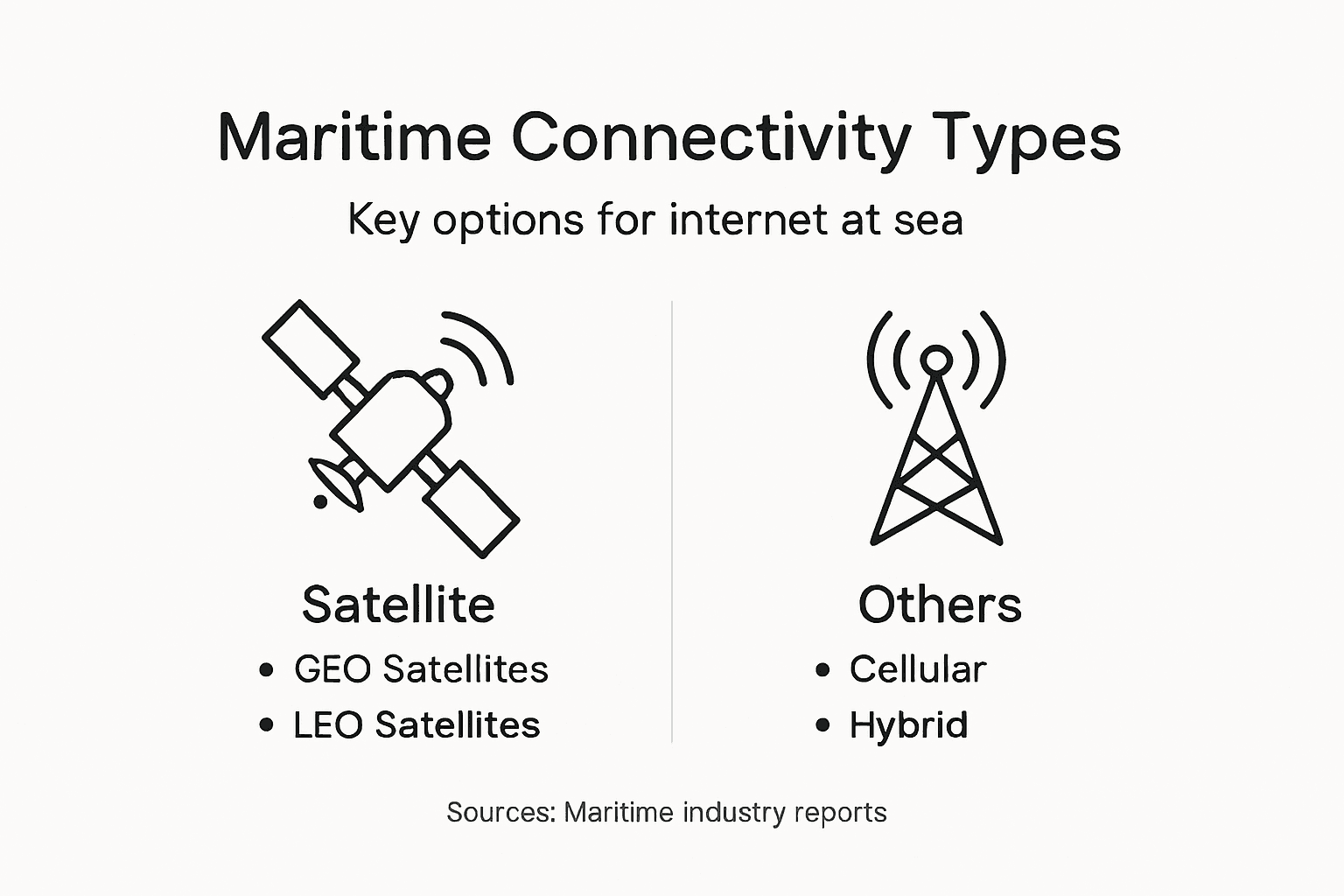
Future maritime communication networks will likely integrate heterogeneous systems that combine satellite platforms, aerial unmanned vehicles, terrestrial networks, and maritime nodes. This multi-layered approach enables sophisticated communication architectures supporting diverse maritime services from passenger broadband to critical safety communications. Advanced technologies like 6G and edge computing will further enhance these systems, creating more resilient, scalable, and energy-efficient connectivity solutions.
Here’s a side-by-side comparison of major maritime connectivity solutions:
| Solution Type | Coverage Area | Typical Latency | Best Use Case |
|---|---|---|---|
| Geostationary | Near-global | High (500+ ms) | Long voyages, remote regions |
| LEO Satellite | Expanding global | Low (20-50 ms) | Streaming, remote work |
| Cellular LTE | Coastal/port areas | Low (20-40 ms) | Short trips near shore |
| Port-based Wi-Fi | Docked locations | Very Low (10-20 ms) | Large data uploads at port |
Pro Tip: When selecting a maritime internet package, compare multiple connectivity solutions and consider your specific travel routes to ensure optimal coverage and performance.
Enabling Remote Work and Leisure Onboard
Modern maritime connectivity has transformed vessels from simple transportation platforms into dynamic, fully connected workspaces. Maritime vessels now function as floating offices with sophisticated internet infrastructure that supports professional and personal digital needs across oceanic routes.
Remote work capabilities on maritime vessels have expanded dramatically, enabling professionals to maintain productivity while traveling. Crew members and passengers can now conduct video conferences, access cloud-based tools, manage emails, and collaborate on complex projects using high-speed satellite connections. The hybrid connectivity approach combines multiple network technologies, ensuring stable internet access that supports everything from operational communication to personal entertainment streaming.

Ships are evolving into comprehensive digital environments that balance professional requirements with personal welfare. Beyond work tools, onboard internet provides critical communication channels for crew members to connect with family, access entertainment platforms, and participate in ongoing training programs. This connectivity significantly reduces the psychological challenges of maritime isolation, creating more supportive and engaging work environments for professionals who spend extended periods at sea.
Pro Tip: Invest in a portable mobile hotspot and download essential work documents before your maritime journey to ensure seamless productivity even during potential connectivity fluctuations.
Key Benefits for Passengers and Crew
Maritime connectivity provides transformative advantages that extend far beyond simple internet access. Low Earth orbit satellite networks have revolutionized the maritime experience, creating unprecedented opportunities for communication, professional development, and personal welfare for both passengers and crew members.
For passengers, onboard internet connectivity means uninterrupted travel experiences that blend leisure and productivity. Travelers can stream entertainment, stay connected with family and friends, manage work responsibilities, and access real-time travel information. Professional remote workers can transform ferry journeys into mobile offices, conducting meetings, managing projects, and maintaining workflow continuity without geographical limitations.
Crew members experience even more substantial benefits from advanced maritime connectivity. Beyond basic communication, these technologies support critical professional development, enable access to medical consultation services, provide mental health resources, and create channels for ongoing training and skill enhancement. The ability to maintain personal connections, access educational content, and reduce professional isolation dramatically improves overall crew welfare and job satisfaction, ultimately contributing to more efficient and psychologically supportive maritime work environments.
Reviewing the main benefits of advanced maritime connectivity for different users:
| User Group | Main Connectivity Benefit | Example Impact |
|---|---|---|
| Passengers | Uninterrupted digital experience | Work, entertainment on voyages |
| Crew | Enhanced personal welfare | Training, remote medical access |
| Operators | Optimized operations | Safety, real-time navigation |
Pro Tip: Download offline work materials and entertainment content before your maritime journey to ensure continuous productivity and enjoyment during potential connectivity fluctuations.
Costs, Limitations, and Smart Package Choices
Maritime connectivity market dynamics reveal a complex landscape of technological innovations and economic considerations. The global maritime connectivity market, currently valued at approximately USD 3.2 billion, demonstrates significant potential for growth, driven by increasing demands for reliable, high-performance communication systems across maritime environments.
Navigating the costs of maritime internet requires understanding the nuanced trade-offs between different connectivity technologies. Satellite network options range from expensive high-throughput systems to more affordable hybrid solutions combining low Earth orbit (LEO), geostationary (GEO) satellites, and cellular networks. Bandwidth requirements, regional coverage, and performance metrics significantly impact pricing structures, with professional and enterprise packages typically commanding premium rates compared to basic passenger internet access.
Hybrid connectivity solutions offer the most flexible approach to managing maritime internet limitations. These integrated networks help mitigate challenges such as regulatory restrictions in territorial waters, cybersecurity risks, and infrastructure costs. Smart package selection involves carefully evaluating coverage areas, data speeds, latency performance, and pricing models to match specific operational or travel requirements.
Pro Tip: Compare multiple maritime internet packages, focusing on data allowances, speed guarantees, and flexibility in roaming between different satellite networks to optimize your connectivity experience.
Experience Seamless Internet Onboard with Seafy
The challenge of maintaining uninterrupted, high-speed internet at sea is no longer a distant dream. With the rise of multi-satellite connectivity and hybrid maritime communication technologies like Starlink, staying connected while traveling across vast oceanic routes is now essential for passengers and crew alike. Whether you need reliable broadband for remote work, seamless video conferencing, or uninterrupted entertainment, addressing the limitations of traditional maritime internet solutions makes all the difference.
At Seafy, we understand these unique connectivity challenges and have tailored our platform to deliver stable, easy-to-use Wi-Fi services specifically for ferry and cruise ship travelers across the Mediterranean and beyond. Our partnerships with leading ferry lines including Corsica Ferries, Grimaldi Lines, and GNV empower you to enjoy smooth internet access throughout your journey. Explore how Seafy integrates cutting-edge satellite technologies and comprehensive digital services to transform ships into floating offices and entertainment hubs.
Ready to take your maritime travel experience to the next level? Visit Seafy to discover our reliable onboard internet packages, activate your Wi-Fi with ease, and stay connected every mile of your voyage. Don’t let connectivity disruptions hold you back—embrace seamless internet at sea now and enjoy work and leisure without limits. Learn more about our platform and onboard digital services at Seafy today.
Frequently Asked Questions
What are the main types of maritime connectivity solutions?
Maritime connectivity solutions primarily include geostationary satellite systems, low Earth orbit (LEO) satellite networks, cellular LTE networks, and port-based Wi-Fi. Each type offers varying coverage, latency, and best use cases depending on travel needs and locations.
How do satellite technologies support seamless internet access at sea?
Satellite technologies enable seamless maritime internet by utilizing multiple communication platforms that integrate commercial satellite networks. This redundancy ensures consistent connectivity, even when individual satellite signals may fluctuate or become disrupted.
What benefits does onboard internet provide for crew members?
Onboard internet provides crew members with enhanced personal welfare by facilitating access to critical training programs, remote medical consultations, and communication with family. This connectivity helps reduce feelings of isolation and enhances job satisfaction among maritime professionals.
How can I choose the right maritime internet package for my needs?
When selecting a maritime internet package, consider coverage area, data speeds, latency performance, and pricing models. Comparing multiple packages that integrate hybrid connectivity solutions can help optimize your experience based on the specific travel routes and operational requirements.