Tech & Wi-Fi
Summer 2026 in Corsica and Sardinia: Wi-Fi Made Easy
Summer 2026 in Corsica and Sardinia: Discover Seafy’s Wi-Fi for digital nomads, ferry travel tips, top attractions, and remote work essentials on these islands.
22 February 2026
Summer 2026 in Corsica and Sardinia: Wi-Fi Made Easy
Crossing the Mediterranean for work does not have to mean sacrificing your connection or productivity. For digital nomads and remote workers eyeing Corsica and Sardinia in summer 2026, finding reliable Wi-Fi at sea is now a real possibility thanks to advances in maritime connectivity. With operators like Corsica Ferries and Corsica Sardinia Ferries offering dedicated onboard internet packages, you can keep up with client calls and deadlines without the stress of unreliable networks. This guide shows how modern solutions, like Seafy, make remote work seamless even as you journey between the French and Italian coasts.
Table of Contents
- Reliable Wi-Fi at Sea: What Seafy Offers
- Ferry Travel Routes and Major Providers
- Remote Work Essentials for 2026 Travelers
- Top Sights and Experiences on Both Islands
- Costs, Packages, and Staying Secure Online
Key Takeaways
| Point | Details |
|---|---|
| Reliable Connectivity | Seafy offers dependable Wi-Fi at sea through partnerships with major ferry operators, providing a stable working environment during maritime travel. |
| Security Measures | Seafy prioritizes security with encrypted data transmission and network segmentation to protect user information against cyber threats. |
| Flexible Packages | Seafy provides a variety of connectivity packages tailored to different travel needs, allowing users to purchase only what they require. |
| Preparation is Key | Remote workers should ensure their technology and connectivity setup is tested and confirmed before travel to avoid disruptions during crossings. |
Reliable Wi-Fi at Sea: What Seafy Offers
Working remotely while crossing the Mediterranean sounds impossible until you actually try it with the right connection. Seafy transforms maritime travel by delivering dependable internet access when you’re far from shore, letting you stay productive during ferries and cruises across Corsica and Sardinia routes.
Seafy partners with major ferry operators including Corsica Ferries, Grimaldi Lines, and GNV to integrate advanced onboard connectivity directly into their fleets. This means you’re not dealing with spotty signals or unreliable hotspots—you’re accessing professionally managed Wi-Fi infrastructure designed specifically for maritime environments.
What Makes Seafy Different
Most travelers expect Wi-Fi at sea to work like their home network. It doesn’t. Wi-Fi at sea operates through satellite technology that manages latency, bandwidth, and signal strength differently than land-based connections. Seafy addresses these technical realities with infrastructure built for maritime conditions.
Here’s what you get:
- Satellite-powered connectivity using advanced systems like Starlink integration for stable coverage even when land is miles away
- Multiple connection options so you can choose the speed and data allowance that matches your work needs
- Easy activation through the Seafy portal—purchase and connect within minutes before departure
- Crew-tested reliability meaning the system handles real maritime challenges, not theoretical ones
Security Built In
Working on a ship means sharing the network with hundreds of other passengers and crew members. Security matters more here than almost anywhere else. Maritime Wi-Fi networks face cyber threats including Man-in-the-Middle attacks and rogue access points that can expose your work data and personal information.
Seafy implements protective measures that keep your connection secure:
- Encrypted data transmission protecting your remote work files and communications
- Network segmentation isolating passenger traffic from crew systems and critical ship operations
- Advanced monitoring systems detecting and blocking suspicious activity in real time
Your work data stays yours. Seafy’s security infrastructure treats maritime threats as a core design principle, not an afterthought.
You’re handling email, video calls, and possibly sensitive client information. The last thing you need is wondering whether someone on deck three is intercepting your video conference with your team back home.
Practical Packages for Remote Workers
Seafy offers flexibility because your work requirements might change between a quick ferry crossing and a week-long cruise. Purchase what you actually need without overpaying for unused data or forcing yourself to disconnect during critical work moments.
Pro tip: Activate your Seafy package at least 24 hours before departure to ensure immediate connectivity when you board—no scrambling at the ferry terminal searching for Wi-Fi that works.
Ferry Travel Routes and Major Providers
Getting to Corsica and Sardinia in summer 2026 means choosing between multiple ferry operators and routes that crisscross the Mediterranean. Your choice of provider directly affects your journey length, departure frequency, onboard amenities, and most importantly for remote workers, Wi-Fi availability and quality.

The Mediterranean ferry landscape has two major players dominating routes to these islands. Both offer frequent departures, comfortable cabins, and the connectivity options you need to work while traveling.
Here’s a summary of the main ferry operators and their unique advantages for remote workers:
| Operator | Route Coverage | Departure Frequency | Key Benefit for Remote Work |
|---|---|---|---|
| Corsica Ferries | Extensive, both islands | Multiple daily departures | Reliable cabins with Wi-Fi |
| Corsica Sardinia Ferries | Over 30 routes | Up to 15 crossings/day | Flexible schedules, route variety |
| Grimaldi Lines | Regional connections | Weekly or seasonal | Good for longer cruises |
| GNV | Select Mediterranean routes | Moderate schedule | Option for alternative travel |
Corsica Ferries: The Dominant Player
Corsica Ferries operates the most extensive network connecting mainland Europe to both islands. Daily sailings link major ports including Toulon, Nice, Livorno, and Savona to Corsican destinations like Bastia and Ajaccio, plus Sardinian ports such as Golfo Aranci.
What this means for your work:
- Multiple departure options throughout the day give you schedule flexibility for meeting client time zones
- Cabin availability lets you book a proper workspace for longer crossings rather than working in public lounges
- Onboard Wi-Fi packages integrate seamlessly with Seafy’s service for consistent connectivity
- Vehicle transport if you’re bringing rental cars to explore the islands independently
Corsica Sardinia Ferries: Frequency and Reach
Corsica Sardinia Ferries operates more than 30 routes with up to 15 daily crossings on popular routes during peak summer 2026. Key ports include Toulon, Nice, Livorno, and Bastia with connections extending to Elba Island.
The frequency matters because:
- Backup departure options mean you’re not trapped if your scheduled ferry fills or runs behind
- Route variety lets you plan multi-island itineraries without backtracking
- Summer peak scheduling ensures maximum sailings during the busy June-August period
Choosing Your Route
Pick your ferry based on departure time that matches your work calendar, not just convenience. A midday crossing might work better than early morning if you need to complete morning calls with your home office before boarding.
Your route choice depends on where you’re starting. Coming from France? Toulon and Nice offer the shortest crossings to Corsica. From Italy? Livorno and Savona provide quick access to both islands. Consider crossing duration alongside Wi-Fi reliability when comparing options.
Both operators include restaurant and lounge facilities where you can set up a makeshift office. Longer crossings give you dedicated work time away from distractions, though you’ll need stable internet to be truly productive.
Pro tip: Book your ferry at least two weeks before travel and confirm Seafy Wi-Fi package activation for your specific departure date—peak summer routes fill quickly and connectivity options vary by vessel.
Remote Work Essentials for 2026 Travelers
Remote work in 2026 isn’t just about having a laptop and Wi-Fi anymore. The landscape has evolved significantly, and successful digital nomads heading to Corsica and Sardinia need specific tools, strategies, and mindsets to stay productive while traveling.
The gap between casual travelers with email access and serious remote workers lies in preparation. You’ll need more than just connectivity—you need redundancy, security, and the right software stack.
Technology Stack That Actually Works
Your toolkit in 2026 extends far beyond your laptop. Essential tools for remote workers now include VPN services, malware protection, cloud storage platforms, and asynchronous communication software designed specifically for nomadic lifestyles.
Here’s what matters most on a ferry:
- VPN service protecting your data across public Wi-Fi networks shared with hundreds of other passengers
- Backup cloud storage syncing your work files automatically so you never lose progress if your device fails
- Offline-capable applications letting you work during dead zones between ports
- Internet speed testing tools so you understand whether connection issues are device-related or network-related
Adapting to Frequent Network Changes
Moving between mainland departure ports, ferry networks, and island arrivals means constantly switching Wi-Fi networks. Each transition introduces security risks and potential disruptions to your workflow.
This is where strategy matters more than tools. You’ll experience network changes that land-based workers never face. Plan accordingly.
The 2026 Remote Work Mindset
Successful digital nomads in 2026 treat connectivity as critical infrastructure, not a convenience—you plan around it, test it, and have backup plans.
The evolution of remote work demands AI integration in workflows, better time management across time zones, and strategic career planning. You can’t just show up and expect to work like you did from a home office.
Consider these shifts:
- Build flexibility into your schedule for time zone differences between your home office and Mediterranean ports
- Develop skills in productivity tools and automation to compensate for connectivity interruptions
- Maintain reliable income streams that don’t depend on real-time collaboration
- Plan work projects that tolerate asynchronous communication and delayed responses
Preparing Before You Board
Your preparation week before departure matters more than you think. Test everything—your VPN, cloud sync, backup power banks, device charging solutions. Verify Seafy’s Wi-Fi packages work with your specific workflow needs.
Don’t discover on your ferry crossing that your video conferencing platform drops every 30 seconds or your file sync is incompatible with Seafy’s network.
Pro tip: Download offline copies of critical work documents, project files, and client communication threads before boarding—network interruptions happen, and offline access keeps you productive regardless of connectivity gaps.
Top Sights and Experiences on Both Islands
Corsica and Sardinia offer dramatically different experiences despite being separated by less than 15 kilometers of water. One island pulls you toward mountain villages and French-influenced culture, while the other showcases ancient ruins and distinct regional traditions. As a remote worker, you’ll want to balance work time with experiences that justify the journey.
Both islands reward you with activities that break the monotony of ferry cabins and onboard workspaces. The key is choosing experiences that fit your work schedule, not the other way around.
Corsica: Mountain Villages and Coastal Beauty
Corsica’s appeal lies in its dramatic contrasts between rugged highlands and Mediterranean coastline. The Balagne region showcases unspoiled landscapes, hilltop villages clinging to cliffsides, and beaches that rival anything in Southern France.
What actually matters for your itinerary:
- Bastia citadel offering historic walks and coastal views perfect for a morning break before afternoon work sessions
- Coastal bike tours letting you exercise while exploring instead of sitting in a cafe
- Wine tasting at local vineyards introducing you to Corsican gastronomy without disrupting your evening schedule
- Hiking trails ranging from 2-hour walks to full-day adventures based on your availability
Sardinia: Ancient History and Regional Identity
Sardinia feels distinctly different from Corsica. The island prioritizes its authentic local culture, ancient heritage, and distinctive regional celebrations over tourist infrastructure.
Ancient nuraghi archaeological sites, pristine beaches, and seasonal festivals showcase Sardinia’s personality. The Sartiglia equestrian joust occurs during Carnival season, while regional music festivals run throughout summer.
Practical experiences for your schedule:
- Nuraghi ruins exploration allowing self-paced historical discovery
- Beach time in natural parks combining relaxation with genuine landscape beauty
- Local food experiences featuring Sardinian cuisine distinct from Corsican flavors
- Seasonal festivals if your summer 2026 dates align with celebrations
Balancing Work and Exploration
Remote work thrives when you separate office hours from exploration time—work mornings with Seafy’s Wi-Fi, explore afternoons without guilt.
Don’t try squeezing sightseeing into coffee breaks between calls. Block dedicated work hours on your calendar, then block exploration time with equal commitment. Your clients need consistency, and the islands deserve your actual attention.
Use slower work periods—Friday afternoons, summer holidays when clients are less responsive—for island adventures. Ferry travel itself provides built-in work time that eliminates commuting guilt.
Pro tip: Book accommodations with reliable Wi-Fi in both Corsica and Sardinia before arrival, ensuring your work base doesn’t depend entirely on Seafy coverage while island-hopping between ferries.
Costs, Packages, and Staying Secure Online
Wi-Fi access at sea costs money, but the expense depends entirely on how you plan ahead and which package matches your actual usage. Many remote workers overpay for options they don’t need or underbuy and regret it halfway through their journey.
Seafy offers flexibility because your connectivity needs shift between ferry crossings and island stays. You’re not committed to one annual plan—you buy what you need for specific journeys.
Understanding Seafy’s Package Structure
Seafy pricing tiers accommodate different work patterns. Quick ferry crossings need different coverage than week-long cruises with daily video calls. Your team’s timezone also affects how much real-time connectivity you actually require.
Here’s what matters:
To help you choose the right Seafy package, here’s a comparison of connectivity options:
| Package Type | Best Use Case | Coverage Duration | Approximate Cost Range |
|---|---|---|---|
| Hourly Pass | Short ferry crossings | 1-3 hours | $5-$10 per hour |
| Daily Package | Day-long remote work | 24 hours | $15-$25 daily |
| Multi-Day Plan | Extended Mediterranean trips | 3-14 days | $40-$80 per journey |
| Backup eSIM | Island work after ferry | Monthly or prepaid | $15-$30 per month |
- Hourly passes for quick connections between islands or port-to-port work windows
- Daily packages covering 24-hour periods across one or multiple ferry journeys
- Multi-day plans reducing per-hour costs for longer Mediterranean voyages
- Unused data rollover policies that don’t penalize you for conservative estimates
Backup Connectivity Options
Don’t depend entirely on maritime Wi-Fi. European roaming options including eSIMs and prepaid plans provide affordable backup access once you dock in Corsica or Sardinia. These options typically cost less than onboard packages and work anywhere you have cellular coverage.
Consider dual connectivity:
- Primary: Seafy packages for ferry crossing work
- Secondary: European eSIM or prepaid plan for island-based work
- Backup: Portable pocket Wi-Fi devices creating private hotspots when public networks fail
Security on Maritime Networks
Public Wi-Fi at sea demands security discipline—encryption, VPNs, and avoided sensitive transactions protect your work and privacy.
Best practices for safe internet at sea include using VPN services that mask your location and encrypt data flowing between your device and the internet. Never handle banking or sensitive client files over unencrypted connections shared with hundreds of passengers.
Your security checklist:
- Enable VPN before accessing any work systems or email
- Disable file sharing and automatic connection features on your device
- Use strong passwords unique to maritime networks
- Avoid downloading large files or updates while connected
- Turn off Bluetooth and location services when not actively using them
Calculating Your Actual Costs
Total connectivity expense includes Seafy packages plus backup options. A two-week Mediterranean journey might cost 40-80 USD in maritime Wi-Fi depending on crossing frequency, plus 15-30 USD for European cellular backup.
Compare this against working from your home office and losing the island experience entirely. Ferry connectivity isn’t a luxury—it’s infrastructure enabling remote work while traveling.
Pro tip: Purchase Seafy packages three days before departure when deals often run, and activate backup eSIM service in your home country before travel to avoid European activation fees and ensure seamless switching between connectivity sources.
Stay Connected Effortlessly on Your Summer 2026 Mediterranean Journey
Traveling to Corsica and Sardinia for work or leisure this summer comes with unique challenges around reliable Wi-Fi and secure internet while at sea. The need for stable maritime connectivity, data protection, and flexible Wi-Fi packages are key pain points that Seafy directly addresses through its digital platform. By partnering with ferry leaders like Corsica Ferries and Grimaldi Lines, Seafy ensures you access high-speed internet powered by satellite technologies such as Starlink, enabling uninterrupted remote work and seamless communication.
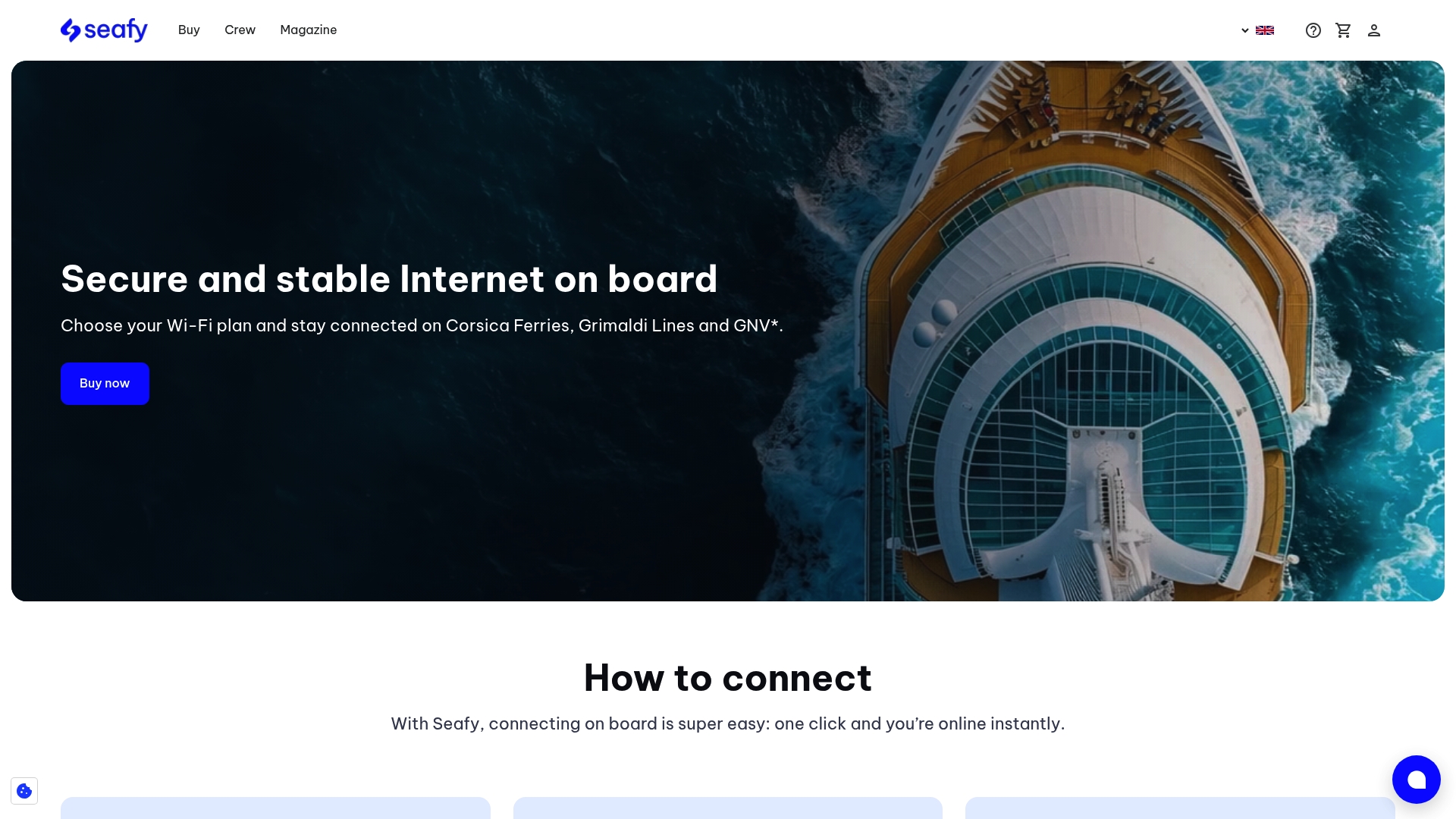
Don’t let connectivity concerns hold back your Mediterranean adventure or work commitments. Experience hassle-free onboard internet by choosing from practical plans tailored to quick ferry crossings or extended trips. Visit Seafy today to explore your options and activate your Wi-Fi package ahead of boarding. Secure your digital lifeline for summer 2026 now and transform how you stay connected at sea with Seafy’s maritime Wi-Fi solutions.
Frequently Asked Questions
How does Seafy provide reliable Wi-Fi at sea?
Seafy partners with major ferry operators to offer advanced satellite-powered connectivity, ensuring stable Wi-Fi even when far from shore.
What security measures does Seafy implement for remote work?
Seafy employs encryption for data transmission, network segmentation, and real-time monitoring systems to protect users from cyber threats while working on board.
What are the different Wi-Fi package options available with Seafy?
Seafy offers hourly passes, daily packages, multi-day plans, and backup eSIM options, allowing users to select connectivity based on their specific travel needs.
How can I prepare for using Seafy Wi-Fi on my ferry crossing?
It’s recommended to activate your Seafy package at least 24 hours prior to departure, ensuring you have immediate connectivity upon boarding. Additionally, confirm your Wi-Fi needs match the selected package to avoid interruptions during travel.
Recommended
- Corsica Ferries WiFi – Enhanced Travel Connectivity
- Discover Cap Corse: wild nature, authentic villages, crystal-clear sea. Info on ferries, Seay Wi-Fi and the perfect itinerary for your Corsican escape.
- Why Onboard Wi-Fi Enhances Your Travel Experience
- 3 Things to Know About Wi‑Fi at Sea – How Onboard Internet Works