Tech & Wi-Fi
Portal-based Wi-Fi access: cruise connectivity guide 2026
Learn how portal-based Wi-Fi access works on ferries and cruises, discover modern authentication technologies like OpenRoaming, and get practical tips for reliable maritime internet connectivity.
12 March 2026
Portal-based Wi-Fi access: cruise connectivity guide 2026
Most ferry and cruise passengers tap “Connect” without realizing the sophisticated portal system managing their onboard internet access. Portal-based Wi-Fi shapes every aspect of your digital experience at sea, from browsing vacation photos to joining remote work calls. This guide reveals how these authentication systems work, why they matter for your connectivity, and how to navigate them effectively for reliable internet throughout your voyage.
Table of Contents
- How Portal-Based Wi-Fi Access Works On Cruise And Ferry Ships
- Security And Challenges Of Portal-Based Wi-Fi On Vessels
- Advancements: Openroaming And Passpoint Technologies For Seamless Onboard Wi-Fi
- Practical Tips For Ferry And Cruise Passengers Using Portal-Based Wi-Fi Access
- Discover Reliable Wi-Fi Solutions With Seafy For Your Next Voyage
- Frequently Asked Questions About Portal-Based Wi-Fi Access
Key takeaways
| Point | Details |
|---|---|
| Portal authentication | Portal-based Wi-Fi uses a login page called a captive portal to manage guest access before granting internet connectivity. |
| Security balance | It balances security and ease of use by requiring user interaction and authentication before full network access. |
| Modern solutions | Technologies like OpenRoaming aim to simplify and secure connections automatically, eliminating repeated manual logins. |
| Passenger benefit | Understanding portal systems helps you connect faster, troubleshoot issues, and maintain reliable internet for leisure or work at sea. |
How portal-based Wi-Fi access works on cruise and ferry ships
When you connect to ship Wi-Fi, you’re immediately redirected to a login page. This is a captive portal, the gateway between your device and the open internet.
Captive portals serve as digital checkpoints. They authenticate passengers, authorize usage limits, and log session details through what network engineers call AAA functions. This approach helps ferry and cruise operators manage bandwidth fairly across hundreds or thousands of simultaneous users while maintaining security protocols.
The typical connection process follows these steps:
- Select the ship’s designated Wi-Fi network from your device settings
- Wait for automatic redirection to the captive portal explanation page
- Review and accept terms of service or usage policies
- Enter credentials, cabin number, or select a purchased package
- Receive confirmation and full internet access
This multi-step authentication might seem cumbersome compared to home Wi-Fi. However, it gives ship operators crucial control over network resources in a bandwidth-constrained maritime environment. Portal systems track usage patterns, prevent unauthorized access, and help distribute limited satellite internet capacity efficiently among paying passengers.
Pro Tip: Save your login credentials in your device’s notes app before boarding. Ship portals often require re-authentication when moving between different areas of the vessel or after periods of inactivity.
Security and challenges of portal-based Wi-Fi on vessels
Maritime networks face unique cybersecurity pressures. Research shows intrusion attempts were detected on over 1,800 vessels in just six months, highlighting the aggressive threat landscape at sea.

The portal-based approach addresses several vulnerabilities, but risks remain. Attackers can create fake Wi-Fi networks mimicking legitimate ship services, tricking passengers into connecting. Once connected to these rogue networks, your traffic passes through the attacker’s system, exposing passwords, emails, and sensitive data.
Common security challenges include:
- Insecure portal configurations allowing traffic interception
- Weak encryption on older ship Wi-Fi systems
- Passengers reusing passwords across multiple portals
- Lack of network segmentation between crew and guest networks
- Outdated software on ship access points and authentication servers
Modern portal systems combat these threats through layered defenses. Network segmentation isolates guest traffic from critical ship operations. RADIUS protocols verify user credentials against secure databases. WPA2 or WPA3 encryption protects data from the moment your device connects.
You play a critical role in your own security. Always verify you’re connecting to the official network name, typically displayed in your cabin or public areas. Avoid entering credit card details or banking passwords over ship Wi-Fi unless you’re certain of the connection’s legitimacy. If the portal looks unusual or requests excessive personal information, contact guest services before proceeding.
Pro Tip: Enable two-factor authentication on critical accounts before your voyage. Even if portal credentials are compromised, attackers can’t access your protected accounts without the second authentication factor. Check secure maritime internet tips for comprehensive protection strategies.
Advancements: OpenRoaming and Passpoint technologies for seamless onboard Wi-Fi
The next generation of ship Wi-Fi eliminates the frustrating portal login experience entirely. OpenRoaming uses pre-provisioned credentials stored securely on your device to authenticate automatically, creating a cellular-like roaming experience across participating networks.
Passpoint technology, also called Hotspot 2.0, works alongside OpenRoaming to deliver enterprise-grade security. Unlike traditional portals with certificate-based authentication, Passpoint encrypts your connection from the first handshake. This eliminates the vulnerable window where attackers could intercept your initial portal login.

The passenger experience transforms completely. Your device connects automatically as you board, maintains the connection as you move throughout the ship, and reconnects instantly if briefly interrupted. No repeated logins. No captive portal pages. No searching for network names.
| Technology Feature | Traditional Portal | OpenRoaming + Passpoint |
|---|---|---|
| Authentication method | Manual web login | Automatic credential exchange |
| Encryption starts | After portal login | First connection handshake |
| Roaming between access points | May require re-login | Seamless handoff |
| Setup complexity | Simple for operators | Requires advanced infrastructure |
| Passenger action required | Every session | One-time device setup |
Real-world results validate these technologies. AIDA Cruises demonstrated zero connection drops over 107 live access points during a 14-day test with OpenRoaming, proving the technology’s reliability in demanding maritime conditions.
Ships adopting these systems offer more than convenience. They deliver measurably better connectivity for passengers working remotely or streaming entertainment. The automatic re-authentication eliminates the frustration of losing connection mid-video call when moving from your cabin to a public lounge.
Pro Tip: Check if your devices support Passpoint before booking. Most smartphones from 2018 onward include this capability, but you may need to enable it in Wi-Fi settings. Contact your ferry or cruise line to confirm whether they’ve implemented cruise Wi-Fi enhancements like OpenRoaming on your specific vessel.
Practical tips for ferry and cruise passengers using portal-based Wi-Fi access
Maximizing your onboard connectivity requires strategic preparation and smart habits. These proven techniques help you achieve secure captive portal access while avoiding common frustrations.
Follow this sequence for optimal connection quality:
- Connect to the official ship network immediately after boarding, before bandwidth demand peaks
- Complete portal authentication fully, including any confirmation emails or SMS codes required
- Test your connection with a simple web page load before launching bandwidth-heavy applications
- Bookmark the portal login page in case you need to re-authenticate later
- Set your device to “forget” the network when disembarking to prevent automatic reconnection attempts in port
- Use airplane mode strategically when not online to preserve battery and avoid constant reconnection attempts
- Configure your email and messaging apps to sync only when connected, reducing background data usage
Device preparation matters as much as onboard behavior. Update your operating system and apps before departure, as outdated software can interfere with captive portal detection. iOS devices sometimes struggle with portal pages, so enable “Auto-Join” for the ship’s network in your Wi-Fi settings to trigger the portal faster.
Separate your work and leisure activities if the portal supports multiple simultaneous logins. Some systems allow you to authenticate a laptop for work while keeping your phone connected for casual browsing. This prevents one device’s heavy usage from degrading performance on the other.
Limit sensitive financial transactions unless absolutely necessary. While modern portals offer decent security, the shared nature of ship networks introduces risks absent from your home connection. Save online banking, investment trades, and large purchases for when you’re back on land with a private network.
VPN use requires caution. Some ship networks block VPN protocols, incorrectly flagging them as security threats. Test your VPN immediately after connecting and contact guest services if blocked. They may whitelist your traffic or suggest alternative security measures.
For comprehensive preparation, review safe internet practices at sea and consult the using cruise Wi-Fi guide before your voyage.
Discover reliable Wi-Fi solutions with Seafy for your next voyage
Seafy transforms the portal-based Wi-Fi experience for ferry and cruise passengers across the Mediterranean and beyond. Our platform integrates seamlessly with leading maritime operators, delivering secure, high-speed connectivity through intuitive captive portals designed specifically for the maritime environment.
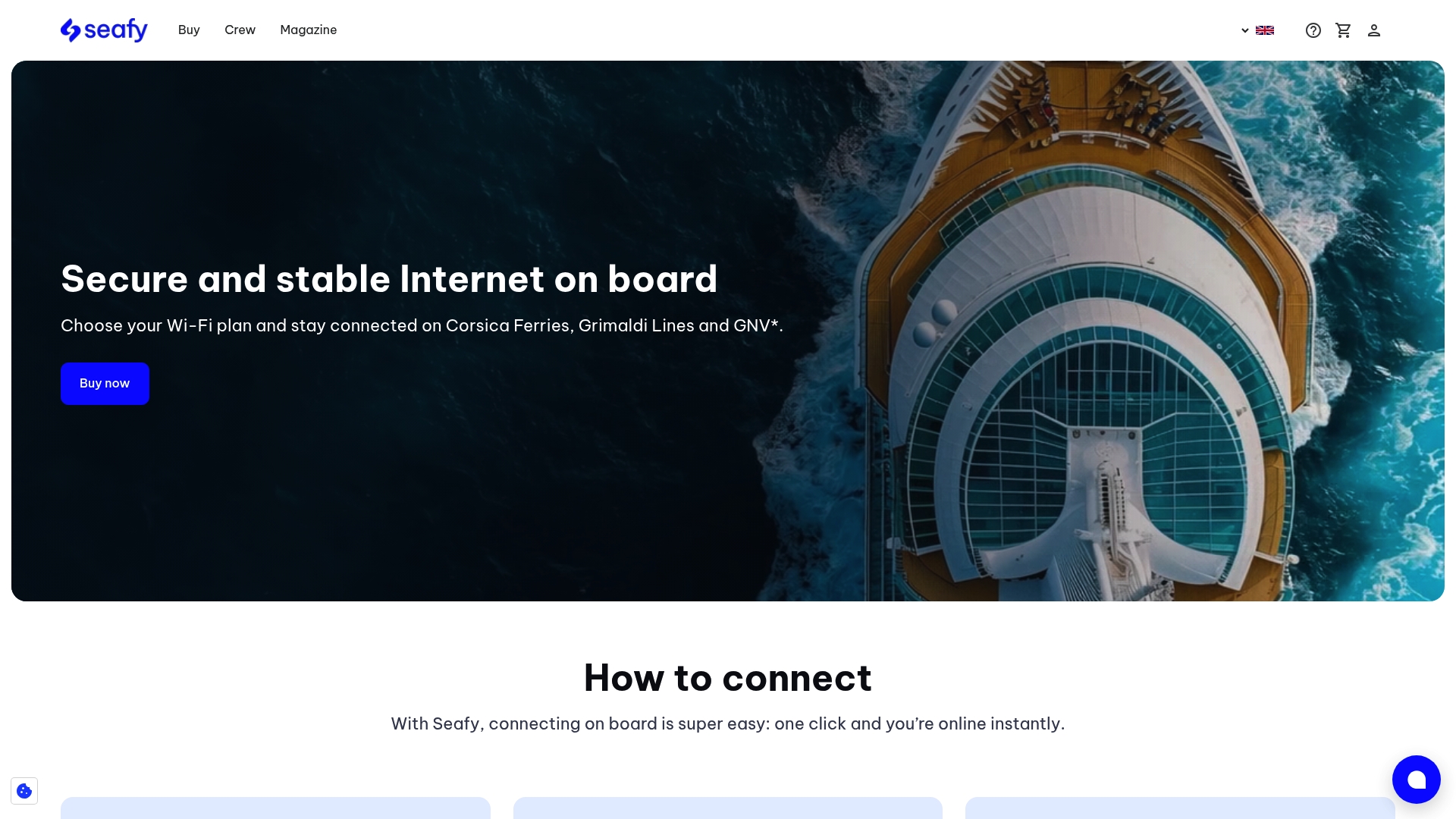
We partner with major ferry lines including Corsica Ferries, Grimaldi Lines, and GNV to provide consistently reliable internet access. Whether you’re streaming entertainment, managing remote work responsibilities, or staying connected with family, Seafy’s optimized bandwidth management ensures stable performance even during peak usage periods.
Our portal systems balance security with user-friendliness, incorporating modern authentication protocols while minimizing login friction. Explore Seafy Wi-Fi solutions to discover how we enhance onboard digital experiences, or learn about the latest WiFi hotspot onboard article innovations improving maritime connectivity.
Frequently asked questions about portal-based Wi-Fi access
What exactly is a captive portal and why do ships use them?
A captive portal is a web page that appears automatically when you connect to a Wi-Fi network, requiring authentication or acceptance of terms before granting internet access. Ships use them to manage limited satellite bandwidth fairly among passengers, control network security, and track usage for billing purposes.
How does portal-based Wi-Fi differ from automatic connection methods like OpenRoaming?
Portal-based Wi-Fi requires manual interaction with a login page each session, while OpenRoaming uses pre-configured credentials to authenticate your device automatically without any portal page appearing. OpenRoaming offers stronger security through encryption from the first connection moment, whereas traditional portals leave a brief vulnerable window before authentication completes.
What personal data does the ship’s Wi-Fi portal collect when I log in?
Most portals collect your device MAC address, connection timestamps, bandwidth usage, and any credentials you provide like email or cabin number. Some systems track browsing activity for network optimization or security monitoring. Review the terms of service displayed on the portal page to understand the specific data collection policies for your vessel.
Why does my device sometimes fail to display the captive portal page?
Devices may fail to trigger the portal due to cached DNS settings, disabled captive portal detection in your operating system, or aggressive privacy settings blocking the redirect. Try opening a web browser manually and navigating to any non-HTTPS website to force the portal to appear, or toggle Wi-Fi off and on to reset the connection.
How can I prepare my devices for smoother portal connections aboard ships?
Update your operating system and browsers before boarding, disable any VPN or proxy settings temporarily during initial connection, and ensure captive portal detection is enabled in your device settings. Have your payment method and identification ready, and check the onboard internet checklist for comprehensive preparation steps.