Tech & Wi-Fi
Fast, reliable ferry internet: Key features explained
Discover the key features of ferry internet that enhance your journey. Learn how to stay connected and enjoy seamless browsing while at sea!
04 May 2026
Fast, reliable ferry internet: Key features explained
TL;DR:
- High-quality ferry internet, enabled by advanced satellite systems like Starlink, provides reliable, high-speed, and ship-wide coverage for seamless browsing, streaming, and remote work. Such connectivity transforms the maritime experience by enhancing safety, entertainment, and productivity during crossings, making digital needs a priority onboard. Choosing ferries with modern internet solutions reflects a commitment to passenger convenience, safety, and treating travel time as valuable.
Forget everything you think you know about ferry internet. The idea that going to sea means losing your connection is quickly becoming outdated. Thanks to satellite advances like Starlink and smarter onboard network designs, passengers can now browse, stream, video call, and even work remotely while crossing the Mediterranean or any other route. This article walks you through exactly what makes ferry internet worth using, what the best features look like, and how you can make the most of your time onboard. 🌐
Table of Contents
- What defines high-quality ferry internet?
- Comparison of ferry internet features: What stands out?
- Coverage and accessibility: Where and how can you connect?
- How high-speed ferry internet transforms your experience
- Our perspective: The hidden opportunity in ferry internet adoption
- Get the best connectivity at sea with Seafy
- Frequently asked questions
Key Takeaways
| Point | Details |
|---|---|
| High speeds possible | Advanced ferries offer internet speeds up to 220 Mbps, supporting even demanding online tasks. |
| Full onboard coverage | Reliable Wi-Fi can be available in all cabins and common areas, not just select spots. |
| Free access options | Some companies provide complimentary Wi-Fi for certain mobile customers or in standard cabins. |
| Transforms travel experience | Fast, reliable ferry internet enables remote work, entertainment, and communication at sea. |
What defines high-quality ferry internet?
Good ferry internet is not just about speed. It is the combination of several key factors working together to give you a smooth, frustration-free experience on the water. When you know what to look for, you can spot the difference between a ferry that genuinely supports your digital needs and one that will leave you waiting on a spinning loading screen.
Here is what separates excellent ferry internet from the rest:
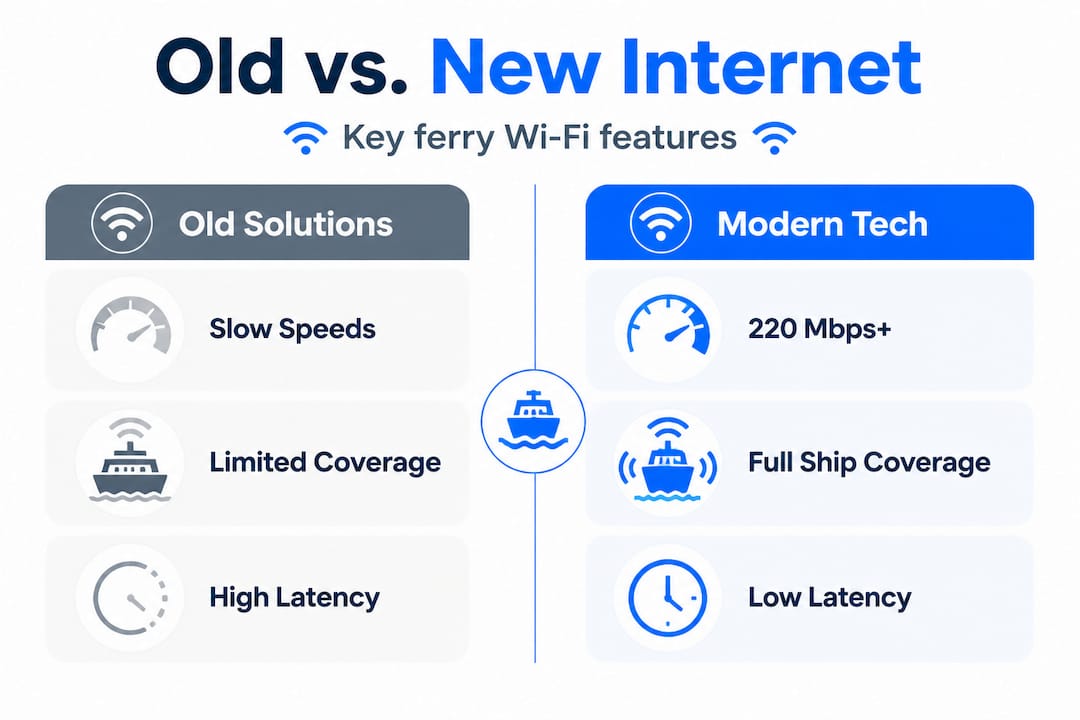
- Speed: Modern satellite systems can deliver impressive bandwidth. For example, SHK ferries offer Starlink Wi-Fi reaching up to 220 Mbps, which is faster than most home broadband connections. At that speed, video calls, file uploads, and HD streaming all become genuinely practical.
- Coverage: Quality internet means you stay connected in your cabin, in the lounge, on deck, and in shared dining areas. Spotty coverage that only works near the bridge or in one corner of the ship is not good enough for today’s traveler.
- Reliability: A stable connection throughout the voyage matters more than occasional peak speeds. Consistent uptime is the real test of any onboard network.
- Security: Passenger data should be protected through encrypted connections and secure portals. This is especially critical if you are working remotely or checking banking apps during your crossing.
- User-friendliness: Getting online should take no more than a minute. A clean, simple login portal makes the difference between a good experience and a confusing one.
Understanding the impact of onboard Wi-Fi goes beyond just personal convenience. It shapes the entire atmosphere of a voyage, from business travelers staying productive to families keeping kids entertained during a long crossing.
⚡ Speed callout: Starlink-powered ferry Wi-Fi can reach up to 220 Mbps, placing it firmly in the same league as fast home or hotel internet.
Comparison of ferry internet features: What stands out?
Now that you know the criteria, it helps to see how different types of ferry internet stack up side by side. The technology has advanced significantly, and not all ferries are running the same setup.
| Feature | Older satellite | Mobile-based (4G) | Modern Starlink/fiber |
|---|---|---|---|
| Typical speed | 1–5 Mbps | 5–20 Mbps | Up to 220 Mbps |
| Coverage area | Limited zones | Near coast only | Ship-wide, all cabins |
| Reliability at sea | Low to moderate | Drops offshore | High and consistent |
| Streaming support | Poor | Moderate | Excellent |
| Video call quality | Often unusable | Unreliable | Smooth and stable |
| Pricing model | Paid, often expensive | Bundled or paid | Varies; free for some users |
| Ease of connection | Complex login | Variable | Simple, fast portal |
The leap from older satellite solutions to modern Starlink-powered setups is dramatic. For example, SHK ferries’ 220 Mbps Starlink service sets a new benchmark for what passengers should expect. There is no reason a ferry crossing should feel like a digital dead zone when this kind of technology exists.
Understanding the broader Wi-Fi travel benefits helps you prioritize which ferries to book and what to expect when you board.
Pro Tip: When booking a ferry, check whether the route uses Starlink or an advanced satellite solution. This single factor will tell you more about your likely connection quality than any other detail in the description.
Coverage and accessibility: Where and how can you connect?
Even the fastest internet package is frustrating if you can only access it in one corner of the ship. Real accessibility means connecting from wherever you are onboard, not just in designated hotspot zones.
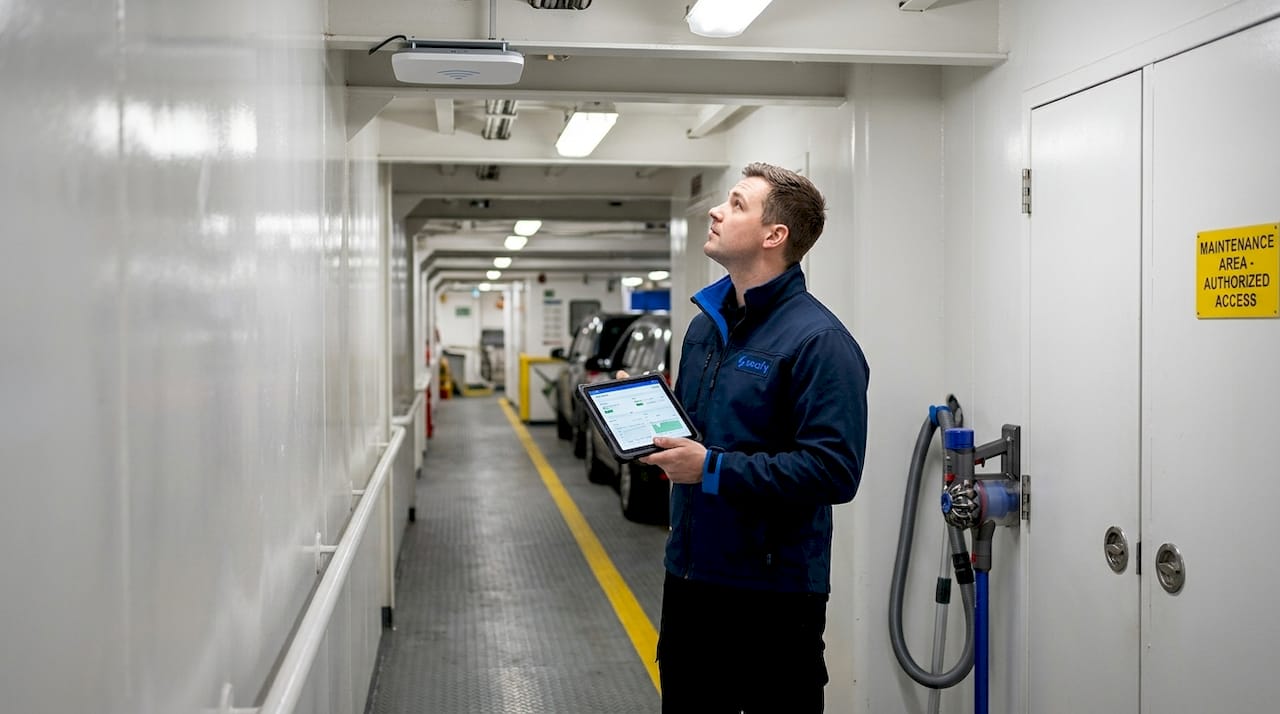
Here is a breakdown of where modern ferry networks typically provide coverage and how access policies tend to work:
| Location on board | Coverage on modern ferries | Coverage on older setups |
|---|---|---|
| Private cabins | Yes, including all cabin types | Often limited or absent |
| Lounges and seating areas | Yes, full signal | Partial, near access points |
| Open decks | Yes | Rarely supported |
| Restaurants and cafes | Yes | Sometimes |
| Crew areas | Typically separate network | Variable |
Access policies vary significantly between ferry lines:
- Free for specific users: SHK ferries provide free Wi-Fi in all cabins for au mobile carrier subscribers in Japan, a model that rewards existing customers and removes onboard friction.
- Paid packages: Many European ferry lines offer tiered Wi-Fi packages you can purchase before or during boarding, often with options for basic browsing or premium speed tiers.
- International accessibility: On well-configured networks, international passengers connect just as easily as local ones. A simple portal login is all it takes, with no SIM card or roaming required.
Getting online should feel like connecting at a hotel. You see the network, you log in or enter a code, and you are browsing within seconds. If a ferry makes this process complicated, that is a red flag for the overall quality of the network. Explore the range of Wi-Fi connectivity options available across different ferry setups to understand what suits your travel style best.
How high-speed ferry internet transforms your experience
Speed and coverage are one thing. But what does reliable onboard internet actually change about your journey? More than you might expect.
Here are the top ways high-speed ferry internet makes a real difference:
- Remote work: With speeds reaching up to 220 Mbps on Starlink-equipped ferries like SHK’s fleet, you can join video meetings, upload large files, and manage your workday without skipping a beat. The crossing becomes productive time, not downtime.
- Entertainment: Stream your favorite shows, listen to music, or catch up on podcasts during longer voyages. No need to pre-download content before you board.
- Communication: Stay in touch with family, colleagues, or clients through messaging apps and video calls. For international travelers especially, this removes the stress of being unreachable.
- Safety and navigation: Passengers can access real-time weather updates, maps, and emergency information, which adds a genuine layer of peace of mind on longer crossings.
- Travel planning: Use the crossing time to book accommodation, check itineraries, or research your destination, all in real time.
The connection between ferry Wi-Fi and productivity is well established among remote workers and frequent travelers. A ferry crossing does not have to be a pause in your day. It can be a genuinely useful chunk of time.
“A high-speed connection at sea is no longer a bonus feature. It is the baseline expectation for any traveler who relies on being online to work, stay safe, or simply feel at home.”
The transformation of travel through high-speed ferry Wi-Fi is already happening across key maritime routes, and it is reshaping what passengers consider acceptable during a voyage.
Pro Tip: To get the best performance during your crossing, connect during off-peak hours such as early morning or late evening. Fewer users on the network means more bandwidth available to you, especially for video calls or large uploads.
Our perspective: The hidden opportunity in ferry internet adoption
Here is something the travel industry does not talk about enough: reliable ferry internet is not just a convenience upgrade. It is a signal. When a ferry line invests in proper connectivity, it tells you something important about how they view their passengers.
We believe that ferry companies adopting Starlink and advanced satellite networks are not simply keeping up with technology. They are actively choosing to treat travel time as valuable time. And passengers notice. Ferries with strong, consistent internet consistently earn better reviews and higher loyalty among frequent travelers, especially remote workers and families.
There is also a safety dimension that gets overlooked. A connected passenger is an informed one. Real-time access to weather, maps, and emergency contacts is not a luxury. It is a genuine quality-of-life improvement.
The shift that Seafy represents in maritime connectivity points toward a future where going offline at sea is a choice, not a given. We encourage you to seek out ferry routes that take this seriously and, when you find a ship with poor internet, to let the operator know what you expect. Passenger feedback drives these investments more than anything else.
Get the best connectivity at sea with Seafy
You deserve a ferry crossing where staying connected is effortless, not a gamble. If everything you have read here resonates with how you travel, whether for work, leisure, or both, Seafy was built exactly for you.

Seafy’s onboard Wi-Fi platform specializes in reliable, high-speed maritime internet tailored to real passenger needs. With partnerships across leading Mediterranean ferry lines including Corsica Ferries, Grimaldi Lines, and GNV, plus integration with satellite technologies like Starlink, Seafy makes it simple to purchase, activate, and enjoy premium connectivity before you even step onboard. No complicated setup, no frustrating dead zones. Just a smooth, connected voyage from departure to arrival. 🌐
Frequently asked questions
How fast can ferry Wi-Fi really be?
Some ferries now offer up to 220 Mbps thanks to Starlink, enabling streaming, remote work, and video calls onboard at speeds comparable to a solid home broadband connection.
Is ferry internet reliable throughout the entire trip?
On ferries equipped with advanced satellite solutions like Starlink, the coverage is consistent across most areas and in all cabins, even during longer open-water crossings.
Can I get free internet on ferries?
Yes, certain operators offer complimentary access. For example, SHK ferries provide free Starlink Wi-Fi in all cabins for au mobile carrier subscribers, no additional purchase needed.
What devices can connect to ferry Wi-Fi?
Most onboard networks support smartphones, tablets, and laptops just like hotel or airport Wi-Fi, so you can connect all your usual devices without any special configuration.
Are there restrictions on streaming or video calls?
With modern high-speed ferry internet, streaming and video calls are fully possible, though some ferries may apply fair usage policies during peak hours to keep the network stable for everyone onboard.