Tech & Wi-Fi
7 Best Practices for Reliable Ferry Internet Access
Explore 7 best practices for ferry internet to ensure high-speed and stable connectivity while traveling. Learn essential tips for remote professionals.
10 February 2026
7 Best Practices for Reliable Ferry Internet Access
Getting reliable internet access while traveling on ferries can feel unpredictable and stressful, especially if you depend on connectivity for remote work or staying in touch with loved ones. Maritime environments present unique challenges for Wi-Fi coverage, bandwidth, and device compatibility that many people don’t realize until they are onboard and facing connection issues. With so much riding on your digital experience, every decision matters.
This guide breaks down practical steps to help you maximize ferry internet by matching packages to your needs, leveraging satellite-backed networks like Starlink, and preparing your devices for maritime Wi-Fi. You’ll learn how to avoid common pitfalls, stay secure, and get support when issues arise. Get ready to discover targeted strategies that will transform your ferry journeys into productive, stress-free online experiences.
Table of Contents
- Choose Wi-Fi Packages That Match Your Needs
- Access the Portal Early for Smooth Setup
- Connect to Satellite-Backed Networks Like Starlink
- Optimize Device Settings for Maritime Wi-Fi
- Schedule Work Tasks Around Peak Usage Times
- Stay Secure with Trusted Login Methods
- Use Local Support and Crew Portals for Troubleshooting
Quick Summary
| Takeaway | Explanation |
|---|---|
| 1. Choose Wi-Fi Packages Wisely | Match your internet package to your specific needs for optimal connectivity during your journey. |
| 2. Access the Portal Early | Early access to the Wi-Fi portal helps verify credentials and troubleshoot login issues before departure. |
| 3. Optimize Device Settings | Configure your device to maximize bandwidth and prevent interruptions during your maritime internet use. |
| 4. Schedule Tasks Around Peak Times | Plan your online activities during off-peak hours to improve productivity and manage bandwidth effectively. |
| 5. Stay Secure with Strong Logins | Use trusted authentication methods to protect your digital identity and secure your internet access while traveling. |
1. Choose Wi-Fi Packages That Match Your Needs
When traveling on a ferry, selecting the right internet package is more than just clicking a random option. Your digital connectivity depends on choosing a package that aligns perfectly with your specific online needs and usage patterns.
Understanding your internet requirements involves analyzing several critical factors:
- Bandwidth needs: Consider whether you’ll be streaming, video conferencing, or just checking emails
- Duration of travel: Select packages matching your ferry journey length
- Number of devices: Ensure the package supports all your connected devices
- Usage intensity: Determine if you need high-speed or standard connectivity
The Wi-Fi Alliance recommends evaluating coverage and device compatibility before making your selection. Maritime environments present unique connectivity challenges that require careful package assessment.
Professional remote workers and digital nomads should prioritize packages offering stable, consistent speeds. Look for options that provide:
- Guaranteed minimum bandwidth
- Unlimited data options
- Multiple device support
- Seamless switching between satellite and cellular networks
Matching your internet package to your specific needs ensures a smooth, productive maritime digital experience.
Pro tip: Always test your selected package during the first hour of your journey to confirm performance and request adjustments if necessary.
2. Access the Portal Early for Smooth Setup
Navigating onboard internet connectivity starts long before you step onto the ferry. Early portal access can mean the difference between a seamless digital experience and frustrating connectivity challenges.
The Washington State Ferries recommend early digital engagement to minimize potential technical hiccups. This proactive approach allows you to:
- Verify account credentials before boarding
- Test login procedures
- Understand package activation steps
- Troubleshoot potential connection issues
Most maritime Wi-Fi portals become accessible hours or even days before your actual journey. This window provides critical preparation time for travelers who depend on internet connectivity.
Specifically for remote workers and digital nomads, early portal setup offers several strategic advantages:
- Confirm exact bandwidth specifications
- Select appropriate data packages
- Understand roaming capabilities
- Save login credentials securely
Anticipating and resolving connectivity challenges before boarding transforms your maritime digital experience from stressful to smooth.
Pro tip: Create screenshots of your login credentials and package details as a backup in case of unexpected technical difficulties during your journey.
3. Connect to Satellite-Backed Networks Like Starlink
The era of unreliable maritime internet is rapidly transforming thanks to advanced satellite networks that promise unprecedented connectivity at sea. Hybrid satellite networks are revolutionizing maritime communication by providing seamless internet access far beyond traditional terrestrial limitations.
Satellite-backed networks like Starlink offer game-changing benefits for digital travelers:
- Ultra-reliable connectivity even in remote ocean regions
- High-speed internet comparable to onshore networks
- Consistent bandwidth across vast maritime territories
- Reduced connection dropouts during long journeys
Modern satellite technologies have dramatically improved maritime internet infrastructure. Unlike traditional maritime communication systems, these networks leverage:
- Advanced low-earth orbit satellites
- Multiple satellite constellation backup
- Rapid signal transmission capabilities
- Global coverage with minimal latency
The International Maritime Organization recognizes these technologies as critical for future maritime digital strategies, emphasizing their role in enhancing safety and operational efficiency.
Satellite networks represent the future of maritime connectivity transforming how we work and communicate while traveling.
Pro tip: Before your journey, verify your device’s compatibility with satellite-based maritime networks to ensure optimal connection performance.
4. Optimize Device Settings for Maritime Wi-Fi
Maritime internet connectivity demands more than just a connection. Your device settings can dramatically impact your online experience while traveling across seas.
Maritime cybersecurity guidelines recommend strategic device configurations to ensure stable and secure internet access. Understanding these nuanced settings can transform your onboard digital experience.
Key device optimization strategies include:
- Disable automatic updates to conserve bandwidth
- Enable data saver mode
- Turn off background app refresh
- Minimize cloud sync activities
- Prioritize essential communication apps
Specifically for remote professionals and digital nomads, focus on these critical device configurations:
- Reduce video streaming quality
- Close unnecessary browser tabs
- Use offline work modes
- Preload critical documents
Adaptive Network Settings are crucial for maintaining connectivity. Maritime networks fluctuate dramatically, so your device must be prepared to handle sudden changes in signal strength and latency.
Proactive device configuration is your best defense against frustrating internet interruptions at sea.
Pro tip: Create a dedicated maritime travel profile on your devices with pre-configured low-bandwidth settings to instantly optimize your internet usage.
5. Schedule Work Tasks Around Peak Usage Times
In the world of maritime internet access bandwidth is not infinite. Understanding and navigating internet usage patterns during peak hours can dramatically improve your online productivity.
Maritime Wi-Fi networks experience significant bandwidth fluctuations throughout your journey. Knowing when these fluctuations occur can help you strategically plan your digital workflow.
Peak usage periods typically occur during:
- Meal times
- Early morning work hours
- Evening entertainment windows
- Group video conference slots
- Social media browsing peaks
Strategic task scheduling for remote professionals involves:
- Downloading large files during off-peak hours
- Conducting critical video meetings in low-traffic periods
- Synchronizing cloud documents during quiet network times
- Batch processing emails when bandwidth is stable
Bandwidth Management is about working smarter not harder. Anticipating network congestion allows you to optimize your digital productivity.
Successful maritime internet users treat bandwidth like a precious resource to be carefully managed.
Pro tip: Configure your devices to automatically sync and download large files during early morning or late night hours when network traffic is minimal.
6. Stay Secure with Trusted Login Methods
Your maritime internet security starts with how you access the network. Maritime cybersecurity guidelines emphasize robust authentication practices to protect your digital identity while traveling.
Trusted login methods create multiple layers of protection against potential cyber threats:
- Multi-factor authentication
- Secure password managers
- Unique login credentials for each platform
- Encrypted login portals
- Biometric verification options
Specifically for remote professionals on maritime networks, implement these security strategies:
- Use two-step verification
- Enable device-specific authentication
- Avoid public Wi-Fi login shortcuts
- Regularly update login credentials
Network Identity Protection means being proactive about your digital security. Each login is a potential entry point for unauthorized access.
Your login credentials are the first and most critical line of defense in maritime digital environments.
Pro tip: Create a dedicated travel email account with unique passwords for maritime internet access to minimize potential security risks across your primary digital accounts.
7. Use Local Support and Crew Portals for Troubleshooting
When maritime internet problems arise technical support is your lifeline. Systematic troubleshooting approaches help resolve connectivity challenges quickly and effectively.
Crew portals offer specialized resources designed specifically for onboard network issues:
- Direct communication with technical staff
- Real-time network status updates
- Diagnostic tool access
- Step-by-step troubleshooting guides
- Immediate reporting mechanisms
For remote professionals experiencing connectivity disruptions:
- Access crew support portal immediately
- Document specific connection symptoms
- Use provided diagnostic checklists
- Request immediate technician intervention
Network Support Strategy means knowing exactly where to turn when internet problems emerge. Crew portals transform potential digital disasters into manageable situations.
Professional maritime travelers treat support portals as their first line of technical defense.
Pro tip: Screenshot your connection error messages before contacting support to provide technicians with precise diagnostic information.
Below is a comprehensive table summarizing the key strategies and considerations for ensuring optimal internet connectivity during maritime travel as discussed in the article.
| Aspect | Description | Recommendations |
|---|---|---|
| Wi-Fi Package Selection | Choosing an internet plan that matches your travel needs. | Assess bandwidth needs, duration, number of devices, and connection intensity. |
| Early Portal Access | Setting up your internet connection prior to boarding. | Verify credentials, understand activation, and troubleshoot early. |
| Satellite Networks | Using satellite-backed systems for reliable connectivity. | Leverage networks like Starlink for coverage and reduced dropouts. |
| Device Optimization | Configuring settings to maximize maritime internet efficiency. | Disable auto-updates, enable data saver, and reduce background usage. |
| Bandwidth Management | Scheduling tasks considering peak usage times. | Perform bandwidth-intensive tasks during off-peak hours. |
| Security Measures | Ensuring secure login practices for maritime connections. | Use multi-factor authentication and secure passwords. |
| Technical Support | Utilizing crew portals and support resources for troubleshooting. | Access real-time updates and request technician assistance if needed. |
End of summary table.
Elevate Your Ferry Internet Experience with Seafy
The article highlights common challenges in maintaining reliable internet access aboard ferries including selecting the right Wi-Fi packages, preparing devices, and managing bandwidth during peak usage. If you want to avoid connectivity frustrations and effortlessly stay connected while traveling across the Mediterranean or other regions, Seafy offers tailored solutions that align perfectly with these needs. Imagine stable, high-speed internet supported by satellite networks like Starlink and easy activation through a user-friendly portal designed for both remote professionals and leisure travelers.
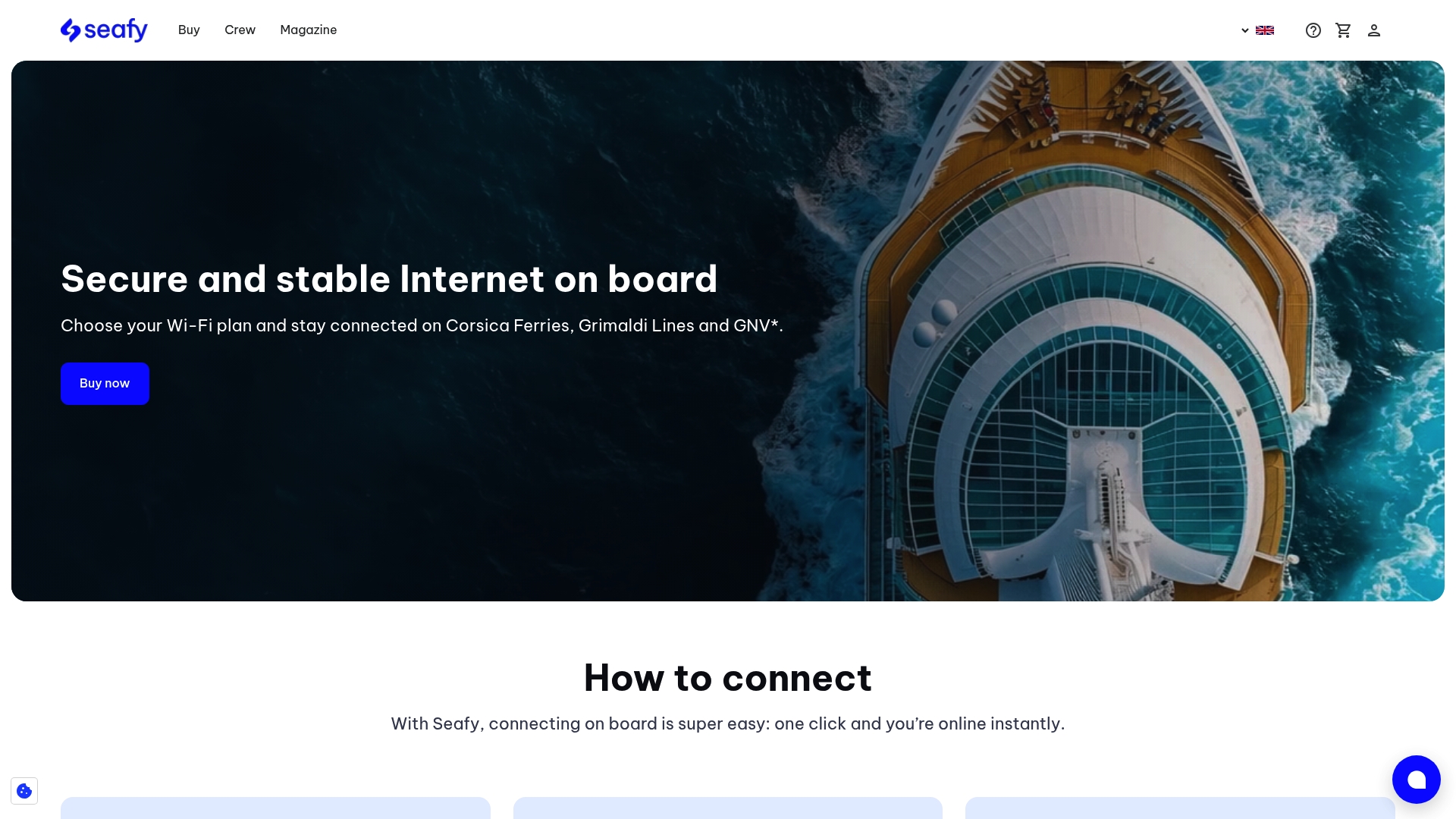
Take control of your maritime digital experience today with Seafy’s seamless onboard Wi-Fi services that provide convenience, security, and optimized performance. Don’t wait to face connectivity issues. Visit Seafy to explore packages crafted to fit your usage patterns, activate services before boarding, and access expert help via the dedicated crew portal. Reliable internet at sea is no longer a challenge but an opportunity for uninterrupted work and entertainment. Start your journey with confidence now.
Frequently Asked Questions
How can I choose the right Wi-Fi package for my ferry journey?
To select the right Wi-Fi package, assess your specific internet needs based on factors like bandwidth requirements, duration of travel, number of devices, and usage intensity. Evaluate options that meet these criteria and ensure you choose a package that guarantees stable speeds for your activities.
What should I do to set up my internet before boarding the ferry?
Access the internet portal early to verify your account credentials, test login procedures, and understand the activation steps. Completing this setup before boarding will help you address any potential connection issues and ensure a smoother experience once on the ferry.
How do satellite networks improve internet access on ferries?
Satellite networks like Starlink provide ultra-reliable internet connectivity over vast maritime territories, allowing for high-speed access even in remote areas. Confirm if your device is compatible with these networks to take full advantage of improved connectivity during your journey.
What device settings should I adjust for better ferry Wi-Fi performance?
Optimize your device settings by disabling automatic updates, enabling data saver mode, and minimizing background app activities. Making these adjustments will help conserve bandwidth and enhance your overall online experience while traveling.
When is the best time to schedule work tasks while on a ferry?
Plan your work tasks around off-peak internet usage times, such as early mornings or late nights. This strategy will help you avoid bandwidth congestion and improve your productivity by allowing you to complete critical tasks more efficiently.
How can I enhance security while using ferry Wi-Fi?
Use trusted login methods that incorporate multi-factor authentication and unique passwords for each platform to protect your digital identity. Regularly updating your login credentials and using secure password managers can further enhance your security while accessing internet services aboard the ferry.