Tech & Wi-Fi
Top 4 Satellite Internet Tools for Ships Alternatives 2026
Discover 4 reliable satellite internet tools for ships to enhance onboard connectivity for both crew and passengers with our detailed comparison.
21 May 2026
Top 4 Satellite Internet Tools for Ships Alternatives 2026
Getting reliable, high-speed maritime internet for passenger ships and fleet operations is often undermined by unpredictable coverage, rigid service tiers, and complex installation requirements. Many satellite connectivity solutions force operators into bespoke contracts, expensive hardware, or limit performance during peak demand and harsh weather. This comparison breaks down pricing, real-world reliability, and onboard portal integration across four leading maritime internet tools so you can match each platform to your route profile and crew or passenger needs without risking a misfit deployment.
Table of Contents
Seafy
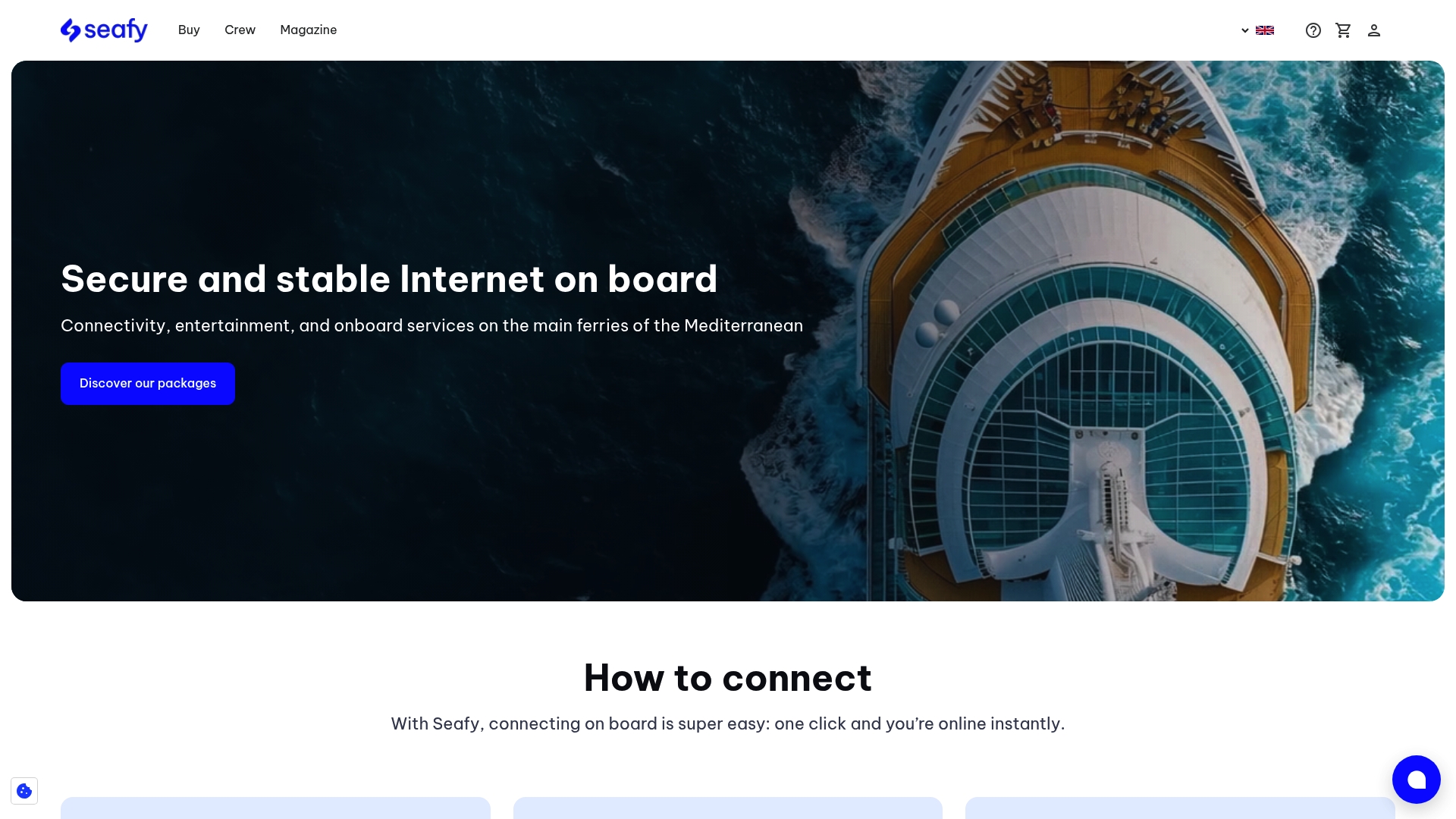
At a Glance
Packages start at €4.99 and top out at €30, with options to buy before boarding or during the voyage for a single crossing. The vendor says Seafy is powered by Starlink, which it positions as the source of faster, more stable sea connectivity.
Core Features
- Onboard Wi-Fi packages with tiered offerings from basic messaging up to high-bandwidth streaming, selectable per crossing.
- Easy connection through a portal on seafy.com and quick onboard purchase and activation flows for passengers and crew.
- Entertainment catalogue with movies, series, music, and games plus news updates and real-time ship tracking.
- Onboard shopping and a dedicated crew portal that includes special packages and a points-based loyalty system.
- Integration into ferry sales channels and partnerships with Corsica Ferries, GNV, and Grimaldi Lines for deployment on many Mediterranean routes.
Key Differentiator
What sets Seafy apart is its maritime focus combined with satellite backing. That Starlink integration lets the platform offer tiered, location-agnostic packages while keeping the purchase experience onboard or in advance via seafy.com.
Pros
- The Starlink-backed connectivity gives crew and passengers a better shot at sustained speeds compared with legacy maritime links, especially on short cross-Mediterranean hops.
- Multiple service tiers let you match spend to need; basic plans cover messaging and email while higher tiers permit streaming and heavier transfers.
- The portal and onboard activation flow reduce queue time at embarkation and let passengers buy access from their cabin or seat without a paper voucher.
- Added services such as entertainment, news, ship tracking, and onboard shopping keep passengers engaged and generate ancillary revenue for operators.
- A crew-specific package with a points system targets crew welfare and on-duty connectivity without interfering with passenger allocation.
Cons
- The platform provides limited public detail on actual sustained bandwidth and latency numbers, so heavy data users seeking terrestrial-equivalent performance may find the available metrics sparse.
Who It’s For
Passenger-facing ferry operators running Mediterranean routes who want a packaged internet and content offer, plus crew who need dedicated access and loyalty benefits. Also useful for travelers who want predictable, buyable connectivity during crossings.
Unique Value Proposition
Pre-purchase plus onboard purchase options combined with a crew loyalty program mean Seafy covers both guest convenience and internal crew needs. For operators, that translates into a single platform that handles sales, activation, and passenger services without a separate portal per vessel.
Real World Use Case
A ferry operator adds Seafy to its boarding flow. Passengers pre-buy a streaming-capable package at €12, connect through the seafy.com portal once onboard, and access movies and news for the crossing. Crew members use a dedicated package and accrue points for onboard purchases.
Pricing
Prices vary by package and length of access and range from €4.99 to €30 per passenger per crossing. Operators can offer pre-purchase through their ticket flow or enable onboard purchases via the Seafy portal.
Website: https://seafy.com
Starlink for Maritime
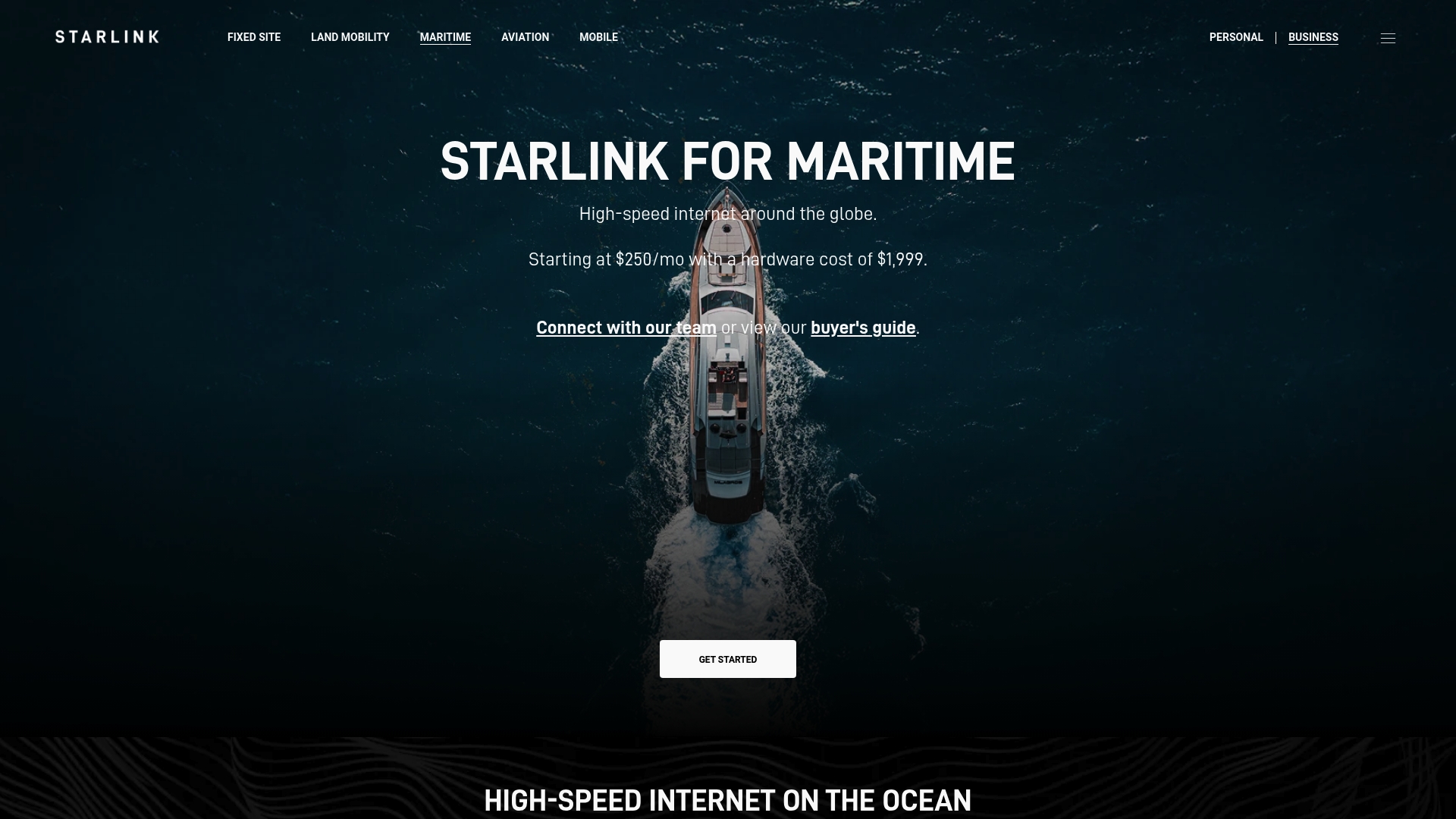
At a Glance
The vendor’s marketing materials state plans start at $250/month with a hardware cost of $1,999, a concrete upfront investment for shipowners. The vendor also claims speeds up to 400+ Mbps today with gigabit-class performance targeted for 2026, a claim that changes long term capacity planning.
Core Features
- High-speed satellite internet with the vendor’s advertised peak up to 400+ Mbps and planned upgrades toward gigabit speeds.
- Resilient hardware engineered to resist saltwater corrosion and hard weather, marketed for in motion use on commercial decks.
- Global maritime coverage including international waters, plus secure fleet management and remote monitoring with end to end encryption.
- Easy installation via Ethernet and documented mounting options for vessels without specialist rigging.
Key Differentiator
Starlink for Maritime is positioned around purpose-built hardware combined with a satellite network that supports vessels while underway. That hardware-first approach aims to reduce field failures on commercial decks and give operators simpler mounting and fleet-level remote management compared with consumer terminals.
Pros
- Durable build quality reduces maintenance visits. The ruggedized enclosure and corrosion resistance are useful on offshore and fishing vessels where salt and spray are constant.
- Wide area coverage works in international waters where terrestrial alternatives do not exist. For routing and telemetry that need continuous satellite reach, this is a real operational option.
- Fleet management tools let shore teams monitor modem health and push settings remotely, which can cut downtime for multi-ship operators.
- The speed claim above supports streaming, large file transfers, and remote backups at sea when conditions match the advertised figures.
- Installation is straightforward for IT teams: Ethernet integration and vendor documentation shorten shipyard work compared with custom VSAT installs.
Cons
- Several third-party reviews have flagged reliability issues; stability and uptime can vary under operational stress and are not uniform across routes.
- Standby mode and plan limits may frustrate vessels that need continuous, always-on links for critical systems or 24/7 operations.
- Performance depends on unobstructed sky view and satellite availability, so signal degradation can occur in congested ports, heavy weather, or near large superstructures.
When It May Not Fit
If your operation requires guaranteed carrier-level SLAs for mission critical control systems, Starlink Maritime’s reported variability and plan constraints make it a risky sole provider. It is also a poor choice for vessels that operate primarily inside cramped harbor basins with limited sky visibility.
Who It’s For
Ship operators, offshore service companies, and research institutions that need rugged satellite broadband for crew communications, remote monitoring, and data transfer. If you already use seafy.com as your onboard portal, Seafy integrates with satellite technologies like Starlink and can act as the passenger and crew-facing layer while Starlink handles the vessel link.
Real World Use Case
A merchant vessel uses Starlink for Maritime to feed live weather and route telemetry to bridge systems while running crew messaging and administrative backups below deck. When conditions match the vendor’s coverage, navigation teams receive low latency charts and shore operations see vessel health metrics in near real time.
Pricing
Pricing starts at $250/month for service with a one-time hardware purchase around $1,999. That model shifts cost toward initial hardware capex plus recurring service, which operators should model against existing VSAT contracts and expected bandwidth needs.
Website: https://starlink.com/business/maritime
Fleet Xpress
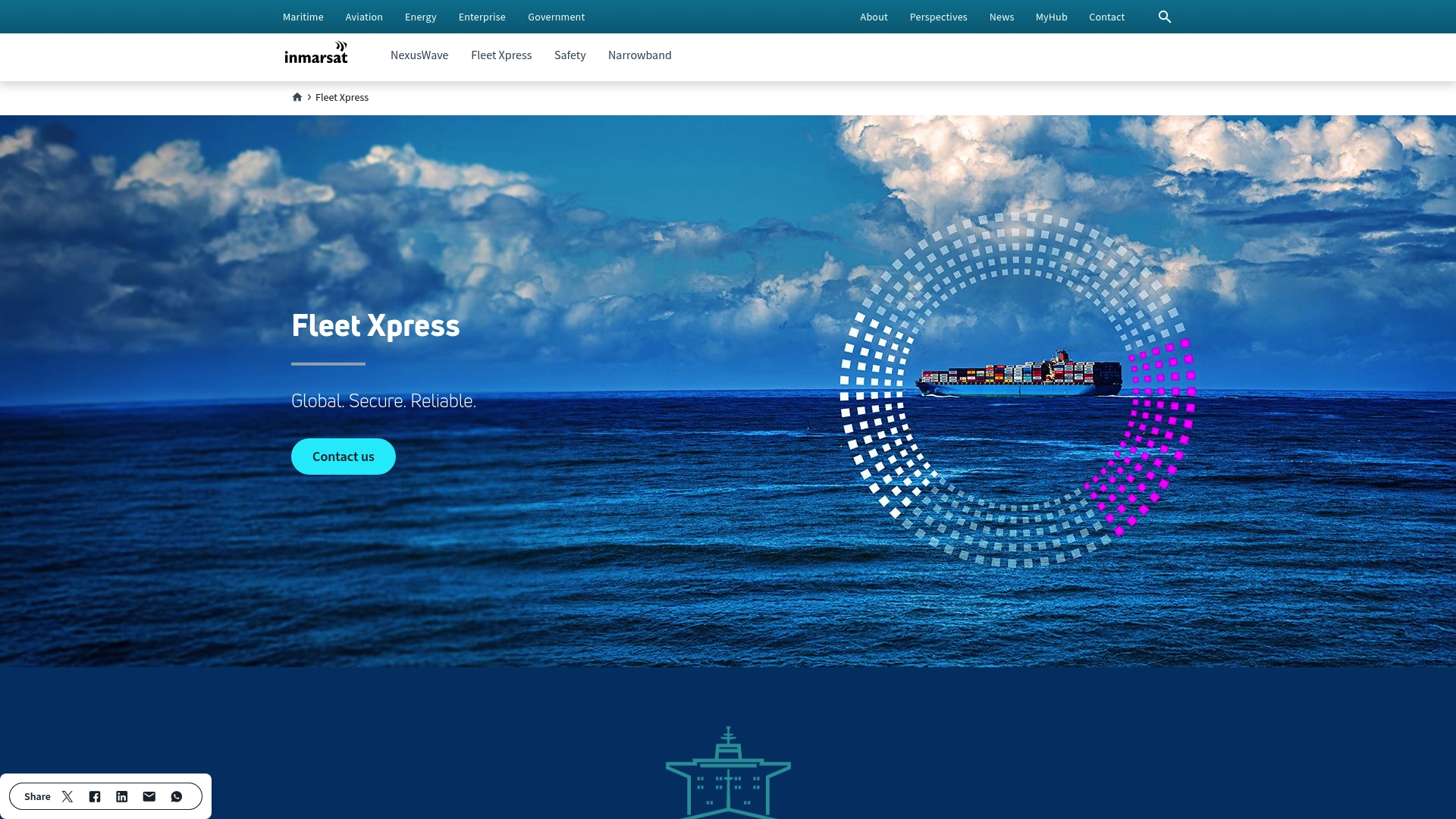
At a Glance
The vendor advertises a 99.9% uptime SLA and a mix of Ka-band and L-band satellites to keep vessels online under varying conditions. That combination is marketed for operators who need predictable availability for both operations and crew welfare.
Core Features
- Integration of Ka-band and L-band networks for capacity and fallback across different sea regions.
- Flexible service plans offering options for unlimited usage or priority data during peak windows.
- Real-time onboard management via Fleet Link, plus layered services like Fleet Care, Fleet Secure, Fleet Hotspot, and Fleet Mail.
Key Differentiator
Fleet Xpress pairs the Ka/L-band combination with fleet-level management tools, so operators see data use and connection health across vessels in one place. That visibility supports scheduled remote diagnostics and prioritized traffic rules for critical systems.
Pros
- Reliable global reach. Operators report stable broadband for navigation data, telemetry, and passenger access on major routes.
- Scales with fleet size. Service plans can shift from capped to priority or unlimited allocations as usage grows.
- Operational controls. Fleet Link and associated tools let technical teams throttle, prioritize, and monitor bandwidth per vessel.
- Crew welfare features. Dedicated crew internet and hotspot options help maintain morale and reduce churn.
- Security focus. The service bundles cybersecurity and management tools aimed at minimizing operational interruptions.
Cons
- Implementation complexity. Third-party reviews emphasize setup, antenna installation, and configuration can be time consuming and costly for some operators.
- Performance limits in extreme remoteness. During peak demand or in niche polar corridors, capacity may become constrained relative to on-route expectations.
- Not for bespoke satellite needs. Buyers requiring entirely dedicated or custom satellite payloads will likely need a different engineering approach.
When It May Not Fit
If you operate short ferry crossings with a simple passenger portal, Fleet Xpress can be more capability than you need. Seafy positions itself as a reliable, easy-to-use solution for passengers and crew on ferries and cruise ships and may suit operators focused on passenger package sales and onboard portal simplicity.
Who It’s For
Fleet Xpress targets maritime fleet operators, vessel managers, and owners who require resilient, manageable satellite broadband across multiple ships. It fits organizations that plan staged digitalization—IoT telemetry, remote diagnostics, and controlled passenger internet—across an entire fleet.
Real World Use Case
A global shipping line rolled Fleet Xpress fleetwide to standardize crew internet and enable IoT-based predictive maintenance. Fleet Link delivered central visibility for data costs and flagged vessels needing on-site antenna tuning before outages affected operations.
Pricing
Pricing is not publicly disclosed and is typically custom quoted based on vessel class, expected usage profile, and selected service tiers. Expect CAPEX for antenna hardware plus an ongoing service charge that varies by plan and priority options.
Website: https://inmarsat.com/fleet-xpress
NexusWave
At a Glance
The vendor advertises unlimited data plans combined with bonded access across Global Xpress Ka-band, LEO services, LTE, and L-band for resiliency. That package is offered as a fully managed service aiming to reproduce shore-like internet for operations, streaming, and crew use.
NexusWave targets fleet-level deployments where continuous connectivity supports navigation updates, remote monitoring, and crew welfare without per-user caps.
Core Features
- Bonded multi-network technology that aggregates Ka, LEO, LTE, and L-band to keep sessions alive when one link degrades.
- Global coverage claim with multiple redundancy layers and a planned upgrade path to ViaSat-3 satellite capacity.
- Dedicated traffic segregation for operational, business, and crew networks to reduce interference and exposure.
- Enterprise security with end-to-end encryption and firewalling tailored to vessel networks.
Key Differentiator
The vendor positions its multi-network orchestration as the primary advantage: real-time bonding and intelligent routing between satellite and terrestrial links to keep critical services online. That orchestration is the feature NexusWave leans on to reduce session drops and handoff delays.
Pros
- High concurrency support: the unlimited data claim above lets operators run IoT telemetry, crew streaming, and large file transfers without per-gig accounting.
- Managed service reduces onboard administrative load by handling routing, failover, and vendor relationships for each network layer.
- Security posture is specific: segregated networks plus encryption limit lateral risk between bridge systems and guest Wi-Fi.
- Scales for global fleets: the multi-orbit approach provides a path to expand capacity as route profiles or data needs grow.
Cons
- Some consumer reviews indicate inconsistent real-world performance, with slow or unstable sessions reported in bad weather and congested sea lanes.
- Pricing and contract terms are typically bespoke and can feel expensive compared with simpler regional or line-of-sight options.
- A portion of users report customer service and billing friction, which can prolong resolution of outages or invoicing disputes.
- Like all satellite solutions, weather sensitivity remains an operational constraint that affects throughput and latency.
When It May Not Fit
If your operation runs a small number of vessels with tight capital budgets, the installation and recurring costs for antenna hardware and managed services can outweigh the benefits. Also, if you need low-cost regional connectivity only near shore, a full bonded multi-orbit service will likely be overkill.
Who It’s For
Marine fleet managers, shipping companies, and maritime service providers that require secure, high-availability internet across long routes. Operators delivering passenger Wi-Fi through portals like Seafy and teams running distributed telemetry will find the platform engineered for fleet scale rather than single-vessel hobby use.
Real World Use Case
A global shipping fleet deployed NexusWave to centralize navigational updates, push onboard software patches, and keep crew video calls reliable during long transits. Operational data flows use the dedicated network while crew services remain isolated and monitored, reducing ticket volume to the IT team.
Pricing
Pricing is not published and is typically tailored to fleet size, route mix, and service level. Contact the vendor for a quote and an installation estimate; expect capital expenditure for antenna systems plus ongoing managed service fees.
Website: https://viasat.com/maritime/services/nexuswave
Maritime Internet Connectivity Comparison
Evaluate the following maritime internet connectivity solutions based on features, pricing, and potential limitations to identify the best option for your operational needs.
| Product | Core Feature | Key Differentiator | Pricing | Notable Limitation |
|---|---|---|---|---|
| Seafy | Tiered Wi-Fi with entertainment portal | Integrated with passenger and crew management | €4.99–€30 per crossing | Limited public data on sustained bandwidth for high-demand users |
| Starlink Maritime | High-speed satellite internet up to 400 Mbps | Ruggedized hardware for maritime usage | $250/month + $1,999 setup | Signal variability under congested or obstructed operational settings |
| Fleet Xpress | Dual Ka/L-band satellite network integration | 99.9% uptime SLA with Fleet-level management | Not disclosed | Complex installation and setup, better suited for large fleet operations |
| NexusWave | Bonded multi-network connectivity with redundancy | Scalable with ViaSat-3 coverage upgrade path | Not disclosed | High bespoke installation costs, weather sensitivity affects performance stability |
Discover Reliable Satellite Internet Tools for Ships with Seafy
Finding dependable satellite internet tools for ships can feel challenging, especially when balancing crew needs and passenger connectivity. Seafy addresses key user concerns by offering a reliable, easy-to-use platform built specifically for ferry and cruise ship routes across the Mediterranean. Whether you need seamless streaming, remote work access, or crew welfare solutions, Seafy delivers onboard Wi-Fi packages that passengers and crew can activate anytime via the simple Seafy portal.

Explore how Seafy integrates satellite technologies like Starlink to maintain consistent internet speeds at sea while providing entertainment, news updates, and a dedicated crew portal. Don’t let connectivity limitations disrupt your voyage. Visit Seafy.com now to purchase onboard internet plans and enjoy uninterrupted connectivity from embarkation to arrival.
Frequently Asked Questions
How does Seafy enhance connectivity for passengers on ferries?
Seafy provides tiered onboard Wi-Fi packages, allowing passengers to select plans that range from basic messaging to high-bandwidth streaming. This flexibility ensures that travelers can choose a package that fits their needs during their crossing. Consider using Seafy to stay connected while enjoying onboard entertainment options such as movies and games.
What is the difference between Seafy and Starlink for Maritime?
Starlink for Maritime is known for providing high-speed satellite internet with advertised speeds of up to 400+ Mbps, making it suitable for continuous, heavy data use. In contrast, Seafy is designed for passenger ease with its straightforward purchase and activation process, making it the ideal solution for travelers looking to enhance their onboard experience. If you prioritize user-friendly access to a variety of entertainment during crossings, Seafy may be your best choice.
Which platform offers better crew welfare features: Seafy or Fleet Xpress?
Fleet Xpress includes dedicated crew internet and hotspot options that cater specifically to crew welfare, ensuring reliable connectivity even under demanding conditions. Seafy, while providing crew packages, focuses more on guest convenience and loyalty benefits, which may not fully meet the needs of extensive crew operations. If crew connectivity is a top priority for your fleet, consider evaluating Fleet Xpress’s crew-specific features.
Can I use Seafy for streaming during my voyage?
Yes, Seafy supports streaming through its higher-tier Wi-Fi packages, which are designed for heavy data use like video streaming. This capability allows passengers to enjoy movies and series while sailing across the Mediterranean. Pre-purchasing a streaming-capable package can enhance your onboard entertainment experience significantly.
What are the pricing tiers for Seafy compared to its alternatives?
Pricing for Seafy ranges from €4.99 to €30 per passenger per crossing, with options available for both pre-purchase and onboard transactions. This pricing strategy offers flexibility compared to competitors, allowing you to choose a plan that best fits your travel budget. Planning your internet access in advance can help maximize your onboard experience while minimizing costs.