Tech & Wi-Fi
How Wi-Fi boosts remote work on Mediterranean ferries
Discover how modern maritime Wi-Fi technology enables productive remote work on Mediterranean ferries with speeds over 150 Mbps and proven strategies for staying connected.
10 March 2026
How Wi-Fi boosts remote work on Mediterranean ferries
Modern satellite technology now delivers speeds over 150 Mbps aboard Mediterranean ferries, transforming ships into viable remote workspaces. This connectivity revolution enables digital nomads to maintain productivity while traveling between coastal destinations. Understanding how maritime Wi-Fi works, which packages suit your needs, and how to optimize performance ensures you stay connected throughout your journey.
Table of Contents
- Technical Foundations Of Maritime Wi-Fi
- Common Misconceptions About Maritime Wi-Fi
- Emerging Technologies Enhancing Maritime Connectivity
- Comparing Maritime Wi-Fi Service Options For Remote Workers
- Optimizing Onboard Wi-Fi For Remote Work
- Practical Applications And Real-World Success Stories
- Enhance Your Remote Work Experience At Sea With Seafy
- Frequently Asked Questions
Key takeaways
| Point | Details |
|---|---|
| Maritime Wi-Fi uses specialized satellite technologies including VSAT, LTE, and Starlink to provide internet connectivity at sea. | |
| Starlink systems deliver speeds exceeding 150 Mbps with latency as low as 30-50 ms, vastly outperforming traditional options. | |
| Common myths about unreliable maritime internet are outdated as modern infrastructure dramatically improves connection stability. | |
| Comparing Wi-Fi packages by cost, speed, and latency helps remote workers select plans matching their workload requirements. | |
| Strategic timing of tasks and limiting bandwidth-heavy applications maximizes onboard connectivity performance. |
Technical foundations of maritime Wi-Fi
Maritime internet relies on satellite communication systems that beam signals between ships and orbiting satellites. Three main technologies dominate this space: traditional VSAT systems, LTE networks near coastlines, and emerging low-earth orbit options like Starlink. Each system operates differently but shares the goal of maintaining connectivity despite constant vessel movement.
VSAT systems connect to geostationary satellites positioned 35,786 kilometers above Earth’s equator. These satellites remain fixed relative to ground stations, providing consistent coverage but introducing significant latency due to the vast signal travel distance. LTE systems leverage coastal cell towers, offering faster speeds within range but limited coverage once ships move beyond shoreline proximity.
Starlink maritime offers speeds over 150 Mbps and latency as low as 30-50 ms by using satellites orbiting just 550 kilometers above Earth. This proximity dramatically reduces signal delay while multiple satellites ensure continuous coverage as vessels traverse Mediterranean routes. The technology represents a quantum leap for remote workers requiring responsive connections.
Several environmental factors influence signal quality regardless of technology:
- Ship movement and orientation affect antenna alignment with satellites
- Heavy rain, fog, or storms can temporarily degrade signal strength
- Sea state and vessel pitch may cause brief connection interruptions
- Geographic location impacts satellite visibility and network congestion
Typical bandwidth ranges from 2-20 Mbps on older VSAT systems to 150+ Mbps on modern Starlink installations across Mediterranean maritime routes. Latency varies from 600-1000 milliseconds on traditional satellites to just 30-50 milliseconds on low-earth orbit networks. These metrics directly impact your ability to conduct video conferences, transfer files, or access cloud applications while traveling.
Understanding Wi-Fi connectivity at sea helps you set realistic expectations and choose appropriate technology for your remote work needs.
Common misconceptions about maritime Wi-Fi
Many remote workers believe maritime Wi-Fi remains too slow for professional video conferencing. This assumption stems from experiences with older satellite systems that struggled to support real-time communication. Modern installations have reversed this narrative entirely.
Another persistent myth suggests Wi-Fi outages at sea occur constantly and unpredictably, making scheduled work impossible. While brief interruptions do happen, they’re far less frequent than most people anticipate. Advanced satellite networks and redundant systems have dramatically improved service continuity.
Reality paints a different picture. 70% of users reported satisfactory video call quality on upgraded Mediterranean ferry routes equipped with newer technology. These systems support standard business applications including video meetings, cloud file access, and email communication without major issues.
The transformation comes from partnerships between ferry operators and satellite providers deploying cutting-edge infrastructure. Vessels now carry multiple connectivity options, automatically switching between systems to maintain service during temporary disruptions. This redundancy creates a more stable experience than single-source systems offered previously.
Several factors contribute to improved reliability:
- Multiple satellite networks provide backup connectivity options
- Automated switching minimizes user-experienced downtime
- Better antenna systems track satellites more accurately during ship movement
- Increased bandwidth allocation reduces congestion during peak usage periods
Pro Tip: Check your ferry operator’s specific technology before booking to understand what is maritime Wi-Fi capabilities on your route. Infrastructure varies significantly between vessels even within the same fleet.
Managing expectations remains important. Perfect connectivity comparable to land-based fiber connections isn’t realistic, but modern maritime Wi-Fi now supports most professional remote work requirements effectively.
Emerging technologies enhancing maritime connectivity
The shift from traditional VSAT to Starlink technology represents the most significant advancement in maritime internet during the past decade. Traditional systems rely on geostationary satellites that maintain fixed positions relative to Earth, requiring large dish antennas and accepting high latency as unavoidable.
Starlink’s low-earth orbit constellation operates fundamentally differently. Thousands of satellites circle the planet at much lower altitudes, creating a mesh network that provides coverage as satellites pass overhead. Phased-array antennas electronically track these moving satellites without mechanical steering, reducing equipment complexity while improving performance.
Seafy’s integration of Starlink technology aboard Mediterranean ferries demonstrates this evolution in practice. The platform enables passengers to purchase and activate high-speed Wi-Fi packages that leverage these advanced satellite networks. This partnership between maritime operators and satellite providers creates infrastructure that genuinely supports remote work scenarios.
Starlink’s capabilities provide higher bandwidth and lower latency compared to traditional VSAT systems, fundamentally changing what’s possible for remote workers at sea.
Ferry operators deploy improved Wi-Fi through strategic partnerships and infrastructure investments:
- Installing Starlink terminals alongside existing VSAT systems for redundancy
- Upgrading onboard network equipment to handle increased bandwidth
- Implementing intelligent routing that selects optimal connectivity at any moment
- Creating dedicated bandwidth pools for different user tiers and applications
These improvements matter because remote work depends on responsive, stable connections. Video conferencing requires consistent low latency to avoid frozen screens and audio delays. Cloud applications need sufficient bandwidth to load documents and sync changes in real time. File transfers demand both speed and connection stability to complete without interruption.
The performance difference becomes immediately apparent in daily usage. A video call that stutters and disconnects on traditional satellite systems runs smoothly on Starlink-enabled connections. Large file uploads that previously required overnight completion now finish in minutes.

Understanding why high-speed internet matters on ferries helps you appreciate these technological leaps and select services that match your connectivity requirements.
Comparing maritime Wi-Fi service options for remote workers
Choosing the right Wi-Fi package requires understanding tradeoffs between cost, performance, and your specific workload needs. Mediterranean ferry operators now offer multiple tiers ranging from basic email access to premium packages supporting bandwidth-intensive applications.
| Feature | Traditional VSAT | Starlink Maritime |
|---|---|---|
| Typical Speed | 2-20 Mbps | 150+ Mbps |
| Latency | 600-1000 ms | 30-50 ms |
| Relative Cost | Lower | Higher |
| Coverage Stability | Moderate | High |
| Video Call Quality | Poor to Fair | Good to Excellent |

Traditional VSAT packages cost less but impose significant limitations. Download speeds rarely exceed 20 Mbps, making large file transfers painfully slow. High latency creates noticeable delays in video calls and cloud application responsiveness. These packages suit basic email checking and web browsing but struggle with demanding professional tasks.
Starlink maritime packages offer speeds exceeding 150 Mbps with latencies around 30-50 milliseconds, approaching land-based broadband performance. This capability supports simultaneous video conferencing, cloud document editing, and file synchronization without major bottlenecks. The premium pricing reflects the superior infrastructure and satellite network costs.
Several Mediterranean ferry operators have upgraded their Wi-Fi offerings:
- Corsica Ferries provides Starlink-enabled packages through Seafy on select routes
- Grimaldi Lines offers tiered plans with premium options for business travelers
- GNV operates upgraded systems on newer vessels with improved bandwidth allocation
- Smaller regional operators increasingly partner with satellite providers for better service
From a remote worker perspective, package selection depends on your daily tasks and budget constraints. Light users checking emails and browsing websites function adequately on basic packages. Professional requirements like video meetings, large file transfers, or accessing bandwidth-heavy applications justify premium packages despite higher costs.
Pro Tip: Calculate your typical daily data usage and application requirements before selecting a package. Upgrading mid-journey often costs more than purchasing appropriate capacity initially.
Consider Wi-Fi coverage on Mediterranean ferries when planning multi-leg journeys, as coverage and package availability vary by route and operator. Understanding these differences helps you maintain productivity across different vessels and itineraries.
Some packages include data caps while others offer unlimited usage within speed tiers. Read terms carefully, as throttling policies after reaching usage thresholds can dramatically impact performance. Time-limited packages (hourly, daily, voyage-length) also require matching your purchase to trip duration.
Troubleshooting Wi-Fi connection onboard becomes easier when you understand your package capabilities and limitations from the start.
Optimizing onboard Wi-Fi for remote work
Maximizing maritime Wi-Fi performance requires strategic planning and smart usage habits. Even premium packages face environmental challenges that land-based connections never encounter. Implementing best practices minimizes frustration and maintains productivity throughout your journey.
Follow these steps to optimize your onboard connectivity:
- Research your ferry’s specific technology before departure to set realistic expectations
- Purchase an appropriate Wi-Fi package matching your workload requirements and budget
- Schedule bandwidth-intensive tasks for periods when connectivity typically performs best
- Monitor weather forecasts as storms significantly impact satellite signal quality
- Limit simultaneous high-bandwidth applications to avoid overwhelming available capacity
Practical strategies enhance reliability and performance:
- Connect via ethernet cable if cabin access points offer wired options for lower latency
- Close background applications consuming bandwidth unnecessarily (cloud sync, updates, streaming)
- Download required files before departure rather than relying entirely on onboard access
- Use mobile apps optimized for low-bandwidth environments when possible
- Position yourself near access points for stronger signal when using wireless connections
- Enable data compression in browsers and applications to reduce bandwidth consumption
Pro Tip: Download the ferry operator’s connectivity app to receive real-time alerts about Wi-Fi status and plan your work schedule around optimal connection windows.
Outages occur roughly 1-3 times per hour depending on route conditions and technology. These interruptions typically last seconds to a few minutes as systems switch between satellites or weather briefly interferes with signals. Preparing for these moments prevents lost work and reduces stress.
Automatic reconnection settings help maintain productivity during brief outages. Configure applications to resume interrupted transfers and enable auto-save features in documents to prevent data loss. Cloud-based tools generally handle temporary disconnections gracefully, syncing changes once connectivity returns.
Timing matters significantly for Mediterranean routes. Morning departures often experience lighter network congestion as fewer passengers actively use Wi-Fi. Late evening periods see reduced usage after business hours conclude. Scheduling important video calls or large uploads during these windows improves success rates.
Understanding troubleshooting Wi-Fi connection onboard techniques empowers you to resolve common issues independently, maintaining productivity without relying on crew assistance.
Practical applications and real-world success stories
Remote workers across Mediterranean routes share increasingly positive experiences as ferry operators upgrade infrastructure. These real-world examples demonstrate how reliable maritime Wi-Fi transforms travel into productive work time rather than connectivity dead zones.
Testimonials highlight specific improvements:
- Software developers successfully attend daily standup meetings via video while crossing from Italy to Greece
- Digital marketing consultants manage client campaigns and coordinate with teams during multi-day cruise segments
- Freelance writers research articles and submit completed work without interruption on overnight ferry journeys
- Business consultants access cloud-based presentation materials and conduct client video calls from ship lounges
Corsica Ferries’ integration of Seafy Starlink improved speeds and reduced downtime significantly across their Mediterranean fleet. Passengers report average speeds exceeding 100 Mbps during optimal conditions, with video conferencing quality matching land-based broadband. Connection stability improved dramatically, with fewer interruptions disrupting work sessions.
Measurable performance gains include:
- Average download speeds increasing from 8 Mbps to 120+ Mbps on upgraded vessels
- Latency dropping from 700 milliseconds to under 50 milliseconds on Starlink systems
- Connection uptime improving from 85% to 96% through redundant satellite networks
- User satisfaction scores rising 40% following infrastructure modernization
These improvements enable genuine remote work freedom. Digital nomads no longer sacrifice productivity during Mediterranean ferry travel. The ability to maintain professional responsibilities while enjoying scenic maritime journeys appeals to growing numbers of location-independent workers.
Understanding how internet at sea transforms remote work efficiency reveals possibilities for combining travel with career advancement. Modern maritime connectivity removes traditional barriers, creating opportunities previous generations of remote workers never experienced.
Enhance your remote work experience at sea with Seafy
Seafy’s Starlink-enabled Wi-Fi service specifically addresses remote worker needs on Mediterranean ferry routes. The platform simplifies purchasing and activating high-speed internet packages designed for professional applications requiring reliable, responsive connections.
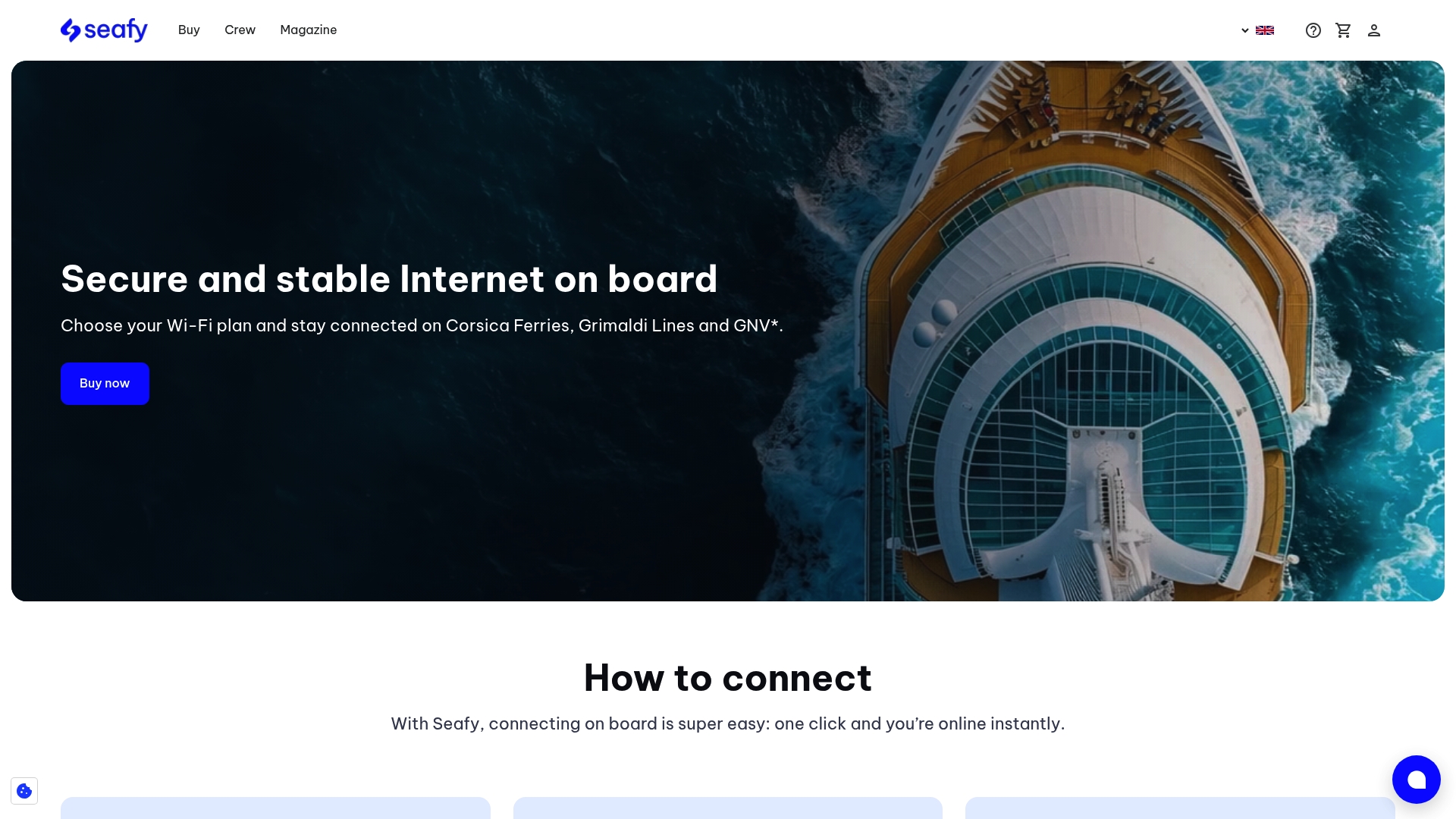
Easy package selection through Seafy’s portal lets you choose appropriate bandwidth and duration before boarding. Activation takes minutes, getting you online quickly without complicated setup procedures. The service leverages cutting-edge satellite technology to deliver speeds and latency supporting video conferencing, cloud applications, and file transfers.
Explore Wi-Fi on board with Seafy to discover packages matching your connectivity requirements and budget. Transparent pricing and clear performance specifications help you make informed decisions about your maritime internet needs.
Pro Tip: Using Seafy ensures access to the fastest, most stable connections available on Mediterranean ferries, maximizing your productivity during travel.
Learn more about Wi-Fi coverage on Mediterranean ferries and review troubleshooting Wi-Fi connection onboard resources to optimize your experience before departure.
Frequently asked questions
Is maritime Wi-Fi reliable enough for professional video calls?
Yes, Starlink-enabled services and newer satellite technology allow many remote workers to maintain stable video calls on Mediterranean ferries. However, occasional brief interruptions can occur due to weather conditions or satellite handoffs. Planning important calls during optimal connectivity windows and using applications with automatic reconnection improves success rates.
How can I improve Wi-Fi performance during a ferry crossing?
Use wired ethernet connections when available and limit simultaneous high-bandwidth applications like video streaming or large downloads. Schedule heavy tasks during known periods of stronger signal, typically morning departures or late evening hours. Monitor onboard connectivity alerts through ferry operator apps to adjust your work plans proactively around temporary service disruptions.
What are the main differences between VSAT and Starlink Wi-Fi packages?
VSAT systems offer lower speeds of 2-20 Mbps with higher latency of 600-1000 milliseconds at lower price points. Starlink provides significantly higher speeds exceeding 150 Mbps with latency as low as 30-50 milliseconds, but packages typically cost more. The performance difference dramatically impacts video conferencing quality and cloud application responsiveness.
Do all Mediterranean ferries offer high-speed internet options?
Not all vessels provide upgraded connectivity, as infrastructure modernization varies by operator and route. Major carriers like Corsica Ferries, Grimaldi Lines, and GNV increasingly offer premium Wi-Fi packages on newer ships and popular routes. Checking specific vessel capabilities before booking ensures you select sailings with connectivity matching your remote work requirements.