Tech & Wi-Fi
Wi-Fi Coverage on Mediterranean Ferries: What Remote Workers Need
Wi-Fi coverage on Mediterranean ferries—explore service types, onboard tech, satellite integration, and costs for digital nomads and remote workers.
30 January 2026
Wi-Fi Coverage on Mediterranean Ferries: What Remote Workers Need
Struggling to keep a video call from dropping while crossing the blue stretch between Greece and Italy can be a major headache for remote workers and digital nomads. Reliable high-speed Wi-Fi is now more available on Mediterranean ferries thanks to advanced hybrid satellite systems that switch smoothly between satellite and cellular networks. This introduction gives you practical insights into how modern ferry Wi-Fi connects you to your work and entertainment, no matter where your ship sails.
Table of Contents
- Wi-Fi on Mediterranean Ferries Explained
- Types of Onboard Connectivity Solutions
- How Satellite Integration Ensures Coverage
- Choosing the Right Ferry Wi-Fi Package
- Costs, Security, and Common Pitfalls
Key Takeaways
| Point | Details |
|---|---|
| Reliable Wi-Fi is Essential for Travelers | High-speed, consistent Wi-Fi is crucial for remote workers and digital nomads on Mediterranean ferries. |
| Advanced Technology Enhances Connectivity | Hybrid network systems integrate satellite and cellular technologies for stable internet access. |
| Choosing the Right Package is Important | Evaluate your bandwidth, duration, and compatibility needs to select the appropriate Wi-Fi package. |
| Security and Cost Awareness are Key | Understand pricing structures and prioritize cybersecurity measures to protect sensitive information. |
Wi-Fi on Mediterranean Ferries Explained
Navigating the digital landscape while traveling across Mediterranean waters demands reliable internet connectivity. Remote workers and digital nomads require consistent, high-speed Wi-Fi that enables seamless communication, file transfers, and online collaboration during maritime journeys. Digital transformation initiatives are progressively improving maritime connectivity across the region.
Modern Mediterranean ferry Wi-Fi services have significantly evolved, offering travelers more robust internet options compared to past decades. These onboard networks now leverage advanced satellite technologies to provide stable internet access, even while traversing open waters. The key features of contemporary maritime Wi-Fi include:
- High-speed connectivity enabling video conferencing and large file uploads
- Consistent signal strength across different maritime routes
- Flexible purchase options for short or extended internet packages
- Multiple device support for smartphones, laptops, and tablets
The technical infrastructure behind maritime Wi-Fi involves complex satellite communication systems that bridge internet connectivity between vessels and global networks. These systems utilize advanced satellite technologies, which dynamically adjust signal transmission to maintain stable internet access despite maritime movement and challenging environmental conditions.
Satellite communication represents the backbone of maritime internet services, with providers strategically positioning orbital networks to ensure comprehensive coverage across Mediterranean routes. This technological approach allows ferry passengers to maintain productive digital workflows while enjoying scenic maritime travel.
Pro tip: Always purchase your Wi-Fi package in advance and test your connection immediately after boarding to resolve any potential technical issues.
Types of Onboard Connectivity Solutions
Remote workers traversing Mediterranean ferry routes have multiple connectivity solutions designed to support their digital needs. Advanced Wi-Fi systems now integrate sophisticated hybrid technologies that ensure reliable internet access throughout maritime journeys.
The primary types of onboard connectivity solutions can be categorized into several distinct technological approaches:
- Satellite Network Connectivity: Leveraging global satellite systems for broad coverage
- Cellular Network Bridging: Utilizing coastal cellular towers during nearshore routes
- Hybrid Network Systems: Dynamically switching between multiple connection types
- Dedicated Maritime Broadband: Specialized high-speed internet infrastructure
Hybrid network systems represent the most advanced connectivity solution for maritime internet access. These sophisticated systems seamlessly transition between different network types, ensuring passengers maintain consistent internet connectivity even when moving through varying signal environments. By combining satellite, cellular, and dedicated maritime broadband technologies, these networks can provide remarkably stable internet experiences.
The technical complexity of these systems involves intricate signal routing mechanisms that prioritize connection quality and speed. Satellite communication plays a crucial role, with providers strategically positioning orbital networks to maximize coverage across Mediterranean maritime routes. This approach allows digital professionals to maintain productive workflows while enjoying scenic sea travel.
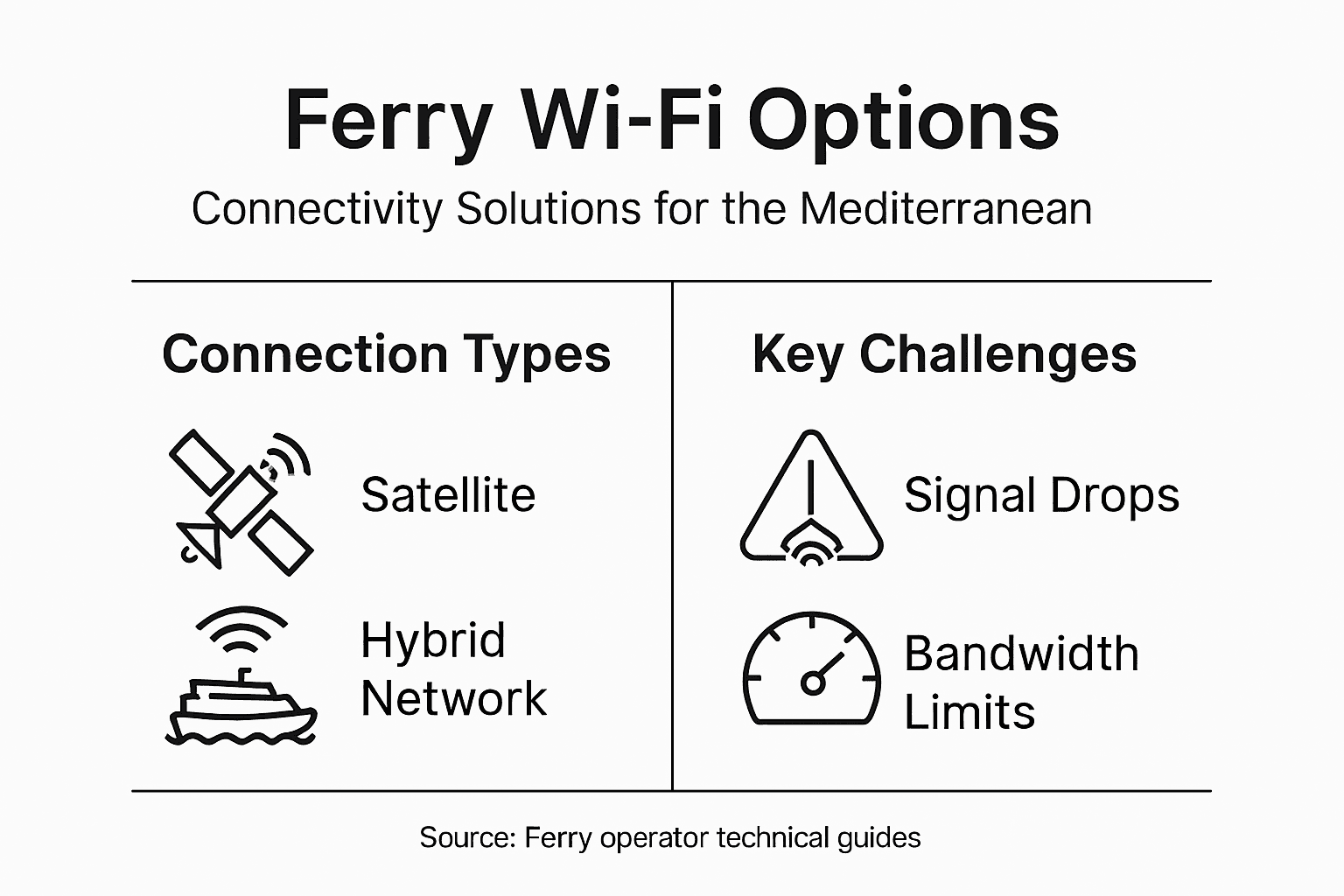
Here is a comparison of the main onboard connectivity solutions for Mediterranean ferries:
| Connectivity Solution | Strengths | Typical Limitations |
|---|---|---|
| Satellite Network | Broad maritime coverage | Higher latency in stormy weather |
| Cellular Network Bridging | Fast near coastlines | Signal loss far from shore |
| Hybrid Network Systems | Seamless switching between networks | Costlier equipment and maintenance |
| Dedicated Maritime Broadband | High-speed, stable onboard access | Limited route availability |
Pro tip: Always verify your device’s compatibility with maritime Wi-Fi systems and consider purchasing a backup mobile data plan for critical work communications.
How Satellite Integration Ensures Coverage
Satellite technology has revolutionized internet connectivity for remote workers traveling across Mediterranean maritime routes. Hybrid satellite communication systems now combine multiple network technologies to guarantee consistent and reliable internet access throughout sea journeys.
The primary mechanisms of satellite integration for maritime connectivity include:
- Low Earth Orbit (LEO) Satellites: Providing low-latency, high-speed connections
- Geostationary Satellite Networks: Offering broader geographical coverage
- Cellular Network Bridging: Utilizing coastal communication infrastructure
- Automatic Network Switching: Dynamically selecting optimal connection paths
Modern maritime satellite systems employ sophisticated network orchestration techniques that seamlessly transition between different connectivity sources. These intelligent systems continuously analyze signal strength, latency, and available bandwidth to maintain an uninterrupted internet experience. By integrating multiple satellite orbits and terrestrial networks, ferry passengers can expect reliable digital connectivity even in remote maritime environments.
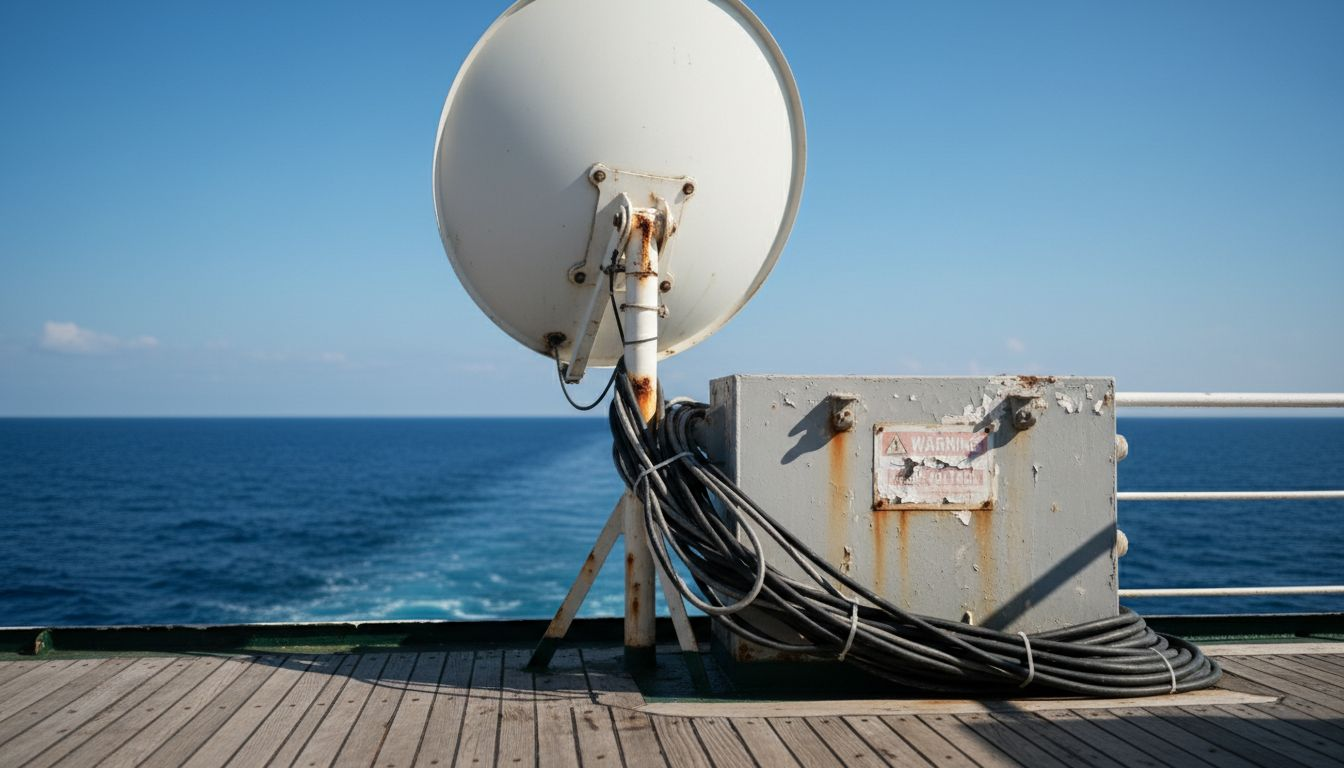
The technical complexity of these satellite integration strategies involves intricate routing algorithms that prioritize connection quality and speed. Satellite connectivity technologies leverage a multi-layered approach, combining LEO satellites’ rapid data transmission with geostationary satellites’ extensive coverage areas. This approach ensures digital professionals can maintain productive workflows regardless of their maritime location.
Pro tip: Invest in a mobile hotspot with multi-network support as a backup to complement onboard satellite Wi-Fi systems during critical work communications.
Choosing the Right Ferry Wi-Fi Package
Remote workers planning maritime travel must carefully evaluate their internet connectivity needs before selecting an onboard Wi-Fi package. Essential ferry Wi-Fi planning involves understanding your specific digital requirements and matching them with appropriate connectivity options.
Key considerations for selecting the ideal ferry Wi-Fi package include:
- Bandwidth Requirements: Assessing your expected data consumption
- Work Duration: Matching package length to your travel timeline
- Connection Speed: Evaluating performance for professional tasks
- Device Compatibility: Ensuring support for multiple devices
- Price Point: Comparing cost against provided features
Digital professionals should strategically analyze their internet performance needs before purchasing an onboard package. Some packages offer tiered options designed for different usage scenarios, ranging from basic browsing to high-intensity professional work requiring video conferencing and large file transfers. Careful package selection can prevent unexpected connectivity interruptions and ensure smooth professional productivity during maritime journeys.
The most effective Wi-Fi packages provide flexible purchasing options with transparent pricing and clear performance specifications. Modern maritime connectivity solutions now offer granular control, allowing travelers to select packages based on precise data requirements, connection speed, and duration of access. This approach enables remote workers to customize their internet experience according to their specific professional and personal communication needs.
Pro tip: Always purchase your Wi-Fi package in advance and test the connection immediately after boarding to identify and resolve any potential technical issues.
Costs, Security, and Common Pitfalls
Navigating the complex landscape of ferry Wi-Fi requires understanding potential challenges and strategic considerations. Maritime network security has become increasingly sophisticated to protect digital professionals during their maritime journeys.
Key financial and security considerations include:
- Pricing Structures: Variable rates based on data usage and duration
- Cybersecurity Risks: Potential vulnerabilities on public maritime networks
- Bandwidth Limitations: Shared connection constraints
- Technical Performance: Fluctuating signal quality
- Payment Flexibility: Options accommodating different usage patterns
Digital professionals must conduct thorough risk assessments when selecting onboard connectivity solutions. The most vulnerable aspects of maritime internet access involve potential security breaches and unpredictable network performance. Public Wi-Fi networks inherently present challenges such as potential data interception, limited encryption, and inconsistent connection speeds that can compromise professional productivity.
Most ferry Wi-Fi providers now implement advanced security protocols to mitigate potential risks. These include robust encryption methods, virtual private network (VPN) compatibility, and dynamic bandwidth management strategies. Travelers should prioritize providers offering transparent security practices, clear performance specifications, and reliable customer support to ensure a seamless digital experience during maritime travel.
This summary outlines common ferry Wi-Fi costs, risks, and provider security features:
| Aspect | Details | Best Practice |
|---|---|---|
| Cost Variability | Priced by usage, duration, and speed tier | Compare plans before purchase |
| Security Measures | Includes encryption and VPN compatibility | Use a personal VPN when possible |
| Network Risks | Public Wi-Fi vulnerable to interception | Avoid sensitive transactions |
| Payment Options | Supports credit card and prepaid options | Choose flexible refund policies |
Pro tip: Always use a reputable VPN service and avoid accessing sensitive financial or professional information on public maritime networks.
Elevate Your Mediterranean Ferry Experience with Reliable High-Speed Wi-Fi
Traveling across the Mediterranean while working remotely can be challenging if your onboard internet is inconsistent or slow. This article highlights pain points such as fluctuating connectivity, security risks, and the complexity of choosing the right Wi-Fi package. Seafy understands these challenges and offers solutions designed to keep remote workers connected with stable, high-speed internet powered by cutting-edge satellite technologies like Starlink. Our platform ensures seamless access for multiple devices while prioritizing cybersecurity so you can focus on your work without interruptions or worries about data safety.
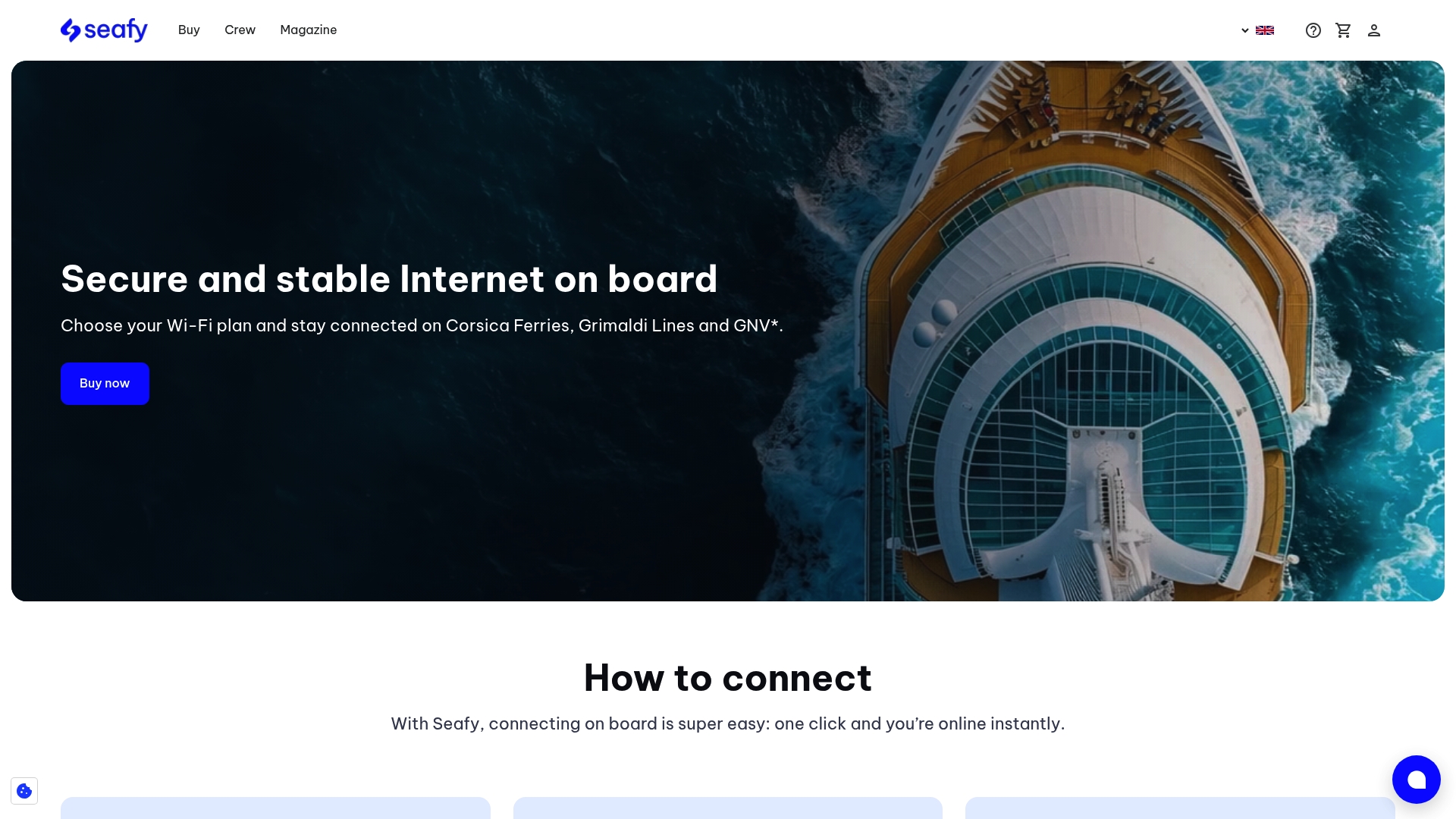
Discover how Seafy partners with leading ferry lines such as Corsica Ferries and Grimaldi Lines to deliver an exceptional onboard digital experience. Don’t risk your productivity to unreliable connections. Visit Seafy today to explore Wi-Fi packages tailored to your needs and start your maritime journey fully connected. Take control of your remote work life at sea and ensure smooth, secure internet access during every leg of your Mediterranean voyage.
Frequently Asked Questions
What types of onboard Wi-Fi connectivity solutions are available on Mediterranean ferries?
On Mediterranean ferries, you can find several types of onboard Wi-Fi solutions, including satellite network connectivity, cellular network bridging for nearshore routes, hybrid network systems that switch between different connections, and dedicated maritime broadband for high-speed access.
How does satellite technology improve Wi-Fi coverage on Mediterranean ferries?
Satellite technology enhances Wi-Fi coverage by utilizing low Earth orbit (LEO) satellites for low-latency connections and geostationary satellite networks for wide geographical coverage, ensuring reliable internet access even in remote maritime environments.
What factors should I consider when selecting a ferry Wi-Fi package for remote work?
When selecting a ferry Wi-Fi package, consider factors such as bandwidth requirements, duration of your travel, required connection speed for tasks like video conferencing, device compatibility, and the overall price point of the package.
What are the common security risks associated with using Wi-Fi on Mediterranean ferries?
Common security risks include potential data interception on public networks, limited encryption, and fluctuating signal quality. It’s advisable to use a reputable VPN service when accessing sensitive information while connected to ferry Wi-Fi.