Tech & Wi-Fi
What Is Maritime Wi-Fi and Why It Matters
Discover what maritime Wi-Fi is, how satellite tech enables reliable connectivity at sea, types of onboard systems, costs, risks, and real-world uses.
09 February 2026
What Is Maritime Wi-Fi and Why It Matters
Every Remote Professional knows the frustration when the Mediterranean sea becomes your office and Wi-Fi turns unpredictable. Reliable connectivity is more than a luxury, it is a lifeline for work calls, file uploads, and downtime streaming. Understanding the complexities and myths around maritime Wi-Fi helps you make better choices for secure, stable internet, so you can stay productive and connected wherever your vessel travels.
Table of Contents
- Defining Maritime Wi-Fi and Common Myths
- Types of Maritime Wi-Fi Networks
- How Maritime Wi-Fi Systems Work Onboard
- Integrating Satellite and Cellular Technologies
- Costs, Risks, and Security Challenges at Sea
- Passenger and Crew Benefits of Maritime Connectivity
Key Takeaways
| Point | Details |
|---|---|
| Maritime Wi-Fi Involves Complexity | This technology requires sophisticated systems and protocols due to unique challenges at sea, such as signal interference and extreme conditions. |
| Cybersecurity is Crucial | Maritime networks face significant vulnerabilities, necessitating robust security protocols and regular updates to safeguard against potential breaches. |
| Different Types of Networks Offer Various Benefits | Satellite-based, coastal cellular, and hybrid networks each have strengths and limitations that affect connectivity and performance in maritime environments. |
| Connectivity Enhances Crew and Passenger Experience | Reliable internet facilitates personal communication and professional efficiency, significantly improving the overall quality of life on board. |
Defining Maritime Wi-Fi and Common Myths
Maritime Wi-Fi represents a specialized wireless networking technology designed specifically for vessels navigating oceanic and coastal waters. Unlike traditional terrestrial networks, these systems must overcome significant technical challenges to provide reliable internet connectivity in remote maritime environments. Reliable internet at sea requires sophisticated satellite and cellular transmission technologies that can maintain signal stability across vast and often unpredictable oceanic regions.
The fundamental definition of maritime Wi-Fi encompasses wireless internet networks installed on ships, ferries, cruise liners, and other maritime vessels. These networks typically utilize a combination of technologies to ensure connectivity, including:
- Satellite communication systems
- Cellular network bridges
- Specialized maritime communication protocols
- Advanced signal amplification equipment
- Robust cybersecurity infrastructure
Contrary to popular misconceptions, maritime Wi-Fi is not a simple plug-and-play technology. Nautical wireless networks involve complex technological ecosystems that must address unique challenges such as signal interference, extreme weather conditions, and potential cybersecurity vulnerabilities. These networks require specialized hardware and sophisticated software to maintain consistent internet access across varying geographical locations.
Cybersecurity Risks are particularly significant in maritime wireless networks. Academic research highlights that these systems can be vulnerable to sophisticated attacks, especially when vessels are docked in ports. The dynamic nature of maritime environments means that security protocols must be continuously updated and monitored to prevent potential breaches.
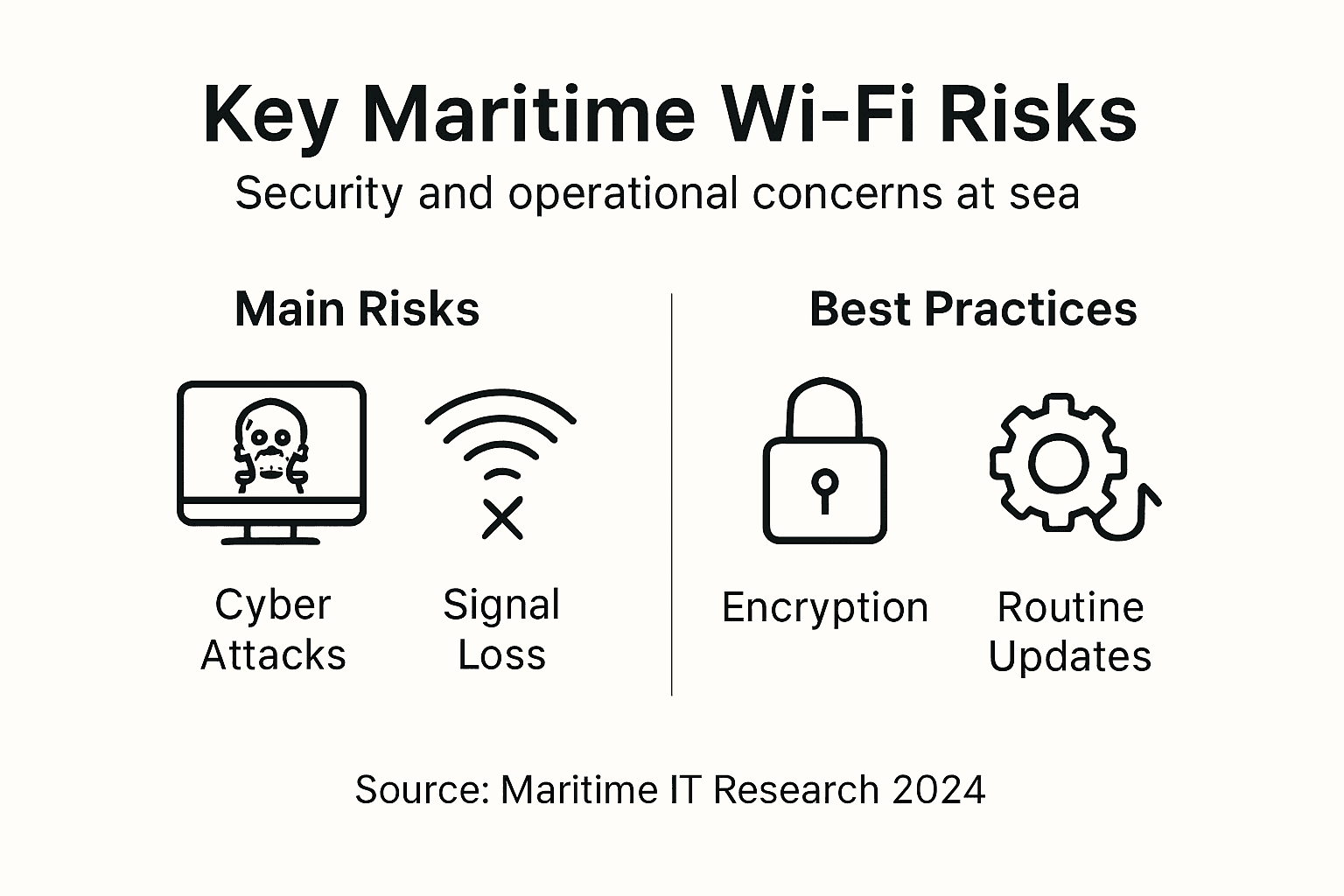
Pro tip: Always verify the security credentials and encryption standards of any maritime Wi-Fi network before connecting sensitive devices.
Types of Maritime Wi-Fi Networks
Maritime Wi-Fi networks represent a complex ecosystem of wireless communication technologies designed to provide internet connectivity in challenging maritime environments. Maritime communication networks encompass multiple interconnected technologies that enable seamless data transmission across oceanic and coastal regions.
The primary types of maritime Wi-Fi networks can be categorized into several distinct technological approaches:
-
Satellite-Based Networks
- Utilize geosynchronous and low-earth orbit satellites
- Provide wide-area coverage across global maritime routes
- Offer consistent connectivity in remote oceanic regions
-
Coastal Cellular Networks
- Leverage terrestrial cellular infrastructure near shorelines
- Provide high-bandwidth connections within coastal zones
- Ideal for shorter maritime routes and near-shore communications
-
Hybrid Wireless Systems
- Combine multiple communication technologies
- Dynamically switch between satellite and cellular networks
- Maximize connection reliability and performance
Propagation Characteristics play a critical role in determining the effectiveness of maritime wireless networks. Vessel communication technologies must account for unique challenges such as signal interference, atmospheric conditions, and the constantly moving maritime environment.
Each network type presents distinct advantages and limitations. Satellite networks offer extensive global coverage but can experience higher latency, while coastal cellular networks provide faster speeds but limited geographical reach. Hybrid systems emerge as a sophisticated solution, intelligently managing network transitions to maintain consistent connectivity.
Here’s a summary comparing main types of maritime Wi-Fi networks:
| Network Type | Coverage Area | Typical Speed | Main Limitation |
|---|---|---|---|
| Satellite-Based | Ocean-wide, global | Moderate | Higher latency |
| Coastal Cellular | Near-shore, regional | High | Limited range off-coast |
| Hybrid Systems | Global and local | Variable, optimized | Complex integration needs |
Pro tip: When selecting a maritime Wi-Fi solution, prioritize networks that offer seamless technological integration and robust failover capabilities.
How Maritime Wi-Fi Systems Work Onboard
Maritime Wi-Fi systems transform vessels into sophisticated digital communication hubs, enabling seamless connectivity through complex technological infrastructures. Maritime wireless networks operate through a series of interconnected components that manage signal transmission, device connectivity, and network security across challenging maritime environments.
The fundamental architecture of onboard Wi-Fi systems involves several critical components:
-
Satellite Communication Modules
- Receive and transmit data signals from orbital networks
- Provide primary connectivity for long-distance maritime routes
- Enable continuous internet access beyond cellular coverage
-
Onboard Wireless Access Points
- Distribute internet signals throughout vessel spaces
- Support multiple device connections simultaneously
- Manage bandwidth allocation and network performance
-
Routing and Signal Management Systems
- Coordinate network transitions between communication technologies
- Filter and secure incoming and outgoing network traffic
- Optimize connection reliability across different maritime zones
Floating office technologies have revolutionized maritime communications by integrating advanced routing mechanisms that dynamically switch between satellite, cellular, and hybrid network configurations. These intelligent systems ensure uninterrupted connectivity by constantly evaluating signal strength, latency, and available network resources.

The operational workflow involves sophisticated signal processing where onboard routers continuously negotiate connections, authenticate devices, and maintain secure communication channels. Specialized maritime Wi-Fi systems must account for unique challenges such as signal interference, extreme weather conditions, and the constant motion of maritime vessels.
Pro tip: Always verify your device’s network settings and connection protocols before boarding to ensure optimal maritime internet performance.
Integrating Satellite and Cellular Technologies
Maritime communication networks represent a sophisticated technological ecosystem where multiple connectivity solutions work in harmony. Maritime wireless integration enables vessels to maintain consistent internet access by strategically combining different communication technologies that compensate for each other’s inherent limitations.
The integration process involves several critical technological strategies:
-
Hybrid Network Architecture
- Simultaneous utilization of satellite and cellular networks
- Automatic switching between network types
- Maintaining continuous connectivity across different maritime zones
-
Signal Redundancy Mechanisms
- Multiple communication pathways
- Backup systems to prevent connectivity interruptions
- Intelligent routing algorithms for optimal performance
-
Dynamic Connection Management
- Real-time network performance assessment
- Bandwidth optimization techniques
- Seamless transition between communication platforms
Maritime communication resilience depends on sophisticated technological integration that goes beyond simple network switching. Advanced maritime communication systems now employ intelligent algorithms that predict and preemptively manage potential connectivity challenges, ensuring minimal disruption during critical operational moments.
The technological synergy between satellite and cellular networks allows maritime operators to create robust, flexible communication infrastructures. These systems dynamically evaluate signal strength, latency, and available bandwidth, automatically selecting the most efficient connection method without manual intervention.
Pro tip: Invest in multiprotocol communication devices that support seamless network transitions for optimal maritime connectivity performance.
Costs, Risks, and Security Challenges at Sea
Maritime Wi-Fi security represents a complex challenge that balances technological capabilities with significant financial and operational risks. Maritime cybersecurity vulnerabilities highlight the intricate relationship between infrastructure investment and potential network breaches, especially in maritime environments where connectivity is both critical and inherently vulnerable.
The primary security challenges in maritime Wi-Fi systems include:
-
Network Vulnerability Points
- Potential data interception during port stays
- Risks from unauthorized wireless access
- Challenges with signal encryption in mobile environments
-
Financial Risk Factors
- Infrastructure installation costs
- Ongoing cybersecurity maintenance expenses
- Potential financial losses from security breaches
-
Compliance and Operational Risks
- Meeting international maritime communication standards
- Protecting crew and passenger digital privacy
- Maintaining continuous secure communication channels
Maritime communication infrastructure costs demonstrate that implementing robust security measures requires substantial investment. Vessel operators must continuously balance the expenses of comprehensive cybersecurity protocols against the potential financial and operational risks of network vulnerabilities.
The unique maritime environment introduces additional complexity to network security. Signal propagation characteristics, limited bandwidth, and the constant movement of vessels create unprecedented challenges for maintaining secure and stable wireless communications.
Pro tip: Regularly update maritime communication security protocols and invest in multi-layered encryption technologies to mitigate potential network vulnerabilities.
Passenger and Crew Benefits of Maritime Connectivity
Maritime internet connectivity represents more than just a technological convenience—it’s a transformative solution addressing critical human needs for communication, welfare, and professional effectiveness. Crew welfare technologies fundamentally reshape the maritime experience by providing critical connections between isolated professionals and their global support networks.
The key benefits for passengers and crew members include:
-
Personal Communication Advantages
- Real-time connections with family and friends
- Ability to share travel experiences instantly
- Reduced feelings of isolation during long voyages
-
Professional Performance Enhancements
- Remote work capabilities
- Seamless communication with shore-based management
- Access to critical operational information and updates
-
Mental Health and Wellbeing Support
- Psychological support through digital connections
- Stress reduction via regular communication
- Enhanced sense of community and belonging
Connectivity transforms maritime environments from isolated spaces to dynamic, interconnected platforms. Crew members can now maintain professional responsibilities, pursue personal development, and stay emotionally connected, dramatically improving overall quality of life during extended maritime assignments.
The technological infrastructure enables unprecedented levels of professional flexibility and personal comfort. Whether managing complex maritime operations or simply staying in touch with loved ones, maritime Wi-Fi bridges significant communication gaps that historically challenged seafaring professionals.
The table below highlights key differences between crew and passenger Wi-Fi priorities:
| Group | Top Priority | Connectivity Use | Impact on Experience |
|---|---|---|---|
| Crew | Professional access | Remote work, updates | Improves job performance |
| Passenger | Social interaction | Sharing, communication | Enhances travel comfort |
Pro tip: Invest in versatile communication devices with multiple connectivity options to maximize your maritime internet experience.
Unlock Seamless Maritime Wi-Fi Connectivity for Your Next Voyage
Navigating the challenges of maritime Wi-Fi means overcoming issues like unstable signals, cybersecurity risks, and limited connectivity options. Whether you are a passenger craving reliable access to stay connected with loved ones or a crew member needing professional-grade internet for remote work, these pain points can significantly impact your onboard experience. Terms like “hybrid wireless systems” and “dynamic connection management” highlight the complexity behind maintaining consistent maritime internet access.
At Seafy, we transform these challenges into opportunities by partnering with leading ferry lines such as Corsica Ferries and Grimaldi Lines to provide a stable, high-speed Wi-Fi service that integrates advanced satellite technologies like Starlink. Our easy-to-use platform allows you to effortlessly purchase and activate Wi-Fi packages, ensuring uninterrupted connectivity on routes across the Mediterranean and beyond. Experience the freedom of digital onboard services designed to keep you productive, entertained, and connected in even the most remote maritime environments.
Ready to elevate your maritime travel experience with trustworthy internet access at sea Explore the full range of our offerings and maintain seamless connectivity wherever your journey takes you by visiting Seafy today. Don’t let connectivity challenges hold you back—connect with confidence now.
Frequently Asked Questions
What is maritime Wi-Fi?
Maritime Wi-Fi is a specialized wireless networking technology designed for vessels navigating oceanic and coastal waters, providing reliable internet connectivity in challenging environments.
How does maritime Wi-Fi work onboard vessels?
Maritime Wi-Fi systems utilize satellite communication modules, onboard wireless access points, and routing systems to manage signal transmission, device connectivity, and ensure continuous internet access across maritime regions.
What are the different types of maritime Wi-Fi networks?
The main types of maritime Wi-Fi networks include satellite-based networks, coastal cellular networks, and hybrid systems, each offering varying coverage areas, speeds, and limitations based on technological capabilities.
Why is cybersecurity important in maritime Wi-Fi systems?
Cybersecurity is crucial in maritime Wi-Fi systems due to potential vulnerabilities during port stays and the need to protect sensitive data from interception and unauthorized access, particularly in a dynamic maritime environment.