Travel tips
Travel Tunis by ferry with GNV: expert tips & Wi-Fi guide
Plan your GNV ferry trip to Tunis with expert tips on ships, cabins, Seafy Wi-Fi packages, booking advice, and what to expect at La Goulette port.
28 March 2026
Travel Tunis by ferry with GNV: expert tips & Wi-Fi guide
Many travelers still picture ferry travel to Tunis as a slow, disconnected ordeal on an aging ship. That picture is outdated. GNV now runs a modern, well-equipped service between Genoa and Tunis, complete with comfortable cabins, onboard dining, and reliable satellite Wi-Fi through Seafy. Whether you’re a digital nomad, a family heading south for the summer, or a first-time ferry traveler, modern onboard connectivity has changed what a 23-hour crossing actually feels like. This guide covers everything: the ships, the Wi-Fi, the booking process, and what happens when you dock at La Goulette.
Table of Contents
- Why choose GNV for your Tunis ferry trip?
- GNV ferry experience: ships, comfort, and what to expect
- How Seafy Wi-Fi works on GNV: digital connectivity explained
- Booking, prices, and key pre-departure tips
- Arrival in Tunis: port info, local connections, and practicalities
- Stay connected and make the most of your GNV crossing
- Frequently asked questions
Key Takeaways
| Point | Details |
|---|---|
| Year-round crossings | GNV offers consistent, twice-weekly ferries from Genoa to Tunis with modern amenities. |
| Onboard digital access | Seafy Wi-Fi keeps you connected for work or leisure, even in mid-sea. |
| Book early | Reserve your cabin and Wi-Fi package well in advance for comfort and peace of mind. |
| Arrival made easy | La Goulette port provides straightforward access to Tunis by metro or taxi upon arrival. |
| Pet-friendly options | Special pet cabins and clear policies make traveling with animals stress-free. |
Why choose GNV for your Tunis ferry trip?
Now that you know ferry travel to Tunis isn’t the hassle most expect, let’s look at what sets GNV apart from other options.
GNV (Grandi Navi Veloci) is one of the most consistent operators on the Western Mediterranean. The line runs twice-weekly year-round sailings between Genoa and Tunis, with an average crossing time of 23 hours and 25 minutes. That regularity matters if you’re planning around work schedules or connecting travel.
Here’s a quick comparison of GNV against other common options for reaching Tunis by sea:
| Feature | GNV (Genoa) | Grimaldi Lines | Tunisian operators |
|---|---|---|---|
| Year-round service | ✓ | Seasonal | Limited |
| Onboard Wi-Fi | ✓ Seafy | ✓ Seafy | Varies |
| Pet cabins | ✓ | Limited | Rarely |
| Cabin classes | Multiple | Multiple | Basic |
| Frequency | 2x weekly | Less frequent | Irregular |
Key advantages of choosing GNV include:
- Consistent schedule with predictable departure and arrival windows
- Modern fleet with air-conditioned cabins, restaurants, and open decks
- Pet-friendly policy with dedicated pet cabins available on request
- Family features including play areas and flexible accommodation options
- Seafy Wi-Fi available on select ships for digital connectivity at sea
Pro Tip: GNV is the best choice for travelers who need reliable crossing times and don’t want to gamble on seasonal or irregular services.
GNV ferry experience: ships, comfort, and what to expect
GNV’s operational advantages matter, but what is it actually like on board? Here’s what to expect when stepping onto a GNV ferry to Tunis.
The GNV Sirio is one of the main vessels on this route. It offers a self-service restaurant, a bar, a duty-free shop, open sun decks, and dedicated pet cabins. The ship covers most comfort needs for a 23-hour crossing.
Here’s a breakdown of cabin options:
| Cabin type | Best for | Approximate comfort level |
|---|---|---|
| Deck/Pullman seat | Budget travelers | Basic |
| Shared cabin (4-berth) | Solo travelers, groups | Moderate |
| Private cabin (2-berth) | Couples, families | Good |
| Premium cabin | Comfort seekers | High |
What you can expect on board:
- Self-service restaurant open for meals and snacks throughout the crossing
- Bar and lounge areas for relaxing or socializing
- Duty-free shop with competitive prices on perfumes, alcohol, and snacks
- Open sun decks for fresh air and sea views
- Pet cabins located in a separate, ventilated area of the ship
- Children’s play area on family-oriented sailings
A few honest cons to keep in mind: some travelers report inconsistent cleanliness in shared areas, limited power outlets in lower-tier cabins, and variable service quality depending on the sailing. These are worth knowing before you board.
Pro Tip: Charge all your devices fully before boarding and bring a portable power bank. Outlets in budget cabins can be scarce, and you’ll want your phone ready for arrival formalities in Tunis.
How Seafy Wi-Fi works on GNV: digital connectivity explained
Comfort and space are important, but digital access is a new priority for many travelers. Here’s how GNV ensures you stay connected at sea.

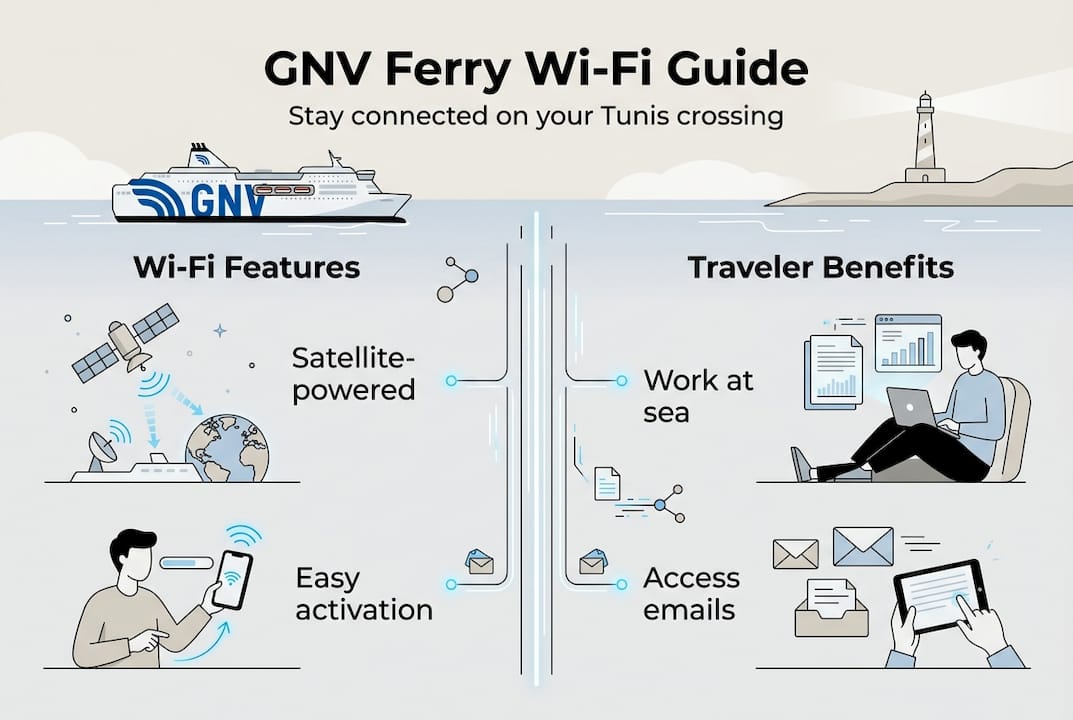
Seavy Wi-Fi is available on select GNV ships, specifically the Spirit and Allegra. Before booking, confirm which vessel is assigned to your sailing if staying connected is a priority for you. The service runs on Starlink satellite technology, which means you get stable, low-latency internet even in the middle of the Mediterranean.
Here’s how to connect:
- On board, open your device’s Wi-Fi settings and select the Seafy network
- Open a browser and go to portal.seafy.com
- Choose your package, pay, and activate instantly
- No app download required
Wi-Fi packages start from €4.99 for a messaging-focused plan (up to 1GB), with higher tiers available for video calls, streaming, and heavier remote work. The pricing is transparent and prepaid, so there are no surprise charges.
For a broader look at how connectivity works across Mediterranean routes, the Wi-Fi guide for Mediterranean ferries is a solid starting point. If you’re new to onboard internet, how to get onboard Wi-Fi walks you through the full process step by step.
Pro Tip: Your mobile data plan will not work once the ship leaves port. If you’re a remote worker or need to stay reachable, a Seafy package is not optional. Check out remote work Wi-Fi advice for tips on making the most of your connection at sea.
Digital nomads especially benefit here. A 23-hour crossing with reliable Wi-Fi is essentially a full workday at sea, without the distractions of a coffee shop or coworking space. 🌐
Booking, prices, and key pre-departure tips
Reliable Wi-Fi makes the journey productive and enjoyable, but getting the logistics right ensures a smooth start.
Fares vary significantly by accommodation type. Here’s a general picture for 2026 sailings:
- Deck or Pullman seat: from €105 one-way, the most budget-friendly option
- Shared cabin: typically €130 to €180 depending on season
- Private cabin: from €200 upward, worth it for overnight comfort
- Vehicle surcharge: added on top of your passenger fare, varies by vehicle size
- Pet fee: additional charge applies; advance booking for pet cabins is strongly recommended, especially in peak season
Where to book: you can go directly through the GNV website or use aggregator platforms like Direct Ferries or Ferry Center. Aggregators are useful for price comparison, but booking direct sometimes gives you more flexibility for changes.
Check-in opens up to 8 hours before departure and closes 3 hours prior. Arriving early is not just recommended, it’s practical. Port check-in for vehicle passengers especially can take time, and you don’t want to be rushing.
Pro Tip: Book your cabin as early as possible for summer or holiday sailings. Private cabins sell out weeks in advance, and a Pullman seat on a 23-hour overnight crossing is a very different experience.
For documents, make sure your passport is valid for at least 6 months beyond your travel date. If you’re bringing a vehicle into Tunisia, check current import rules and any temporary admission requirements before you travel. Rules can change, so verify with the Tunisian consulate or GNV directly.
For more on how digital tools are reshaping the ferry experience, Wi-Fi transforming ferry travel is worth a read before you depart.
Arrival in Tunis: port info, local connections, and practicalities
Once you’ve enjoyed the crossing, your final step is entering Tunis stress-free. Here’s what to expect at port and beyond.
GNV ferries dock at La Goulette port, located about 15 kilometers northeast of central Tunis. The north dock is the most convenient for foot passengers, offering straightforward access to metro and taxi connections.
Key things to know on arrival:
- Disembarkation supplement: expect a fee of around €12 per passenger at La Goulette
- Immigration: have your passport and any required entry documents ready before you reach the desk
- Customs: declare any goods above the duty-free allowance; vehicle import paperwork is checked here
- Metro (TGM line): runs from La Goulette directly into central Tunis, affordable and reliable
- Taxis: available at the port exit; agree on a fare before getting in or insist on the meter
- Shuttle services: some hotels and tour operators offer pickup from the port
“The north dock at La Goulette is the most passenger-friendly part of the port. If you’re on foot, head there first and follow signs for the TGM metro station.”
Be prepared for busy arrivals, especially on summer sailings. Disembarkation can take time when the ship is full and vehicles are being unloaded. Build in at least an hour of buffer before any onward connection.
Construction and port upgrades at La Goulette have been ongoing, so signage can shift. When in doubt, follow the crowd or ask port staff.
Stay connected and make the most of your GNV crossing
With the essentials in hand, staying connected onboard means you can travel to Tunis with confidence and the right tools in place.
A 23-hour crossing doesn’t have to mean 23 hours offline. With Seafy Wi-Fi on GNV, you can answer emails, join a video call, stream a show, or simply stay in touch with family back home. The service is designed to work for everyone, from casual travelers checking social media to professionals who can’t afford to go dark for a full day. ⚡
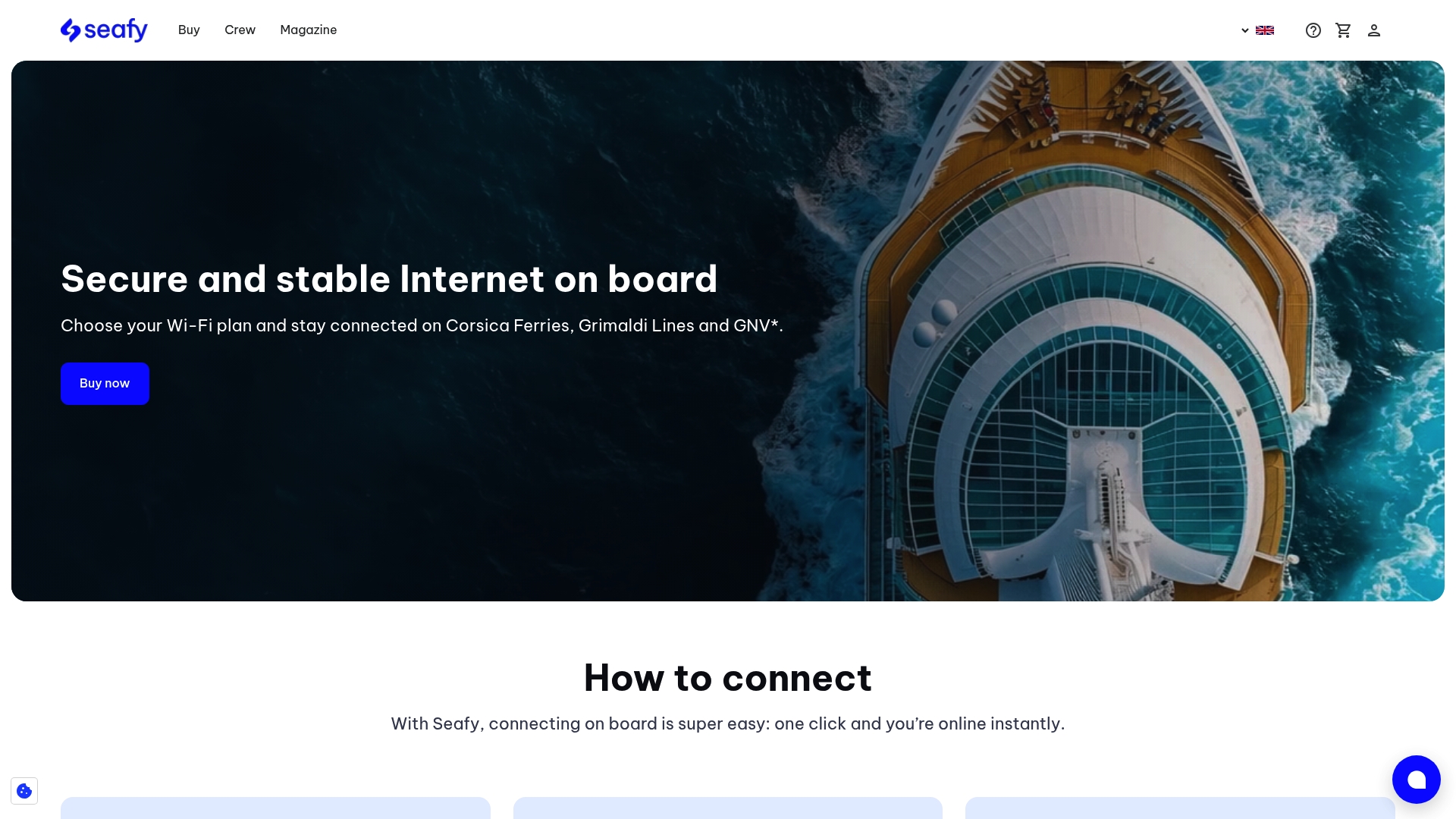
Seavy covers major GNV ships and makes activation simple through the onboard portal. Check which vessel is assigned to your sailing before you depart, and consider activating your package as soon as you board to make the most of the crossing. For remote workers especially, smart working onboard has practical tips on setting up a productive workspace at sea. The Mediterranean is beautiful. You might as well enjoy it connected.
Frequently asked questions
How long does the GNV ferry take from Genoa to Tunis?
The average crossing is 23h25m between Genoa and Tunis, but actual sailing times can range from around 20.5 hours to nearly 29 hours depending on the specific departure.
Can I connect to Wi-Fi during the ferry crossing to Tunis?
Yes. Seafy Wi-Fi is available on select GNV ships and provides reliable internet powered by Starlink satellite, suitable for messaging, remote work, and light video in public areas and most cabins.
Do I need to book my GNV ferry to Tunis in advance?
Absolutely. Advance booking is highly recommended, especially for private cabins, vehicle spaces, and peak-season sailings, as availability fills up quickly.
Where does the ferry dock when arriving in Tunis?
GNV ferries arrive at La Goulette port, with the north dock offering the easiest access to metro and taxi connections heading into central Tunis.
Are there special rules for traveling with pets on GNV?
GNV allows pets on board and offers dedicated pet cabins, but you must book in advance and comply with Tunisia’s animal entry requirements, including up-to-date vaccination records.