Destinations
7 Mediterranean ferry destinations with reliable internet
Discover 7 Mediterranean ferry destinations for spring 2026 with reliable onboard internet. Compare routes, connectivity options, and get practical tips for staying connected while exploring islands.
11 March 2026
7 Mediterranean ferry destinations with reliable internet
Choosing a Mediterranean ferry destination for spring 2026 means balancing sunshine, culture, and reliable onboard internet. Remote workers need stable connections while leisure travelers want seamless streaming and social sharing. This guide evaluates seven ferry-accessible destinations where you can enjoy spring weather and stay connected, comparing routes, internet infrastructure, and practical tips for travelers who refuse to compromise on connectivity.
Table of Contents
- How To Choose Mediterranean Ferry Destinations For Spring With Reliable Internet
- Seven Mediterranean Destinations To Reach By Ferry For Spring 2026
- Comparing Ferry Routes And Internet Connectivity Across Spring Destinations
- Recommendations For Different Traveler Profiles And Spring Trip Goals
- Stay Connected On The Mediterranean Ferry With Seafy Wi-Fi
- FAQ
Key takeaways
| Point | Details |
|---|---|
| Selection criteria | Prioritize destinations with sunny spring weather, engaging activities, and ferry routes offering dependable satellite internet infrastructure. |
| Seven top destinations | Corsica, Sardinia, Madeira, Malta, Greek Islands, Sicily, and Balearic Islands combine cultural richness with reliable connectivity options. |
| Connectivity comparison | Ferry internet performance varies by satellite technology, route duration, weather interference, and concurrent user loads. |
| Traveler recommendations | Remote workers need high-bandwidth routes; leisure travelers benefit from flexible packages; culture seekers can explore emerging destinations. |
| Preparation essentials | Check ferry operator partnerships, download offline content, and choose appropriate data packages before departure. |
How to choose Mediterranean ferry destinations for spring with reliable internet
Spring travel to Mediterranean islands by ferry combines the appeal of warming weather with the practical need for internet connectivity. Spring travel demand shifts toward destinations combining sunshine with active pursuits, making April and May ideal months for ferry exploration. You want destinations offering outdoor activities, cultural experiences, and beaches without summer crowds, but connectivity matters just as much as scenery.
Reliable onboard internet depends on multiple technical factors. Satellite technology forms the backbone of ferry connectivity, with newer systems like Starlink offering significant improvements over traditional maritime satellites. Weather conditions affect signal quality, particularly during spring storms common in the Mediterranean. The number of concurrent users sharing bandwidth impacts your connection speed, with peak travel times creating congestion. Route geography matters too, as proximity to coastal infrastructure can supplement satellite coverage.
When evaluating ferry destinations, consider these practical factors:
- Ferry route frequency and duration affecting total connectivity time
- Operator partnerships with proven internet service providers
- Coverage maps showing satellite availability along specific routes
- Package costs compared to data allowances and speed guarantees
- Backup options for maintaining productivity during signal gaps
You should also assess potential interference from weather patterns and geographic features. Spring storms can temporarily disrupt satellite signals, while mountainous coastlines may create brief dead zones. High data costs remain common with maritime satellite services, so understanding pricing structures before boarding prevents surprise charges. Following ferry internet best practices helps you maximize connection stability.
Balancing leisure activities with connectivity needs requires realistic expectations. Streaming video consumes significant bandwidth that may struggle during peak hours, while email and messaging remain reliably accessible. Remote workers should schedule bandwidth-intensive tasks during off-peak hours when fewer passengers compete for capacity. An onboard internet checklist ensures you board prepared with downloaded content and appropriate data packages.
Pro Tip: Test your ferry operator’s internet speed immediately after boarding by running a quick speed test, allowing time to adjust work plans or purchase upgraded packages if needed.
Seven Mediterranean destinations to reach by ferry for spring 2026
Corsica stands out for spring travelers seeking dramatic landscapes and French-Italian cultural fusion. Ferry routes from Nice, Marseille, and Livorno provide frequent service with modern vessels equipped with satellite internet infrastructure. The island’s hiking trails bloom with wildflowers in April, while coastal towns remain pleasantly uncrowded. Internet connectivity on major routes to Bastia and Ajaccio benefits from proximity to mainland infrastructure, supplementing satellite coverage.
Sardinia offers pristine beaches and archaeological sites with excellent ferry access from Genoa, Livorno, and Civitavecchia. Spring temperatures reach comfortable levels for beach activities without summer heat. Major ferry operators serving Sardinia have invested in upgraded satellite systems, providing reliable connectivity for remote work during 8 to 12 hour crossings. The island’s blend of beaches, mountains, and nuraghe ruins creates diverse activity options.
Madeira emerges as a standout destination where sunshine and active pursuits define the spring experience. Ferry services from Portimão connect this Portuguese island to mainland Europe, with routes featuring modern connectivity infrastructure. The island’s levada walks, botanical gardens, and dramatic cliffs provide endless exploration opportunities. Madeira’s year-round mild climate makes spring particularly appealing for outdoor activities and march ferry vacation ideas.
Malta combines compact size with rich history, accessible via ferry from Sicily and southern Italy. Spring weather allows comfortable exploration of Valletta’s UNESCO sites and the island’s megalithic temples. Ferry routes to Malta typically offer solid internet connectivity due to the island’s advanced telecommunications infrastructure visible from sea. The short crossing times limit extended work sessions but provide adequate connectivity for email and communications.

Greek Islands present countless options, with Cyclades and Dodecanese islands offering distinct spring experiences. Ferries from Piraeus, Rafina, and Italian ports provide extensive network coverage. Popular islands like Santorini, Mykonos, and Rhodes see spring getaways 2026 interest due to perfect weather before summer crowds arrive. Internet reliability varies by route length and operator, with major lines investing in improved satellite systems.
Sicily serves as both destination and gateway, with ferry connections from mainland Italy and Malta. The island’s spring almond blossoms, Greek ruins, and diverse cuisine attract culture-focused travelers. Ferry routes to Palermo and Catania benefit from frequent service and competitive pricing. Connectivity quality depends on specific operators, with newer vessels offering superior internet infrastructure for work and entertainment.
Balearic Islands provide Spanish Mediterranean flavor closest to mainland Europe. Ibiza, Mallorca, and Menorca feature ferry services from Barcelona and Valencia with relatively short crossing times. Spring weather allows hiking, cycling, and beach activities before peak tourist season. These routes typically offer reliable connectivity due to proximity to Spanish coastal infrastructure and modern ferry fleets.
Comparing ferry routes and internet connectivity across spring destinations
Ferry routes to Mediterranean destinations vary significantly in duration, frequency, and connectivity infrastructure. Understanding these differences helps you select options matching your internet needs and travel timeline. The following comparison highlights key factors affecting your onboard experience.
| Destination | Typical Route Duration | Ferry Frequency | Internet Technology | Estimated Package Cost |
|---|---|---|---|---|
| Corsica | 6 to 10 hours | Daily | Satellite + coastal | €15 to €30 |
| Sardinia | 8 to 12 hours | Multiple daily | Advanced satellite | €20 to €35 |
| Madeira | 18 to 24 hours | Weekly | Satellite | €25 to €45 |
| Malta | 1.5 to 3 hours | Several weekly | Satellite + 4G proximity | €10 to €20 |
| Greek Islands | 4 to 10 hours | Multiple daily | Variable satellite | €12 to €30 |
| Sicily | 1 to 8 hours | Multiple daily | Mixed infrastructure | €10 to €25 |
| Balearics | 4 to 8 hours | Daily | Modern satellite | €15 to €28 |
Weather and bandwidth limitations affect satellite internet performance across all maritime routes. Spring conditions generally provide better connectivity than winter storms, but Mediterranean weather remains unpredictable. April and May typically see fewer severe weather events that disrupt satellite signals, though occasional systems can cause temporary degradation.
Bandwidth allocation varies dramatically by vessel capacity and passenger load. A ferry carrying 2,000 passengers sharing a satellite connection experiences significantly slower speeds than a 500 passenger vessel with equivalent technology. Peak travel times, particularly Friday evenings and Sunday returns, see maximum user counts that reduce available bandwidth per person. Early morning and late evening periods typically offer better performance.
Cost structures reflect both technology investment and competitive market conditions. Routes with multiple competing operators often feature lower internet pricing, while monopoly routes command premium charges. Package options range from basic email access to unlimited streaming plans, with hourly, daily, and voyage-long options. Some operators bundle internet with cabin upgrades, potentially offering better value than standalone packages.
Connectivity consistency depends on route geography and satellite coverage patterns. Coastal routes benefit from potential 4G/5G signal reach during portions of the journey, supplementing satellite systems. Open sea crossings rely entirely on satellite technology, making weather conditions and user load the primary variables. A ferry wi-fi checklist helps you prepare for these variations.
Pro Tip: Book overnight ferries for remote work sessions, as nighttime passenger counts drop significantly and bandwidth per user increases, often delivering speeds 3 to 4 times faster than daytime peak hours.
Recommendations for different traveler profiles and spring trip goals
Remote workers require different connectivity solutions than leisure travelers, and matching your profile to the right destination ensures trip success. Understanding your priorities helps narrow choices from seven destinations to the perfect fit.
-
Remote workers needing consistent connectivity should prioritize Sardinia or Corsica routes with 8 to 12 hour crossings and advanced satellite systems. These longer journeys provide extended work windows with modern infrastructure. Choose overnight ferries when bandwidth competition drops significantly. Consider booking cabin space for laptop setup and privacy during video calls. Sardinia routes from Genoa typically feature newer vessels with superior internet at sea transforming remote work capabilities.
-
Leisure travelers prioritizing entertainment and social sharing benefit from shorter routes to Malta or Balearic Islands. These destinations offer sufficient connectivity for streaming, photo uploads, and video calls without requiring sustained work productivity. The shorter crossing times reduce total internet costs while maintaining adequate service quality. Malta’s proximity to Sicily provides backup 4G coverage during portions of the journey, supplementing satellite service.
-
Culture-focused explorers seeking emerging destinations should consider Madeira, where growing cultural appeal combines with reliable longer-distance ferry infrastructure. The extended crossing time allows deep work sessions before arrival. Greek Islands offer maximum cultural variety with flexibility to island hop using inter-island ferries. Sicily provides the richest archaeological and culinary experiences with frequent ferry options.
-
Budget-conscious travelers balancing cost with connectivity find value in competitive routes like Sicily from mainland Italy or Balearics from Barcelona. Multiple operators competing on these routes drive down both passage and internet costs. Consider purchasing internet packages in advance online, which often costs 15% to 25% less than onboard purchases.
-
Flexible travelers willing to adjust plans benefit from booking shorter routes initially, then extending island stays if connectivity meets work needs. Malta’s compact size allows easy exploration while maintaining reliable internet at accommodations. Corsica and Sardinia offer enough variety for extended stays if ferry internet proves adequate for remote work continuation.
Practical preparation includes downloading offline content before boarding, purchasing appropriate data packages for your usage patterns, and maintaining backup mobile hotspot options when reaching ports. Spring ferry schedules offer more flexibility than summer peak season, allowing date adjustments based on weather forecasts affecting connectivity. Understanding your traveler profile and matching it to destination strengths creates the optimal balance between Mediterranean exploration and reliable internet access.
Stay connected on the Mediterranean ferry with Seafy Wi-Fi
After comparing seven Mediterranean destinations and evaluating connectivity factors, having a reliable internet partner matters most. Seafy delivers high-quality onboard internet service across Mediterranean ferry routes, partnering with major operators like Corsica Ferries, Grimaldi Lines, and GNV. Our satellite-powered network keeps you connected whether you’re catching up on work emails or streaming your favorite shows during longer crossings.
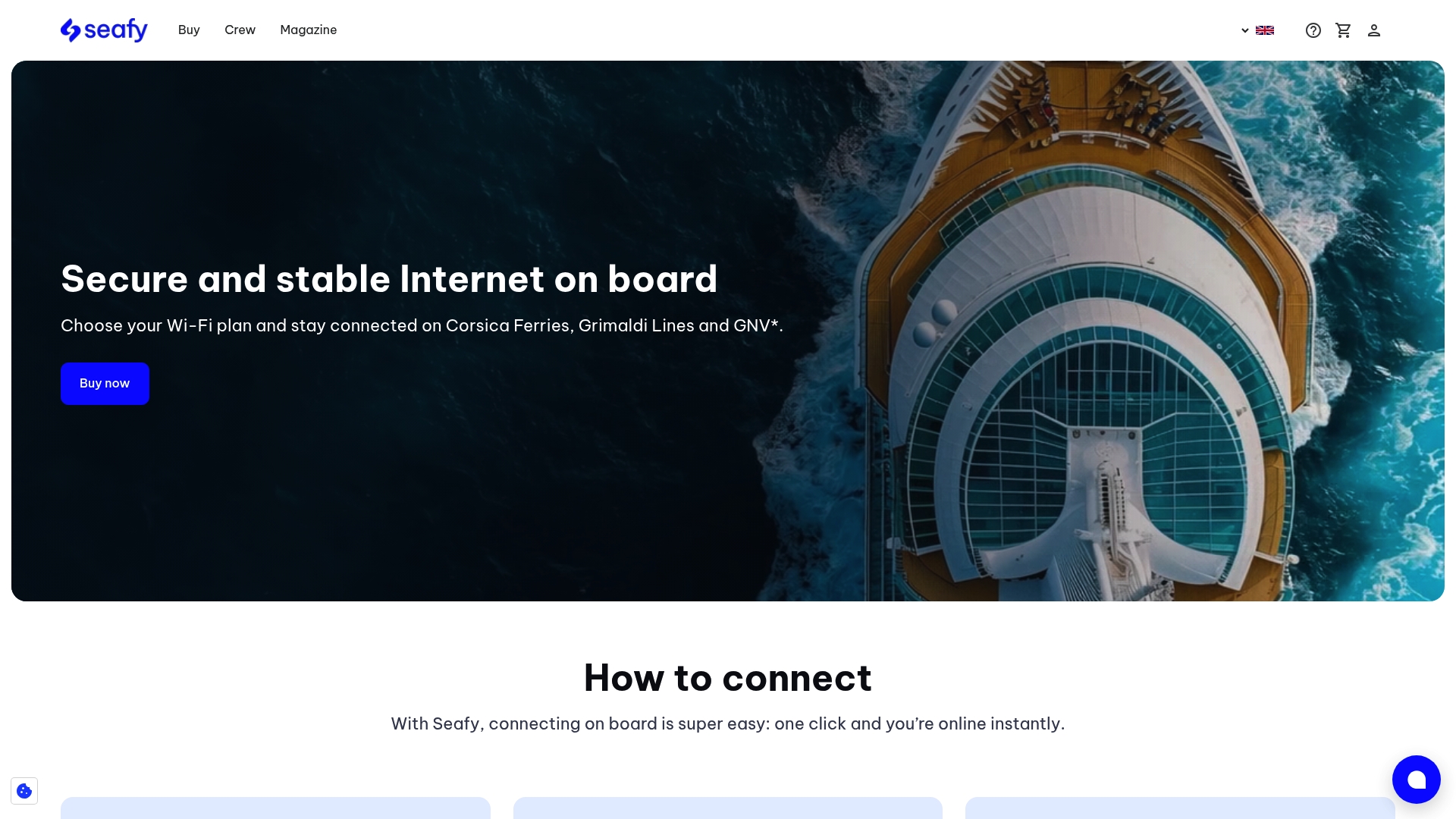
Seafy’s flexible packages suit different traveler needs, from hourly options for quick email checks to unlimited plans for remote workers. Our easy-to-use portal lets you purchase and activate service immediately after boarding, with transparent pricing and no hidden charges. Whether you’re crossing to Sardinia for a week-long adventure or taking a quick hop to Malta, Seafy ensures you stay connected with the people and work that matter. Visit Wi-Fi on board with Seafy to explore packages for your spring Mediterranean journey.
FAQ
How reliable is ferry internet signal in spring?
Spring ferry internet reliability averages 85% to 95% uptime on modern routes with advanced satellite systems. Weather affects performance less than summer storms or winter conditions, making April and May optimal months. Expect brief interruptions during heavy rain or when passing through mountainous coastal areas.
What affects onboard internet speeds?
The number of concurrent users sharing bandwidth creates the biggest speed variation, with peak travel times reducing speeds by 60% to 70%. Satellite technology type, weather conditions, and distance from shore also impact performance. Newer Starlink systems deliver consistently faster speeds than traditional maritime satellites.
Can I work remotely without interruption aboard?
Remote work feasibility depends on your job requirements and route selection. Email, messaging, and document editing work reliably on most modern ferries. Video conferencing remains challenging during peak hours but succeeds during off-peak times. Download critical files before boarding and schedule bandwidth-intensive tasks strategically.
Are there affordable internet options on ferries?
Internet costs range from €10 to €45 depending on route length and package type. Shorter crossings under 4 hours typically cost €10 to €20 for basic packages. Longer overnight routes charge €25 to €45 for unlimited access. Purchasing packages online before boarding often saves 15% to 25% compared to onboard pricing.
How to prepare for unexpected connection issues?
Download essential files, offline maps, and entertainment content before departure. Maintain a mobile hotspot as backup when ferries approach port areas within cellular range. Keep realistic expectations about maritime internet capabilities and build buffer time into work deadlines. Check internet roaming at sea guidelines to avoid surprise charges from cellular data usage.