Tech & Wi-Fi
Internet Roaming at Sea: What Travelers Need to Know
Internet roaming at sea explained—learn how Wi-Fi, satellite, and mobile data work on ferries and cruises, package costs, and top connectivity solutions.
14 February 2026
Internet Roaming at Sea: What Travelers Need to Know
Every Mediterranean traveler knows the frustration of losing connection as their ship sails farther from the coast. Staying online at sea matters for cruise passengers coordinating excursions and remote workers relying on dependable Wi-Fi for calls and deadlines. Understanding maritime internet roaming helps you avoid unexpected outages and costly data fees, revealing practical ways to maintain productivity and leisure while crossing international waters.
Table of Contents
- Internet Roaming At Sea Defined
- How Internet At Sea Really Works
- Wifi, Cellular, And Satellite Options Compared
- Costs, Limitations, And Avoiding Surprises
- Top Tips For Reliable Cruise Connectivity
Key Takeaways
| Point | Details |
|---|---|
| Understanding Maritime Internet Roaming | Internet roaming at sea uses satellite and specialized technologies to provide connectivity beyond traditional cellular networks. Ensure you are aware of your vessel’s internet capabilities and costs before sailing. |
| Connectivity Options | Satellite internet offers the broadest coverage, while cellular networks function effectively near coastlines. Assess your needs to choose the best combination of services for your maritime journey. |
| Cost Awareness | Internet access at sea can be expensive due to high per-megabyte charges and unforeseen background data usage. It’s wise to purchase packages with clear pricing and set data limits to avoid unexpected bills. |
| Enhancing Cruise Connectivity | To ensure reliable internet access, prepare devices by updating apps, use secure connections like VPNs, and manage data consumption consciously while onboard. Prioritize downloading essential content before the trip. |
Internet Roaming at Sea Defined
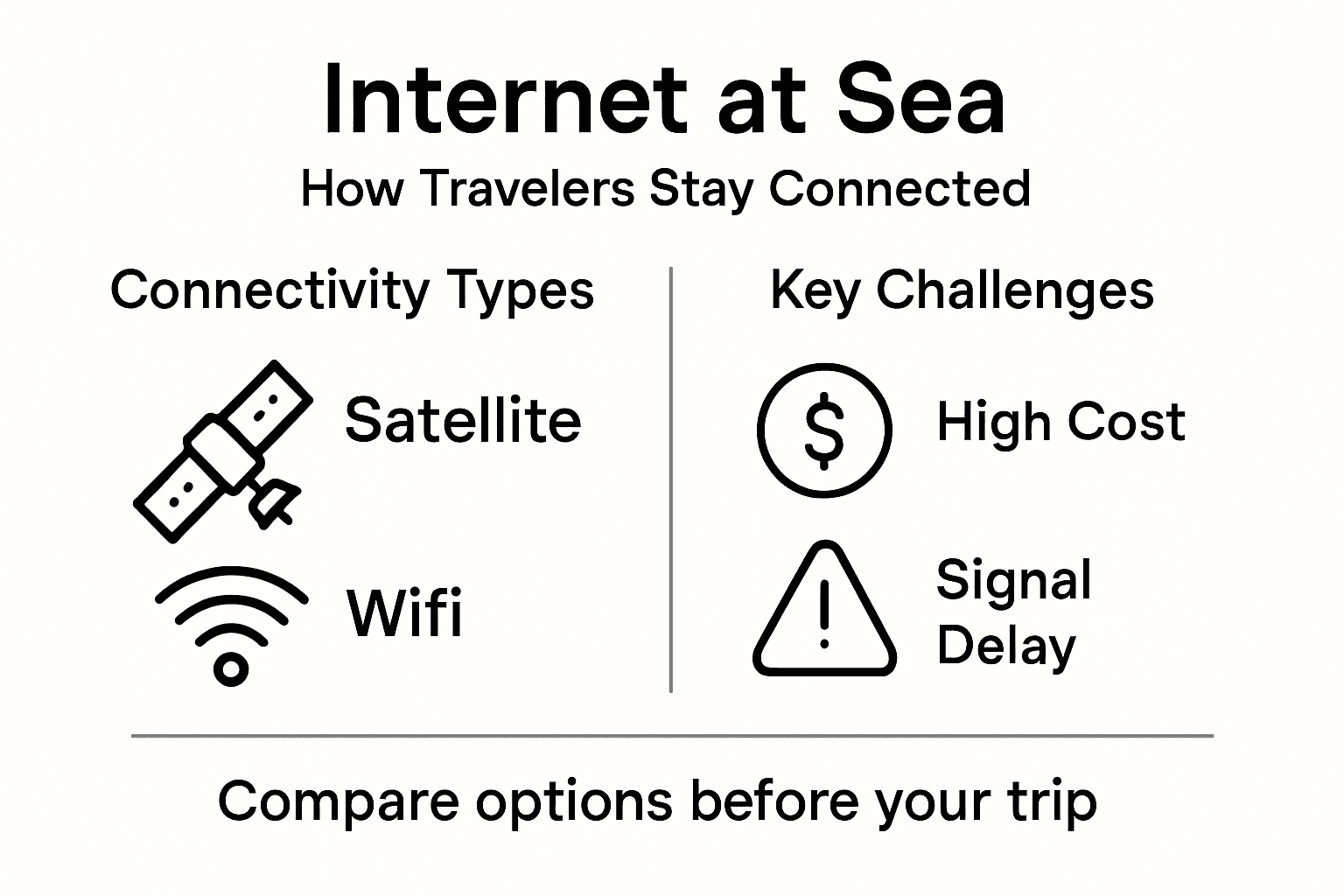
Internet roaming at sea represents a specialized telecommunications service that enables travelers to maintain digital connectivity while traversing maritime environments. Unlike traditional land-based roaming, maritime internet access involves complex satellite and cellular technologies designed to provide reliable internet connections across vast oceanic regions.
At its core, maritime internet roaming involves connecting mobile devices to networks that operate beyond traditional cellular infrastructure. Roaming services at sea depend critically on agreements between maritime service providers, satellite companies, and telecommunication networks. These intricate partnerships allow passengers on cruise ships, ferries, and other maritime vessels to access voice, data, and internet services while traveling across international waters.
The technical mechanisms behind internet roaming at sea differ significantly from terrestrial networks. Maritime connectivity relies primarily on:
- Satellite communication systems
- Advanced maritime network infrastructure
- Specialized onboard wireless technologies
- International roaming agreements
Traditional cellular networks cannot function effectively at sea due to geographic limitations and signal transmission challenges. Instead, specialized maritime networks utilize high-powered satellite connections to bridge communication gaps, ensuring travelers remain connected even hundreds of miles from coastlines.
Pro tip: Always confirm your specific vessel’s internet roaming capabilities and potential additional costs before embarking on your maritime journey.
How Internet at Sea Really Works
Navigating the digital world while at sea requires a sophisticated network of technological solutions that differ dramatically from standard land-based internet connectivity. Undersea fiber-optic cables form the critical backbone of global internet infrastructure, but maritime internet access relies on a complex interplay of satellite communications and specialized transmission technologies.
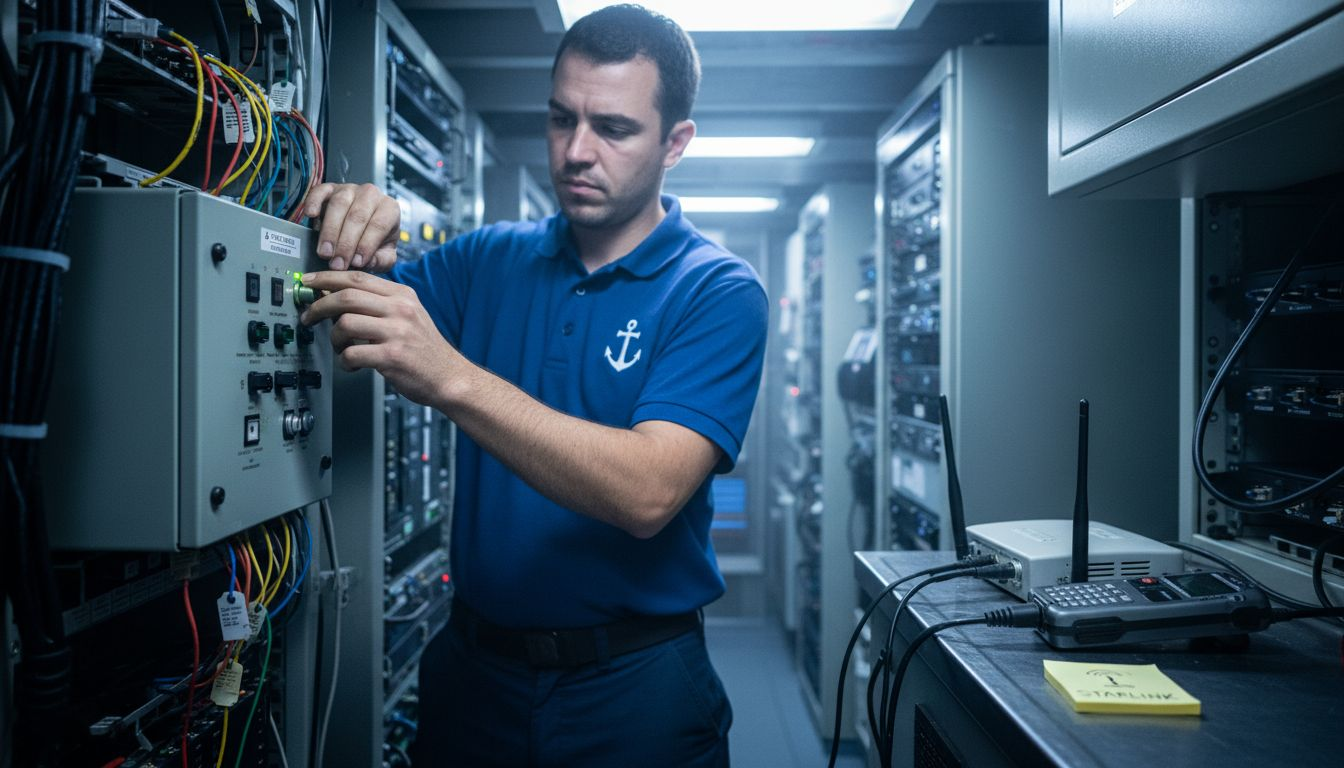
The primary mechanism for internet connectivity at sea involves satellite communication systems that bridge the gaps where traditional cellular networks cannot reach. Ships are equipped with specialized satellite dishes that communicate with orbiting satellites, which then relay data signals to ground stations connected to the global internet backbone. This process involves multiple technological handoffs that ensure continuous connectivity even in remote maritime environments.
The key components enabling internet access during maritime travel include:
- High-powered maritime satellite systems
- Specialized onboard wireless receivers
- Advanced signal transmission technologies
- Sophisticated data routing mechanisms
- International telecommunications agreements
While satellite links provide essential connectivity, they come with unique technical challenges. Signal transmission at sea experiences higher latency compared to terrestrial networks, and bandwidth can be more limited and expensive. Maritime internet providers must continuously optimize their technologies to overcome geographic barriers and provide reliable internet access across varying oceanic conditions.
Pro tip: Purchase a maritime internet package that offers flexible data plans and understands the technical limitations of satellite-based connectivity.
Wifi, Cellular, and Satellite Options Compared
Maritime travelers face a complex landscape of internet connectivity options, each with distinct advantages and limitations. Satellite internet technologies represent the most comprehensive solution for maritime communication, offering unprecedented global coverage where traditional networks fail.
Each connectivity method presents unique characteristics that impact internet accessibility at sea. Wifi networks are typically confined to onboard systems or port areas, providing localized connectivity with limited range. Cellular connections work effectively near coastlines but quickly degrade as vessels move further offshore, creating significant communication challenges for travelers.
The primary connectivity options for maritime internet access include:
To help visualize the differences among internet options at sea, see the comparison below:
| Connectivity Method | Availability Zone | Speed Potential | Typical Use Case |
|---|---|---|---|
| Satellite Internet | Open ocean | Moderate | Long voyages |
| Cellular Networks | Near coastlines | High near land | Port access |
| Onboard Wifi | On the vessel | Varies by ship | Shipwide access |
- Satellite Internet
- Widest geographic coverage
- Global signal transmission
- Higher cost per data unit
- Cellular Networks
- Limited coastal range
- Lower latency near shore
- Dependent on terrestrial infrastructure
- Onboard Wifi
- Restricted to vessel networks
- Minimal external signal dependency
- Controlled bandwidth allocation
Advanced satellite constellations are transforming maritime connectivity, with low Earth orbit systems dramatically improving transmission speeds and reducing signal latency. These technological innovations are creating more reliable internet experiences for travelers, addressing previous limitations of satellite-based communication.
Pro tip: Consider purchasing a multi-network maritime communication plan that combines satellite, cellular, and wifi options to ensure consistent internet access during your voyage.
Costs, Limitations, and Avoiding Surprises
Maritime internet connectivity comes with a complex financial landscape that can quickly turn expensive if travelers aren’t carefully prepared. Roaming fees on cruises can escalate dramatically, creating unexpected financial challenges for unsuspecting passengers who don’t understand the nuanced pricing structures of maritime communication networks.
The financial implications of internet access at sea are significantly different from terrestrial connectivity. Satellite-based networks charge premium rates for data usage, with costs often exponentially higher than standard land-based internet packages. These elevated prices stem from the sophisticated technological infrastructure required to maintain reliable communication across vast oceanic distances.
Key financial risks and limitations include:
- Unexpected Background Data Charges
- Automatic app updates
- Email synchronization
- Cloud backup services
- High Per-Megabyte Pricing
- Significantly more expensive than land networks
- Variable rates depending on satellite provider
- Potential bill shock
- Limited Bandwidth Allocation
- Restricted data transfer speeds
- Potential additional charges for higher bandwidth
- Inconsistent connection quality
Travelers can mitigate these risks by implementing strategic communication approaches. Disabling cellular data roaming, purchasing pre-configured ship-provided WiFi packages, and carefully monitoring data consumption are critical steps in controlling maritime communication expenses.
Pro tip: Always purchase a maritime internet package with clear, upfront pricing and set strict data usage alerts to prevent unexpected charges.
Top Tips for Reliable Cruise Connectivity
Ensuring stable and secure internet connectivity during maritime travel requires strategic preparation and thoughtful digital practices. Vacation internet security tips emphasize the importance of proactive planning to maintain reliable communication while minimizing potential risks.
Successful maritime internet connectivity hinges on understanding and implementing smart digital strategies. Travelers must recognize that onboard internet environments differ significantly from standard land-based networks, demanding specialized approaches to maintain consistent and secure digital access.
Critical strategies for reliable cruise connectivity include:
Here’s a summary of practical strategies to improve your cruise internet experience:
| Strategy Type | Essential Action | Main Benefit |
|---|---|---|
| Device Preparation | Update apps and enable security | Fewer technical issues |
| Connection Management | Use VPN and control auto-sync | More secure, less data used |
| Security Protocols | Set strong passwords, lock device | Prevent account breaches |
- Device Preparation
- Update all software before departure
- Install security applications
- Enable remote tracking features
- Connection Management
- Prioritize ship WiFi over cellular data
- Use VPN for enhanced security
- Limit background data consumption
- Security Protocols
- Use strong, unique passwords
- Avoid public WiFi vulnerabilities
- Keep devices physically secure
Navigating maritime internet requires a combination of technical knowledge and practical caution. Passengers should remain vigilant about their digital footprint, understanding that each data transaction potentially carries significant financial and security implications.
Pro tip: Download essential documents, maps, and entertainment content before your cruise to reduce reliance on potentially expensive or unstable onboard internet connections.
Stay Connected and Confident with Reliable Maritime Internet Solutions
Traveling at sea comes with specific challenges like unpredictable connectivity, high roaming costs, and limited bandwidth that can disrupt your leisure or remote work plans. This article highlights crucial issues such as satellite-based latency, expensive data charges, and unreliable cellular coverage near coastlines. If you want to avoid unexpected fees and unstable internet access while enjoying your voyage, choosing a trusted onboard WiFi provider is essential.
Seafy specializes in delivering stable, high-speed internet across major ferry and cruise routes in the Mediterranean through seamless satellite partnerships like Starlink. With easy-to-activate WiFi packages designed to suit your data needs and an intuitive portal for effortless connection and management, we help passengers and crew overcome the key limitations described in the article. Whether you need reliable connectivity for entertainment or work, our platform ensures you stay connected without surprises.
Enhance your maritime experience today by exploring how Seafy’s solutions address roaming challenges and keep you online with confidence. Visit Seafy now to purchase your internet package and enjoy uninterrupted onboard connectivity.
Frequently Asked Questions
How does internet roaming at sea work?
Maritime internet roaming works by connecting mobile devices to satellite networks that function beyond traditional cellular infrastructure, enabling reliable internet access even in remote oceanic areas.
What are the main types of internet connectivity options available at sea?
The primary connectivity options for maritime internet include satellite internet, which offers the broadest coverage, cellular networks, which work well near coastlines, and onboard WiFi, which is restricted to the vessel’s systems.
Why are maritime internet costs often higher than land-based options?
Maritime internet typically incurs higher costs due to the advanced technology required for satellite communications and the variable pricing structures dependent on the maritime service providers, resulting in elevated per-megabyte charges.
What steps can travelers take to minimize unexpected charges while using internet at sea?
Travelers can minimize unexpected charges by disabling cellular data roaming, purchasing pre-configured internet packages offered by the ship, and closely monitoring their data usage to control expenses.