Tech & Wi-Fi
Top 4 Internet Service Providers for Crew 2026
Compare the top 4 internet service providers for crew to choose the best option for efficient communication, work, and entertainment at sea.
23 June 2026
Top 4 Internet Service Providers for Crew 2026
Finding reliable maritime Wi-Fi for crew that works well across different vessels and offers fair payment terms remains a challenge. Many providers require complex installation, long contracts, or skip transparent pricing, which makes it hard for crew or operators to switch quickly or budget accurately. This list breaks down managed service models, activation methods, and crew features so crew and operators can match a provider to their route and fleet size.
Table of Contents
Seafy
At a Glance
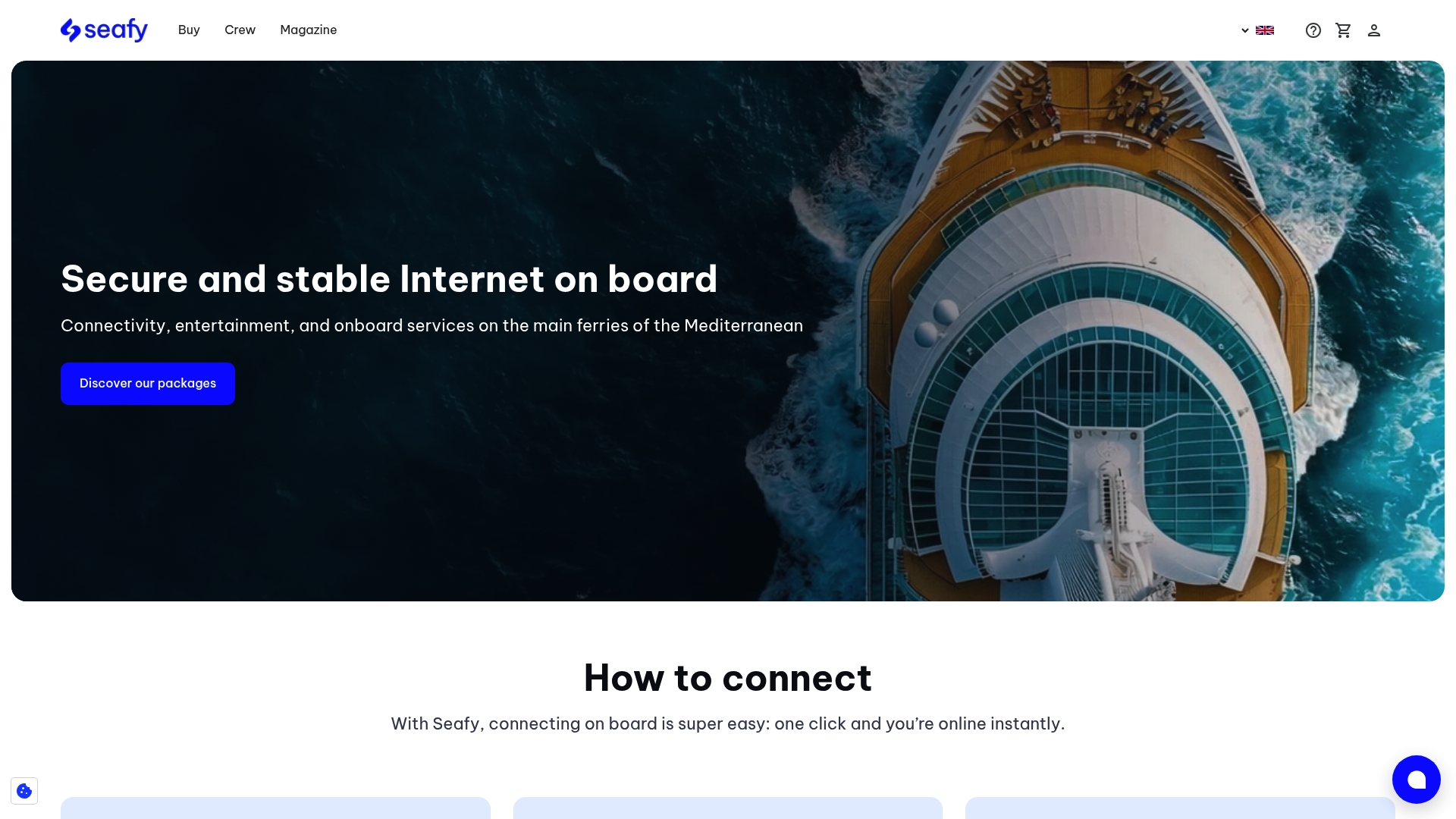
Seafy uses Starlink to bring satellite internet directly to ferries across the Mediterranean. The service pairs fast satellite connectivity with an onboard portal that lets passengers and crew buy and activate packages during a voyage. Seafy also bundles entertainment features and a crew portal to support daily onboard needs.
Core Features
Seafy offers simple one click connection onboard and several packages labeled Easy, Digital, Digital Plus, and Star Plus to match browsing or streaming needs. The portal supports secure payments through credit card, Revolut Pay, Google Pay, and Apple Pay and provides news, games, radio, travel information, and a blog. Operators such as Corsica Ferries, Grimaldi Lines, and GNV integrate Seafy for passenger and crew access.
Key Differentiator
The platform’s standout capability is its reliance on Starlink to maintain stable internet at sea, including on larger vessels. That satellite link reduces the service gap that traditional shore based systems create when ships move offshore. For crew who must send large files or maintain video calls, this makes a practical difference in daily operations.
Pros
Connecting and activating a package is quick and straightforward through the onboard portal, which saves time for both crew and passengers. Multiple package tiers let you choose light browsing or full streaming without guessing. Payment options are broad, including Revolut Pay and mobile wallets, so purchases complete with minimal friction. The additional content catalog keeps passengers occupied during crossing and gives crew easy access to route news and service updates.
Cons
- Connection quality can vary by vessel and location, so speeds may differ between sailings.
Who It’s For
Seafy fits passengers and crew on Mediterranean ferry routes who need reliable onboard internet for communication, streaming, or remote work. It also suits maritime staff who manage onboard services and want a single portal for passenger connectivity. Coastal operators who already work with Corsica Ferries, Grimaldi Lines, or GNV will find the integration relevant.
Unique Value Proposition
Onboard activation via seafy.com combined with multiple instant payment methods lets you buy and start a package while still on deck. That removes the need for pre registration or paper vouchers and gets devices online within minutes. For crew, it reduces passenger support time and simplifies billing during busy embarkation periods.
Real World Use Case
A passenger on a Corsica Ferries crossing chooses the Digital Plus package to stream movies, check messages, and make video calls. The passenger pays with a mobile wallet, activates the package through the portal, and stays connected for the duration of the trip. Crew use the same portal to monitor active sessions and share onboard announcements.
Pricing
Seafy lists package pricing from €4.99 to €30, depending on the plan selected and the session length. Packages are tiered by expected usage from light browsing to full streaming, letting you pick the level you need without guessing.
Website: https://seafy.com
Nowhere Networks
At a Glance
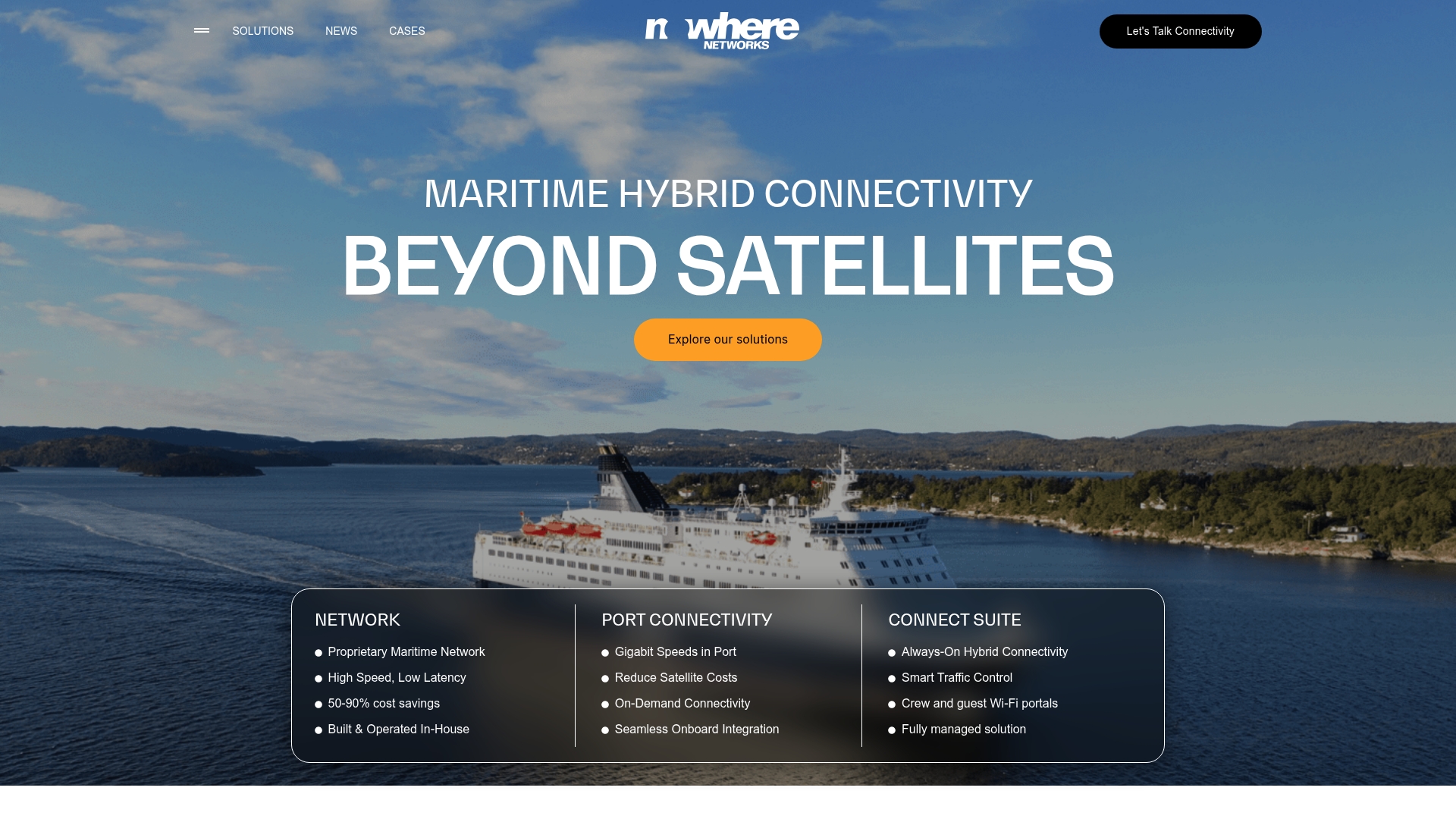
Nowhere Networks owns a proprietary land based maritime network that acts as a low latency backbone for vessels and ports. This backbone pairs with satellite and LTE or 5G to cut reliance on satellite only links. The vendor positions that mix as a way to deliver land like performance at sea while lowering operational cost.
Core Features
The platform combines land, satellite, and LTE or 5G radios into a single managed stack and offers a Nowhere Connect Suite™ for traffic control and passenger portals. Nowhere supplies network design, equipment installation, and ongoing management under a Network as a Service model. The package also uses LEO satellites alongside LTE to fill coverage gaps and route traffic efficiently.
Key Differentiator
Ownership of the proprietary land based maritime network is the clearest distinction. That backbone reduces round trip delay compared with satellite centric setups and increases available capacity near shore. Combined with the vendor owned antenna technology, this grants operators more control over performance and traffic prioritization than many third party aggregators.
Pros
Nowhere delivers a turnkey, fully managed option that removes the daily networking burden from shipboard teams. The platform can cut operating cost compared with traditional satellite first architectures because traffic uses the land based backbone when available. Its traffic management tools let operators prioritize crew critical systems over passenger streaming. The company reports successful deployments across vessels and ports, which supports its claims about real world reliability.
Cons
- Buyer may face significant upfront investment or long term contractual commitments for full installation and management.
- Pricing is not listed publicly, so operators must request a custom quote to evaluate total cost.
- The hybrid architecture can be complex to integrate with older onboard systems on some vessels.
When It May Not Fit
If your fleet runs older onboard systems that cannot accept modern networking stacks, this solution may add integration overhead. Operators with only short term or seasonal need for connectivity may find the contractual model too rigid. Smaller operators who need a plug and play hotspot without installation may prefer lighter alternatives.
Who It’s For
Maritime operators, port authorities, and offshore facility managers who need sustained high bandwidth and granular traffic control will benefit most. Teams migrating away from expensive satellite only links and willing to invest in fixed infrastructure are an ideal fit. This product suits organizations that want a single vendor to handle design, install, and run network operations.
Real World Use Case
A ferry operator replaced legacy satellite links with Nowhere Networks to move heavy passenger traffic onto shore connected points of presence. Crew systems remained on prioritized paths while passenger portals handled billing and session control. The switch reduced satellite load and unlocked higher throughput for onboard services.
Pricing
Pricing is custom and not published on the website. Operators receive tailored quotes that reflect vessel count, installation scope, and managed service levels. Project scale and ongoing service choices determine the final commercial terms.
Website: https://nowherenetworks.com
Marpoint
At a Glance
Marpoint reports serving more than 4,000 vessels. That scale shows a focus on fleet level deployments rather than single vessel subscriptions. The company combines hardware, network infrastructure, managed IT, and a maritime cybersecurity stack branded as Governor and EVO suite. The product mix targets operators who need centralized control across many ships.
Core Features
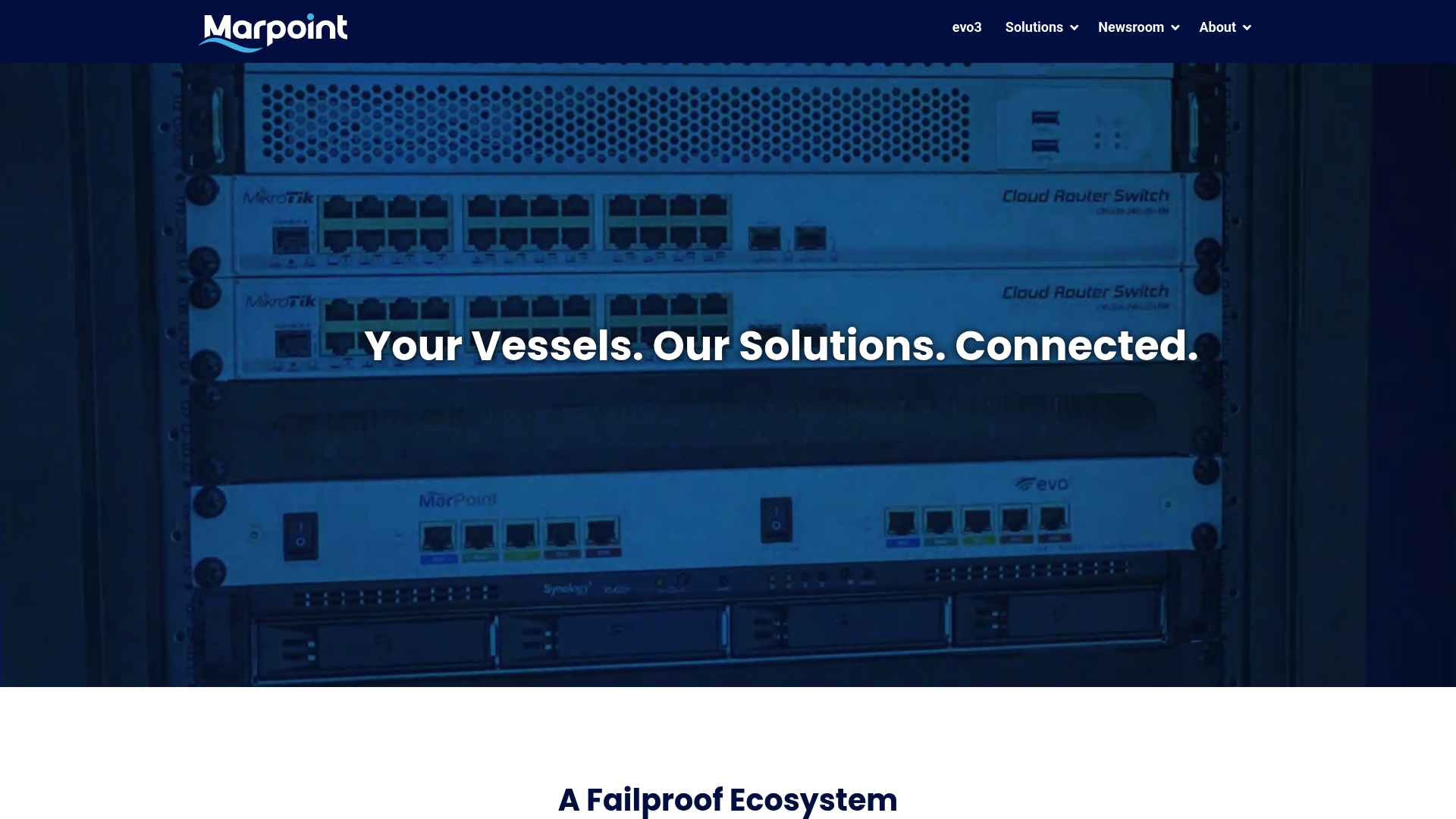
Marpoint centers its stack on the evo3 router for next generation network management with multi WAN support, enterprise security, and high speed networking. The UNI Virtualization server centralizes fleet IT, letting teams run virtual machines and services from shore. Managed IT services include remote monitoring and proactive support, while asset management gathers network assets and sensor data for shipboard telemetry. The cybersecurity layer bundles firewalls, intrusion detection, AI threat detection, and disaster recovery tools aligned with maritime regulatory standards.
Key Differentiator
Building on that compliance claim, Marpoint mixes virtualization, fleet wide control, and AI driven threat detection into a single ecosystem. This lets operators govern connectivity and security from a central point without stitching multiple vendors together. The model is aimed at fleets that prefer a single vendor responsible for network, IT, and cybersecurity at scale.
Pros
Marpoint delivers integrated maritime solutions that combine connectivity, onboard IT, and cybersecurity. The vendor advertises class approval and alignment with IMO 2021 and IACS URs, which helps when meeting regulatory requirements across flag states. Global coverage and on demand managed services support continuous operations and reduce the need for large onboard IT teams. Case studies from major maritime clients indicate practical deployment experience at sea.
Cons
-
Deployment complexity can rise for non technical teams. Integration of a multi layer ecosystem requires trained staff or shore based IT.
-
Pricing details are not listed publicly. Procurement will likely require direct contact and a bespoke quote.
-
Lack of published pricing tiers may delay budget approvals for smaller operators.
When It May Not Fit
Small operators with a single ship and minimal IT staff may find the solution more involved than they need. Teams without shore side IT support will face a steeper setup and maintenance curve. Buyers who need transparent, off the shelf pricing or fixed tier plans should anticipate custom proposals instead of published rates.
Who It’s For
Fleet managers, shipowners, and maritime IT professionals who want centralized fleet management and integrated cybersecurity will get the most value. The product suits operators that plan multi ship rollouts and need a single vendor to handle networking, virtualization, and security. It fits organizations preparing for regulatory audits and tighter compliance routines.
Real World Use Case
A shipping company deploys Marpoint’s EVO3 router and UNI virtualization across its fleet to improve onboard internet and harden defenses. The deployment lets the operator push updates and monitor network health from shore. That setup supports crew welfare through better connectivity while reducing time spent troubleshooting at sea.
Pricing
Pricing is not specified publicly. Marpoint asks prospects to contact sales for a custom quote and deployment estimate. Expect bespoke pricing tied to fleet size, hardware choices, and managed service scope.
Website: https://marpoint.gr
Zwana Nexus
At a Glance
The edge appliance includes a built in WatchGuard UTM firewall for onboard security and policy enforcement. It combines onboard virtualization, local storage, and real time analytics to monitor vessel systems. Multi orbit connectivity with SD WAN and automated failover keeps links up across satellite and cellular networks.
Core Features
Zwana Nexus pairs edge computing hardware with onboard virtualization and local storage to run shipboard applications. The platform bundles WatchGuard UTM firewall, onboard telemetry, and a fleet SaaS portal for remote IT management. It delivers multi orbit connectivity through SD WAN, automated failover, and quota managed crew internet.
Key Differentiator
The defining feature is the maritime specific edge platform that merges secure connectivity with fleet monitoring. That combination gives operators ship level processing, real time telemetry, and policy enforcement from shore. Seafy focuses on passenger portals, while Zwana Nexus focuses on fleet level IT, crew services, and hardware integration.
Pros
The vendor states built in security aligns with IMO and IACS standards. Tight hardware and software integration reduces onsite appliance sprawl and simplifies fleet wide monitoring. Multi orbit links, remote policy control, and crew internet quotas support operations and crew welfare without extra boxes.
Cons
- Complex setup and configuration may require certified IT staff for installation and ongoing maintenance.
- Pricing and licensing details are not specified, so small fleets will need to contact sales for a quote.
- Vendor documentation offers limited public cost details and licensing models, which complicates budgeting.
When It May Not Fit
Not a good fit for single vessel operators with limited IT budgets. Operators with no onboard IT team will face higher installation and maintenance costs. Owners who need consumer wireless packages and minimal hardware should choose simpler solutions.
Who It’s For
Fleet operators, ship managers, and vessel owners running commercial fleets will benefit most. Teams that require centralized IT control, telemetry visibility, and enforced security policies get clear operational gains. It also suits operators who prefer crew internet and VoIP integrated with vessel systems.
Real World Use Case
A shipping company deployed Zwana Nexus across its fleet to centralize IT management and telemetry. Shore teams pushed policy updates, watched hardware health, and rerouted traffic when satellite links degraded. Crew received quota managed internet and onboard VoIP without separate vendor rollouts.
Pricing
Pricing is not specified in public materials. The vendor markets Zwana Nexus as a tailored enterprise solution that requires direct contact for a quote. Fleet size and configuration determine final costs and licensing scopes.
Website: https://onenet.group/zwana
Comparison of alternatives
Passengers and maritime crew seeking immediate and user-friendly internet connectivity during Mediterranean voyages will recognize distinctions between Seafy’s portal-based solution and alternatives offering tailored enterprise features.
Accessibility and Convenience
Seafy excels in providing a user-friendly experience through its instant onboard package activation via the onboard portal, catering to passengers and crew alike. In contrast, solutions like Marpoint and Zwana Nexus, while offering fleet management tools, necessitate technical setup and maintenance, making them less accessible for short-term or immediate use.
Enterprise-Level Functionalities
Nowhere Networks and Zwana Nexus offer enterprise-grade capabilities, such as proprietary land-based maritime networking and integrated fleet telemetry, respectively. These features are ideally suited for operators managing large fleets with high traffic and performance requirements. These advanced functionalities, however, result in greater complexity and potential preliminary costs for integration and deployment.
Best fit
- For passengers on Mediterranean ferry routes relying on personal device connectivity and desiring quick package activation without pre-registration, Seafy provides an accessible and immediate option.
- Operators emphasizing reduced satellite load and cost while integrating land networks may prefer Nowhere Networks for its hybrid architecture and performance optimization.
- Shipping companies needing advanced centralized IT and fleet monitoring systems will find Zwana Nexus a strong match with integrated telemetry and security policy enforcement.
- Crewmembers responsible for managing passenger internet usage and announcements will appreciate Seafy’s simplified onboard portal and session control tools.
Our pick
For ferry passengers and crews requiring reliable and instantly accessible internet services while at sea, Seafy.com is a standout choice due to its onboard activation capabilities and flexible payment systems. While operators managing expansive fleets may benefit from exploring the advanced functionalities of alternatives like Nowhere Networks or Zwana Nexus, Seafy’s ease of implementation and use addresses immediate connectivity needs effectively.
Reliable maritime internet solutions significantly contribute to improving communication, crew welfare, and operational efficiency onboard.
Choosing the Right Internet Service for Crew Connectivity Needs
Many crew members and passengers struggle with inconsistent internet access while at sea. Reliable Wi-Fi with clear options for streaming, communication, and remote work is key to staying connected on Mediterranean ferry routes. Seafy offers a straightforward solution that uses Starlink satellite technology to provide stable internet onboard vessels like those operated by Corsica Ferries and GNV.
With Seafy, you can activate tailored internet packages quickly through an easy portal. It supports convenient payment methods including credit card, Google Pay, Apple Pay, and Revolut Pay. Whether you need light browsing or full streaming capabilities, Seafy has a package built for you. Learn more about how Seafy enhances onboard connection quality and crew welfare by visiting Seafy.
Looking for reliable internet designed for maritime travel? Visit Seafy now to choose the right plan and start your voyage with seamless connectivity.
FAQ
How does Seafy support crew connectivity while at sea?
Seafy offers a reliable and easy-to-use solution for onboard internet connectivity. It provides various packages allowing crew members to stay connected for communication, remote work, and entertainment during voyages. Using Seafy, crew can quickly activate packages through the onboard portal while onboard the ferry.
What is the difference between Nowhere Networks and Seafy?
Nowhere Networks owns a proprietary land-based maritime network, which enhances low latency connectivity for vessels close to shore. This advantage benefits vessels needing high bandwidth and granular traffic control. In contrast, Seafy focuses on delivering satellite connectivity via Starlink, making it a great choice for consistent internet while at sea across various vessel sizes.
Can I use Seafy if my vessel operates on longer routes?
Seafy is designed for seamless connectivity, especially on longer routes where satellite links are crucial. Its reliance on Starlink provides a continuous internet experience even far from shore. You can expect a stable connection while using Seafy, regardless of distance from the coastline.
How do Seafy’s payment options benefit crew members?
Seafy supports multiple payment options including credit card, Revolut Pay, Google Pay, and Apple Pay, which makes the purchasing process seamless for crew members. This flexibility ensures crew can quickly activate their internet packages without hassle during busy embarkation periods.
What features make Seafy ideal for streaming and remote work?
Seafy provides different package tiers such as Digital Plus, which is specifically tailored for streaming and remote work. The service supports stable internet connections necessary for bandwidth-intensive applications like video calls and streaming services, allowing crew to stay engaged while at sea.