Onboard experiences
Valletta by Ferry with Grimaldi Lines: Ultimate Guide
Complete guide to reaching Valletta by Grimaldi Lines ferry: routes, schedules, booking tips, onboard experience, arrival logistics, and connectivity advice for 2026 travelers.
31 March 2026
Valletta by Ferry with Grimaldi Lines: Ultimate Guide
Most travelers racing to Malta book the fastest ferry from Sicily, completely missing the unique experience and convenience of Grimaldi Lines’ long-haul service from mainland Italy. This slower maritime journey transforms travel time into an adventure, offering car transport, overnight cabins, and a mini-cruise atmosphere at a fraction of typical costs. Whether you’re planning a road trip through Europe, seeking budget-friendly passage, or craving the romance of slow travel, the Grimaldi Lines route to Valletta delivers practical benefits wrapped in Mediterranean charm. This guide walks you through booking, schedules, onboard life, arrival logistics, and expert tips to make your ferry voyage seamless and memorable.
Table of Contents
- Why choose the Grimaldi Lines ferry to Valletta?
- Routes, schedules, and booking your voyage
- Onboard experience: facilities, cabins, and what to expect
- Arrival in Valletta: disembarkation, transport, and getting to the city
- Practical travel tips: staying connected and exploring Valletta
- Stay connected with Seafy Wi-Fi and plan your seamless ferry adventure
- Frequently asked questions
Key Takeaways
| Point | Details |
|---|---|
| Best for car travelers | Grimaldi Lines offers a slow but practical option for those taking cars from mainland Italy to Valletta. |
| Long journey, book cabins | Secure a cabin in advance since trips can last over 25 hours and are more comfortable overnight. |
| Terminal outside city center | Expect a 1.5km walk, bus ride, or short taxi to reach Valletta city from the ferry port. |
| Mixed reviews, pet-friendly | Travelers like affordable fares and pet access, but note delays, staff issues, and basic amenities. |
| Stay connected with Wi-Fi | Prepare for downtime and remote work by arranging onboard Wi-Fi or offline tools before departure. |
Why choose the Grimaldi Lines ferry to Valletta?
Grimaldi Lines serves a specific traveler profile beautifully. If you’re driving through Europe and want your vehicle in Malta, need affordable passage for a family, or simply prefer the journey to be part of the destination, this ferry route stands apart. Unlike the quick passenger-only options from Sicily, Grimaldi operates RoRo passenger ferries ideal for car travelers departing from Salerno and other Italian ports.
The key distinction lies in what you prioritize. Virtu Ferries runs fast catamarans between Sicily and Malta, cutting travel time to under two hours but limiting vehicle space and charging premium rates. Grimaldi’s Salerno route takes 25 to 31 hours, but you get spacious car decks, private cabins for overnight comfort, and significantly lower fares. The experience feels less like transport and more like a ferry adventure with Grimaldi Lines, complete with onboard dining, lounges, and the chance to watch the Mediterranean unfold from your deck chair.
Who benefits most from Grimaldi Lines:
- Road trippers bringing vehicles to explore Malta and beyond
- Budget-conscious families or groups seeking affordable passage
- Slow travel enthusiasts who value the journey itself
- Pet owners, as Grimaldi accommodates animals in designated areas
- Travelers departing from central or northern Italy who want direct routes
Cost comparisons reveal substantial savings. While fast ferries charge €80 to €150 per person one-way, Grimaldi’s deck passage starts around €50 to €70, with cabin upgrades adding €30 to €60. Vehicle transport costs €60 to €120 depending on size, still cheaper than flying and renting a car in Malta. For a family of four with a vehicle, you’re looking at €300 to €400 total versus €600-plus on faster alternatives.
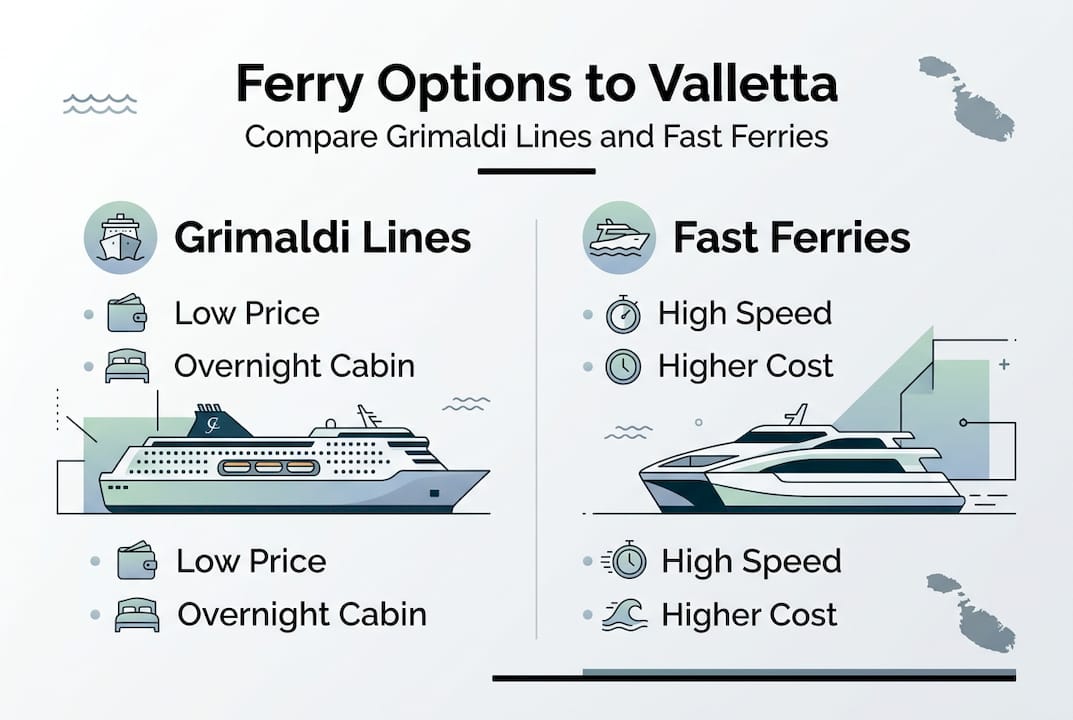
The trade-off is time. Your 25-hour voyage includes overnight passage, so book a cabin to sleep comfortably. Morning arrivals in Valletta mean you disembark refreshed and ready to explore. The slower pace also lets you enjoy destinations and life onboard, turning transit into relaxation.
Beyond Salerno, Grimaldi connects Malta with other Italian ports like Livorno, Catania, and Palermo, plus Tunis. These route options to Malta expand your itinerary possibilities, letting you design multi-country road trips with maritime legs that save on fuel and tolls.
Pro Tip: Book Grimaldi when your trip includes a vehicle, when you’re traveling overnight and want cabin comfort, or when you’re seeking a mini-cruise atmosphere without cruise ship prices. The slower pace rewards those who plan ahead and embrace the journey.
Routes, schedules, and booking your voyage
Grimaldi’s primary Malta service runs between Salerno and Valletta on a fixed weekly schedule. As of 2026, the typical schedule shows departures from Salerno on Friday nights around midnight, arriving in Valletta Saturday afternoon at 3pm. Return voyages leave Valletta Sunday evenings at 5pm, reaching Salerno Monday morning by 7am. This timing suits weekend explorers and those syncing ferry travel with work schedules.
Seasonal variations occur, especially during summer peak season when Grimaldi may add sailings or adjust times. Always verify schedules 30 to 60 days before travel, as cargo demands and port logistics occasionally shift departure windows. Winter months sometimes see reduced frequency, so advance planning matters.
Sample weekly schedule for Salerno–Valletta:
| Route | Departure Day | Departure Time | Arrival Day | Arrival Time | Duration |
|---|---|---|---|---|---|
| Salerno to Valletta | Friday | 11:59pm | Saturday | 3:00pm | ~25 hours |
| Valletta to Salerno | Sunday | 5:00pm | Monday | 7:00am | ~26 hours |
Beyond Salerno, routes also include Catania and other Italian ports like Livorno and Palermo on fixed weekly schedules. Tunis connections operate less frequently but open North African travel options. Each route serves different traveler needs, so match your departure city to your broader European itinerary.
Booking requires a few straightforward steps. Grimaldi’s direct website lists some routes, though Malta services aren’t always prominently featured. Third-party booking platforms like AFerry and FerryConnection aggregate schedules, compare prices, and simplify reservations. These sites let you filter by date, vehicle type, and cabin preference, then book instantly with confirmation emails.
How to book your Grimaldi Lines voyage:
- Visit booking platforms like AFerry.com or FerryConnection.com for Malta routes
- Enter travel dates, passenger count, and vehicle details if applicable
- Compare cabin options: inside cabins, outside cabins with windows, or deck passage
- Select meal packages or plan to purchase food onboard separately
- Complete payment and receive e-tickets via email, usually within 24 hours
- Arrive at port 90 minutes early for vehicle check-in and boarding
Pricing varies by season, cabin type, and how far in advance you book. Early reservations, especially for summer sailings, secure better rates and guarantee cabin availability. Deck passage (Pullman seats or open seating) costs least but offers minimal comfort for overnight journeys. Inside cabins provide beds, private bathrooms, and air conditioning for €80 to €120 per person. Outside cabins with portholes add €20 to €40 but deliver natural light and sea views.
Vehicle transport requires accurate dimensions during booking. Cars under 5 meters cost €60 to €100, while larger vehicles like vans or SUVs range from €100 to €150. Motorcycles and bicycles travel for €30 to €50. Trailers and campers incur additional fees based on length.
For those planning ferry holiday destinations or exploring Grimaldi connections in Sardinia, booking multiple legs together sometimes unlocks discounts. Ask booking agents about multi-route packages if your itinerary includes several ferry segments.
Pro Tip: Double-check schedules 30 days before departure, as cargo priorities occasionally shift sailing times. Book cabins at least two weeks ahead during peak summer months to avoid sold-out situations.
Onboard experience: facilities, cabins, and what to expect
The Eurostar Salerno, Grimaldi’s primary vessel on the Malta route, accommodates 950 passengers, 160 cars, 89 cabins, and 64 Pullman seats. This RoRo design prioritizes vehicle transport, so expect a functional rather than luxurious atmosphere. The ship feels more working ferry than cruise liner, with cargo trucks sharing deck space and utilitarian interiors.
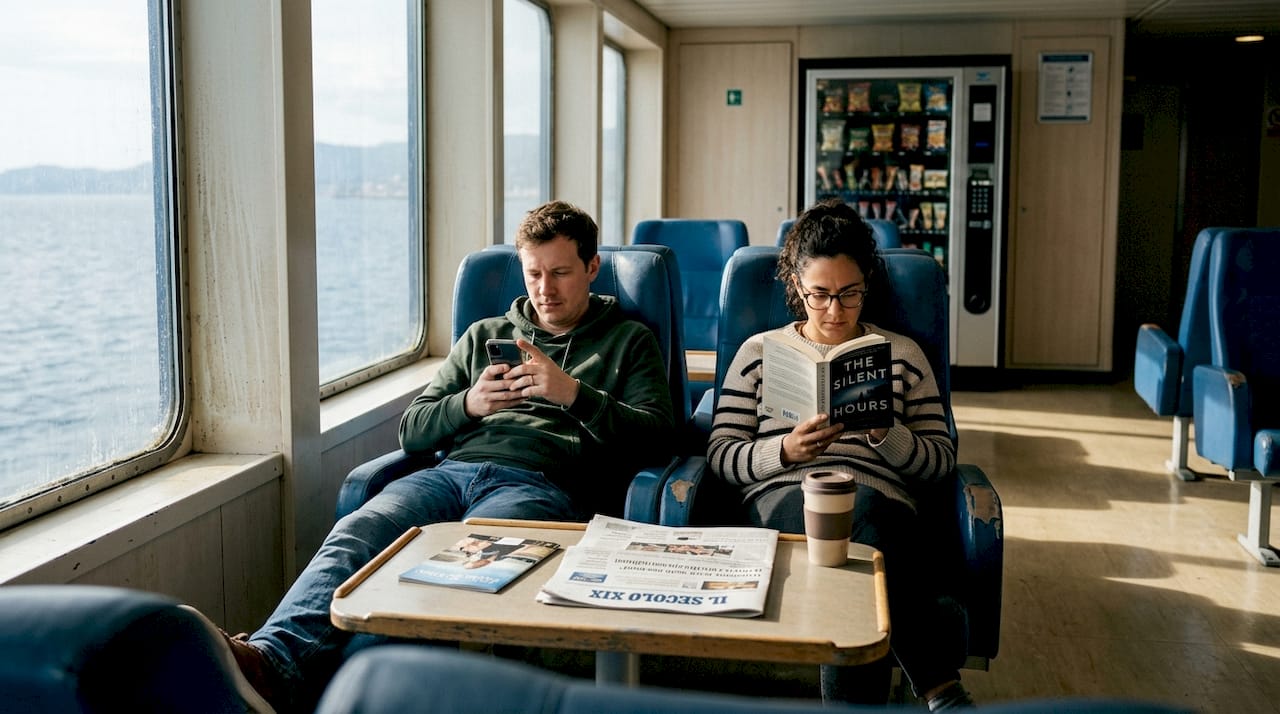
Cabins range from basic inside rooms with bunk beds to outside cabins featuring windows and slightly more space. All include private bathrooms with showers, air conditioning, and basic linens. Cleanliness standards generally meet expectations, though some travelers report dated furnishings. Pullman seats offer reclining chairs in shared lounges, suitable for budget travelers on shorter daylight routes but less comfortable for overnight passages.
Onboard dining includes a self-service cafeteria with hot meals, sandwiches, snacks, and beverages. Food quality receives mixed reviews. Some passengers praise affordable pricing and decent pasta dishes, while others criticize limited variety and lukewarm offerings. Bringing your own snacks, especially for picky eaters or dietary restrictions, adds comfort. The ship also has vending machines and a small bar serving coffee, beer, and spirits.
Common areas include indoor lounges with seating, outdoor deck spaces for fresh air and views, and a small shop selling essentials like toiletries and souvenirs. Entertainment is minimal, no organized activities or evening shows, so bring books, download movies, or plan to work if you need connectivity.
Pet policies allow dogs and cats in designated kennels or cabins, depending on size and booking. Fees apply, and advance notice is required. This pet-friendly approach attracts travelers who refuse to leave furry companions behind.
Real traveler experiences reveal both strengths and challenges. Reviews on Trustpilot average 3.5 out of 5, highlighting convenience, affordability, pet-friendliness, and clean cabins as top positives. However, complaints focus on staff rudeness, delays, limited food options, and slow disembarkation that can stretch beyond an hour.
One frequent criticism involves boarding and departure delays. Cargo loading takes priority, sometimes pushing departure times back 30 to 60 minutes. Disembarkation follows a similar pattern, with vehicle passengers waiting while trucks exit first. Patience is essential, especially if you have tight onward connections.
Wi-Fi availability exists but quality varies. Some sailings offer paid Wi-Fi packages through onboard portals, while others provide spotty free access. Speeds rarely support video streaming or large downloads, so plan offline entertainment. For those needing reliable connectivity, consider purchasing a local SIM card before boarding or exploring working remotely on Grimaldi Lines strategies.
Power outlets in cabins let you charge devices, though shared lounges have limited plugs. Bring a power strip if traveling with multiple electronics. The ship’s 220V European outlets require adapters for non-European devices.
Useful tips for overnight journeys:
- Book a cabin for comfort, privacy, and better sleep on 25-hour voyages
- Pack snacks, water, and entertainment to supplement onboard options
- Expect a cargo-truck atmosphere with functional rather than luxurious vibes
- Arrive early to secure good lounge seating if traveling deck passage
- Bring seasickness medication if you’re sensitive, as Mediterranean swells can rock the ship
The life onboard Grimaldi ferries rewards those who embrace the journey’s slower pace. Watching the Italian coastline fade, enjoying sunset from the deck, and waking to Malta’s Grand Harbour creates memories that fast ferries simply can’t match.
Arrival in Valletta: disembarkation, transport, and getting to the city
Grimaldi ferries dock at Kordin Grain Terminal or Valletta Cruise Port area in Grand Harbour, Floriana, about 1.5 kilometers from Valletta’s historic center. This location is less central than Virtu Ferries’ terminal, requiring additional transport to reach the city.
Disembarkation begins with vehicle passengers, as cars and trucks exit first. Foot passengers follow, sometimes waiting 30 to 60 minutes depending on cargo volume. Once off the ship, you’ll clear a simple customs check, then face transport choices.
Getting from the ferry port to Valletta:
-
Walking: The most budget-friendly option involves walking around the bay to Dwieli bus stop, then catching buses 2, 3, or 4 to Valletta. The walk takes 15 to 20 minutes and includes a steep climb, challenging with heavy luggage. From Kordin pier, the route to Valletta center spans roughly 1.5 kilometers.
-
Taxi: Taxis wait at the port, charging €10 to €15 for the short ride to Valletta. This option suits travelers with luggage or those arriving in hot weather. Negotiate fares before entering, as meters aren’t always used.
-
Ride-sharing: Bolt operates in Malta, offering app-based rides at competitive rates. Download the app before arrival and ensure you have mobile data or Wi-Fi to request pickups.
-
Public buses: Malta’s public transport network, operated by Malta Public Transport, connects the port area to Valletta via lines 2, 3, and 4. Buses run frequently, cost €2 for a two-hour ticket, or use a Tallinja card for better rates. The nearest stop requires a 10 to 15-minute walk from the terminal.
For vehicle passengers, driving into Valletta presents challenges. The city’s narrow streets, limited parking, and restricted zones make cars impractical for exploring the historic core. Consider parking in Floriana or using park-and-ride facilities, then walking or busing into Valletta.
Public transport in Malta centers on the Tallinja card, a rechargeable smart card offering unlimited travel for set periods. A seven-day card costs €21, ideal for tourists planning extensive exploration. Single-journey tickets cost €2 in summer, €1.50 in winter, purchased from drivers with exact change. The Tallinja card saves money and eliminates cash hassles.
Main bus routes from the port area include:
- Line 2: Connects Floriana and Valletta with frequent service
- Line 3: Runs through Valletta to Bugibba and northern Malta
- Line 4: Links Valletta with Sliema and St. Julian’s, popular tourist areas
Buses operate from 5:30am to 11pm, with reduced night service. Schedules and real-time tracking are available via the Tallinja app, downloadable before arrival.
Pro Tip: If you have heavy luggage or arrive in peak summer heat, consider a taxi for the steep climb from the port. The €10 to €15 fare buys comfort and saves energy for exploring Valletta’s hills and stairs.
Practical travel tips: staying connected and exploring Valletta
Connectivity matters for modern travelers, whether you’re navigating with maps, sharing photos, or staying in touch with home. Onboard Wi-Fi on Grimaldi ferries exists but remains unreliable for consistent use. Speeds fluctuate, and paid packages sometimes fail to deliver promised performance. Plan offline entertainment and download maps before boarding.
Upon arrival in Malta, connectivity options expand. Local SIM cards from providers like Vodafone, GO, and Melita offer affordable data plans. A tourist SIM with 10GB costs €15 to €20, available at the airport, convenience stores, and telecom shops. These SIM cards work in unlocked phones and provide reliable 4G coverage across Malta.
Public Wi-Fi hotspots exist in Valletta’s main squares, cafes, and some government buildings, though security and speed vary. For sensitive tasks like banking, use mobile data or a VPN.
Valletta’s compact size makes walking the best exploration method. The entire city spans less than one square kilometer, with most attractions within 15 minutes of each other. However, steep streets and numerous staircases challenge those with mobility issues. Comfortable walking shoes are essential.
Top walkable routes and attractions from Grand Harbour:
- Upper Barrakka Gardens: Panoramic views of Grand Harbour, 10-minute walk from port
- St. John’s Co-Cathedral: Baroque masterpiece with Caravaggio paintings, central Valletta
- Republic Street: Main shopping and dining thoroughfare, runs through city center
- Fort St. Elmo: Historic fortification at Valletta’s tip, houses National War Museum
- Merchant Street: Charming narrow lane with local shops and cafes
Valletta earned UNESCO World Heritage status for its Renaissance architecture and fortifications. The entire city functions as an open-air museum, with every street revealing history. Allocate at least a full day to explore properly, more if you visit museums and take breaks.
Public transit extends beyond Valletta to Malta’s broader attractions. Using a Tallinja bus card unlocks unlimited travel for €21 per week, connecting you to Mdina, the Blue Grotto, Gozo ferries, and beach towns. Key routes include:
- Line 130: Direct express to Malta International Airport
- Lines to Sliema/St. Julian’s: Beach areas and nightlife hubs
- Lines to Mdina: Ancient walled city in central Malta
- Cirkewwa routes: Access to Gozo ferry terminal
Buses run frequently during daytime but thin out after 9pm. Plan evening returns accordingly or budget for taxis.
Pro Tip: Download offline maps of Valletta and Malta before arrival. Google Maps allows offline area downloads, ensuring navigation even without data. This simple step prevents getting lost and saves mobile data for other uses.
For those interested in Wi-Fi tips for ferry travelers, understanding connectivity limitations helps set realistic expectations and plan accordingly.
Stay connected with Seafy Wi-Fi and plan your seamless ferry adventure
Your Grimaldi Lines voyage to Valletta combines practical transport with memorable maritime experiences, but staying connected throughout the journey enhances every aspect. Whether you’re coordinating arrival logistics, working remotely during the crossing, or simply sharing your adventure in real time, reliable connectivity transforms good trips into great ones.
Seafy partners with major ferry lines including Grimaldi to deliver high-speed Wi-Fi on board with Seafy, ensuring you stay online even in the middle of the Mediterranean. Our satellite-powered networks provide stable connections for streaming, video calls, and productivity, turning your 25-hour voyage into productive or entertaining time rather than a digital blackout.
Beyond connectivity, Seafy’s platform offers comprehensive resources for ferry travelers. Explore detailed guides on routes, booking strategies, and onboard experiences across Mediterranean ferry networks. Our Malta and ferry travel tips section delivers insider knowledge on everything from port logistics to island exploration, helping you plan seamlessly from departure to destination.
For travelers combining work and leisure, Seafy’s reliable onboard Wi-Fi means you can catch up on emails during the crossing, then arrive in Valletta ready to explore without connectivity stress. Families can keep kids entertained with streaming services, while solo travelers stay connected with loved ones throughout the journey.
Ready to book your Valletta adventure with confidence? Visit Seafy to discover how our connectivity solutions and travel resources make ferry journeys smoother, more productive, and infinitely more enjoyable.
Frequently asked questions
How long does the ferry from Salerno to Valletta take?
The Salerno to Valletta ferry takes about 25 to 31 hours, depending on sea conditions and the specific sailing schedule. Overnight passages are standard, making cabin bookings worthwhile for comfort.
Can I bring my car on the Grimaldi Lines ferry to Malta?
Yes, Grimaldi Lines ferries accommodate up to 160 cars on routes like Salerno to Valletta. Book vehicle space in advance, especially during summer peak season, to guarantee availability.
Where does the Grimaldi ferry dock in Malta?
The main Grimaldi terminal is at Kordin Grain Terminal or Valletta Cruise Port area in Grand Harbour, Floriana, approximately 1.5 kilometers from Valletta’s historic center. Taxis, buses, and walking routes connect the port to the city.
Is the Grimaldi ferry suitable for overnight travel?
Yes, the long journey duration makes overnight travel standard. Book cabins for comfort as the voyage includes sleeping hours, and deck passage offers minimal rest options for 25-plus-hour crossings.
What’s the best way from the ferry port to Valletta city center?
You can walk the steep 1.5-kilometer route, take a taxi for €10 to €15, or use local buses like lines 2, 3, or 4 from Dwieli stop. Taxis suit travelers with luggage, while buses offer budget-friendly access to central Valletta.