Tech & Wi-Fi
Ferry WiFi Portal: Seamless Connectivity at Sea
A ferry WiFi portal lets travelers access, purchase, and activate onboard internet. Learn its core purpose, types, package options, and how Seafy works.
13 January 2026
Ferry WiFi Portal: Seamless Connectivity at Sea
Most American travelers find that staying connected while crossing the Mediterranean is more complicated than logging on at a café in New York or Paris. Reliable WiFi on ferries like Grimaldi and Corsica Ferries comes with distinct challenges. Over 60 percent of maritime passengers struggle with patchy connections at sea. Knowing how ferry WiFi portals work helps remote workers and leisure seekers alike choose the right digital packages, avoid costly mistakes, and stay productive no matter where the journey leads.
Table of Contents
- Ferry WiFi Portal Defined and Debunked
- Types of Ferry WiFi Portal Systems
- How Passengers Access and Use the Portal
- Onboard Internet Packages and Coverage
- Critical Safety, Privacy, and Cost Factors
Key Takeaways
| Point | Details |
|---|---|
| Ferry WiFi Portals Enhance Connectivity | Ferry WiFi portals transform the passenger experience by providing stable internet access during maritime travel. |
| Types of Connectivity Solutions | Ferry WiFi systems include satellite-based, cellular, and hybrid approaches, each serving different operational scenarios. |
| User-Friendly Access and Packages | Passengers can easily access internet packages tailored to their needs, from basic messaging to high-bandwidth options for streaming. |
| Security and Cost Awareness | Comprehensive security measures protect user data, while clear pricing structures help passengers manage their costs effectively. |
Ferry WiFi Portal Defined and Debunked
A ferry WiFi portal is a digital gateway that allows passengers to access, purchase, and manage internet connectivity while traveling on maritime vessels. Unlike traditional land-based internet services, maritime connectivity presents unique technological challenges that require specialized solutions. Wi-Fi solutions at sea operate through complex satellite networks and advanced transmission technologies to provide stable internet access in remote maritime environments.
The fundamental purpose of a ferry WiFi portal is to transform the passenger experience by bridging communication gaps during sea travel. Modern portals offer seamless internet access that enables travelers to stay connected, work remotely, stream entertainment, and maintain communication with family and colleagues. These digital platforms typically feature user-friendly interfaces where passengers can select internet packages, track data usage, and manage their online connectivity in real time.
Key components of an advanced ferry WiFi portal include satellite connectivity, secure payment gateways, bandwidth management systems, and adaptive networking technologies. These systems must contend with unique maritime challenges such as signal interference, geographical limitations, and constant vessel movement. Advanced providers like Seafy have developed innovative solutions that leverage cutting-edge satellite technologies to ensure consistent, high-speed internet access across different maritime routes.
Pro tip: Before boarding, always screenshot your WiFi package details and login credentials to ensure smooth connectivity during your maritime journey.
Types of Ferry WiFi Portal Systems
Ferry WiFi portal systems can be broadly categorized into three primary technological architectures: satellite-based, cellular network, and hybrid connectivity solutions. Digital transformation in ferry travel has dramatically expanded the capabilities of these technological platforms, enabling more sophisticated internet access methods for maritime travelers.
Satellite-based systems represent the most advanced and reliable WiFi portal technology for maritime environments. These systems utilize high-orbit and low-orbit satellite networks to provide internet connectivity across vast oceanic regions. Key characteristics include wide geographic coverage, consistent signal transmission, and the ability to maintain connection even in remote maritime zones. Advanced satellite systems can deliver bandwidth speeds ranging from 2-50 Mbps, depending on the specific technological infrastructure and satellite network employed.
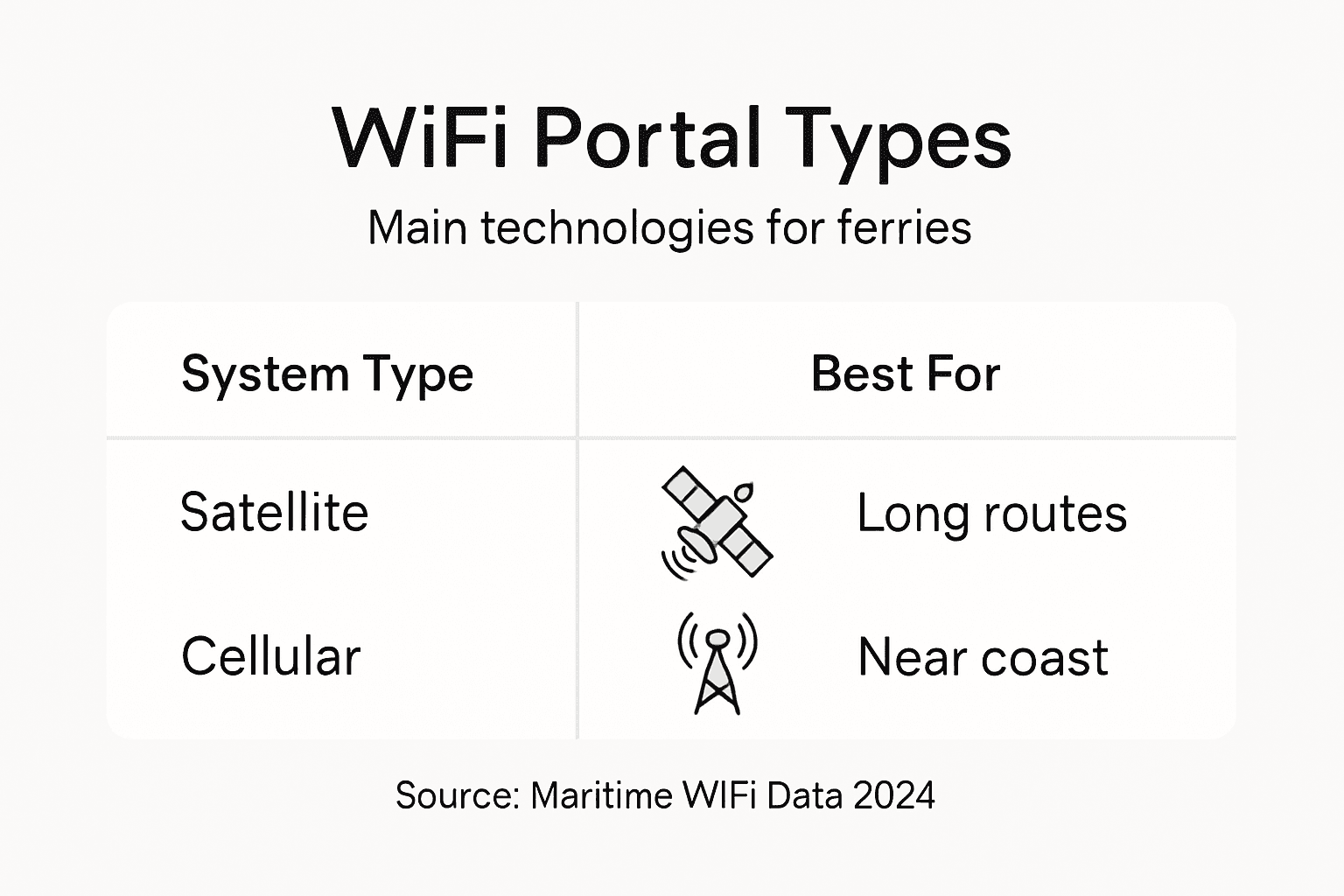
Cellular network and hybrid WiFi portal systems offer alternative connectivity approaches for ferry internet services. Cellular systems leverage coastal mobile networks during near-shore travel, switching between cellular towers and satellite connections based on signal strength and geographical location. Hybrid systems combine multiple transmission technologies - including satellite, cellular, and terrestrial networks - to create robust, adaptive connectivity solutions that maximize internet availability throughout maritime journeys.
Here’s a summary of ferry WiFi portal system types and their typical use cases:
| System Type | Connectivity Source | Ideal Usage Scenario | Coverage Range |
|---|---|---|---|
| Satellite-Based | High-orbit and low-orbit satellites | Long international and remote routes | Ocean-wide, mid-sea |
| Cellular Network | Coastal mobile networks | Short, near-shore crossings | Near land, coastlines |
| Hybrid | Satellite, cellular, terrestrial | Mixed travel routes with variable conditions | Dynamic, route-dependent |
Pro tip: Always check your ferry’s WiFi portal specifications before departure to understand the specific connectivity technologies and potential bandwidth limitations.
How Passengers Access and Use the Portal
Accessing a ferry WiFi portal involves a straightforward process designed to be user-friendly and intuitive for travelers with varying levels of technical expertise. WiFi onboard connectivity begins with identifying the vessel’s wireless network, typically named with the ferry line or service provider’s branding.
Once connected to the network, passengers are automatically redirected to a captive portal where they can select and purchase internet packages. The portal interface offers multiple purchasing options, including short-duration passes for brief internet needs and extended packages for longer journeys. Travelers can typically choose between different data volumes and connection speeds, allowing flexibility based on individual requirements such as basic messaging, social media browsing, or more demanding tasks like video conferencing and file downloads.

The registration process is designed to be quick and secure, requiring minimal personal information. Most portals allow passengers to connect up to three devices simultaneously, ensuring flexibility for travelers carrying multiple electronics. Payment methods usually include credit cards, digital wallets, and sometimes onboard credit systems, providing convenient options for purchasing internet access. Technical support is generally available through the portal interface or via dedicated customer service channels to assist passengers experiencing connection difficulties.
Pro tip: Download and screenshot your WiFi package details before losing cellular signal to ensure you have all necessary login information during your maritime journey.
Onboard Internet Packages and Coverage
Ferry WiFi services typically offer multiple internet packages designed to accommodate diverse passenger needs and usage patterns. WiFi onboard options range from basic messaging plans to high-bandwidth packages that support intensive online activities, ensuring travelers can find a suitable connectivity solution for their specific requirements.
The standard package tiers commonly include Easy, Digital, Digital Plus, and Star Plus options, each offering progressively enhanced internet capabilities. The Easy package provides basic messaging and email access, while Digital packages support social media browsing and light streaming. Digital Plus and Star Plus packages cater to travelers needing robust connectivity for video conferencing, large file downloads, and high-definition streaming. These packages are typically valid for 24 hours post-activation and allow users to register multiple devices, with the flexibility to connect one device at a time.
This table highlights the main features and recommended uses for common ferry WiFi package tiers:
| Package Tier | Main Feature | Suitable For | Device Limit |
|---|---|---|---|
| Easy | Messaging & email | Basic connectivity needs | Up to 3 devices |
| Digital | Social & light streaming | Social browsing, light media | Up to 3 devices |
| Digital Plus | High bandwidth | Video calls, large files | Up to 3 devices |
| Star Plus | Premium streaming & speed | HD streaming, multiple tasks | Up to 3 devices |
Coverage for these internet packages extends throughout the ferry’s primary passenger areas, including cabins, lounges, and public spaces. Advanced satellite technologies enable stable connectivity even in mid-sea conditions, ensuring that passengers can maintain internet access across different maritime routes. The package pricing and bandwidth allocation are strategically designed to balance user experience with network performance, preventing individual users from monopolizing the available bandwidth.
Pro tip: Compare package details before purchasing and consider your expected online activities to select the most cost-effective internet plan for your maritime journey.
Critical Safety, Privacy, and Cost Factors
Ferry WiFi networks incorporate comprehensive security protocols designed to protect passenger data and ensure safe digital interactions. Maritime network security involves sophisticated authentication processes and traffic monitoring systems that safeguard user information and prevent potential cyber vulnerabilities during maritime travel.
Privacy protection is paramount in onboard internet services. Acceptable Use Policies establish clear guidelines that prohibit inappropriate online behaviors and outline specific restrictions on network usage. These policies typically require users to comply with international legal standards, respect other passengers’ privacy, and avoid activities that could compromise network integrity. Operators employ advanced encryption technologies and user authentication mechanisms to prevent unauthorized access and protect sensitive personal information.
Cost management represents another critical aspect of ferry WiFi services. Passengers must carefully review package details, understanding potential roaming charges and data limitations. Most providers offer transparent pricing structures with prepaid packages, enabling travelers to control their internet expenses. Strategic bandwidth allocation prevents individual users from monopolizing network resources, ensuring fair and consistent connectivity for all passengers. Additional cost-saving strategies include disabling mobile data roaming and selecting packages that match specific online activity requirements.
Pro tip: Always screenshot your WiFi package receipt and review the terms of service to understand exactly what internet access you’re purchasing before your maritime journey begins.
Stay Connected at Sea with Seafy’s Advanced Ferry WiFi Solutions
The challenges of maintaining stable internet connectivity during maritime travel are real. From satellite disruptions to limited bandwidth and complicated access portals, travelers often face frustration trying to stay connected on ferry journeys. If you want to avoid losing touch while onboard and experience seamless internet access tailored specifically for maritime environments, it is time to explore reliable solutions. Seafy understands the unique demands of ferry WiFi portals and offers robust technology powered by advanced satellite systems like Starlink to overcome ship movement and signal challenges.
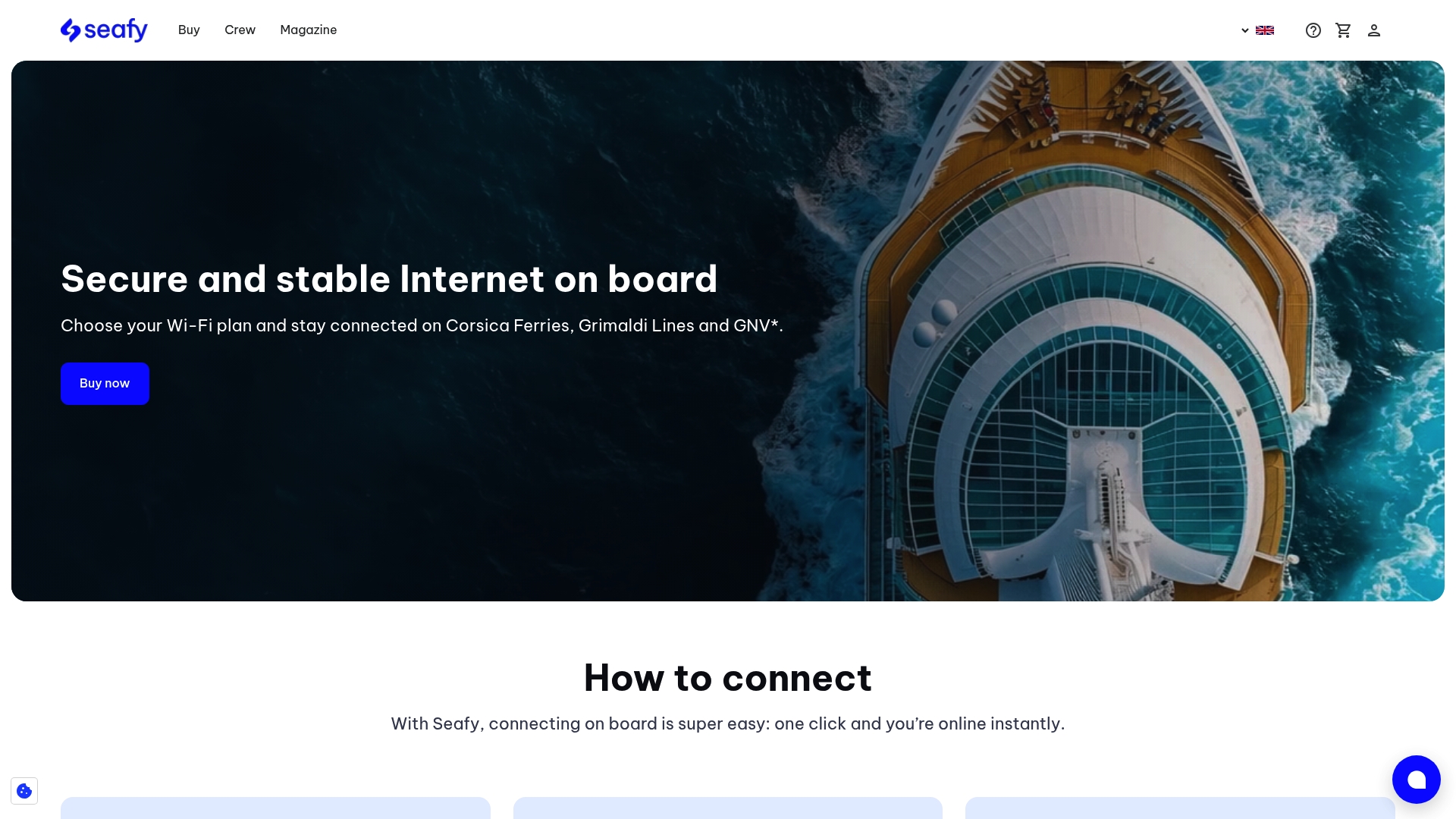
Discover how Seafy transforms your onboard digital experience by providing easy-to-use portals where you can quickly purchase flexible internet packages that match your needs. Whether you require messaging, streaming, remote work capabilities, or full high-speed access, Seafy’s partnership with leading ferry lines like Corsica Ferries and Grimaldi Lines ensures consistent coverage throughout your journey. Don’t let slow or unreliable WiFi dampen your maritime travel. Visit Seafy now and unlock fast secure connection on the water. Take control of your internet usage and enjoy true digital freedom at sea today.
Frequently Asked Questions
What is a ferry WiFi portal?
A ferry WiFi portal is a digital platform that allows passengers to access, purchase, and manage internet connectivity while traveling on ferries. It provides a user-friendly interface for selecting internet packages and tracking usage during the journey.
How do I access the ferry WiFi portal?
To access the ferry WiFi portal, connect to the vessel’s wireless network, typically named after the ferry line. You will be redirected to a captive portal where you can select and purchase internet packages.
What types of internet packages are available on ferry WiFi portals?
Ferry WiFi portals usually offer several packages, including Easy, Digital, Digital Plus, and Star Plus. Each package caters to different needs, from basic messaging to high-definition streaming, with varying data allowances and speeds.
How is my privacy protected when using the ferry WiFi portal?
Ferry WiFi networks implement comprehensive security protocols, including encryption and user authentication, to protect passenger data. Acceptable Use Policies guide safe online behaviors, ensuring user privacy and compliance with international standards.