Tech & Wi-Fi
Top 3 Ferry Internet Providers Comparison Alternatives 2026
Explore 3 ferry internet providers comparison alternatives to help you choose the best onboard connectivity solution for your next trip.
09 June 2026
Top 3 Ferry Internet Providers Comparison Alternatives 2026
Staying connected with reliable internet at sea often runs into disappointing speed, rigid plan structures, or complicated onboarding that leave both passengers and crew offline when it matters most. Many maritime Wi-Fi solutions still depend on slow legacy satellites, require complex manual activations, or fail to offer practical plans for both remote work and streaming. This side-by-side comparison addresses connection speed, package flexibility, and ease of activation so you can choose the right ferry internet alternative for seamless browsing, crew communication, and entertainment on your next crossing.
Table of Contents
Seafy
At a Glance
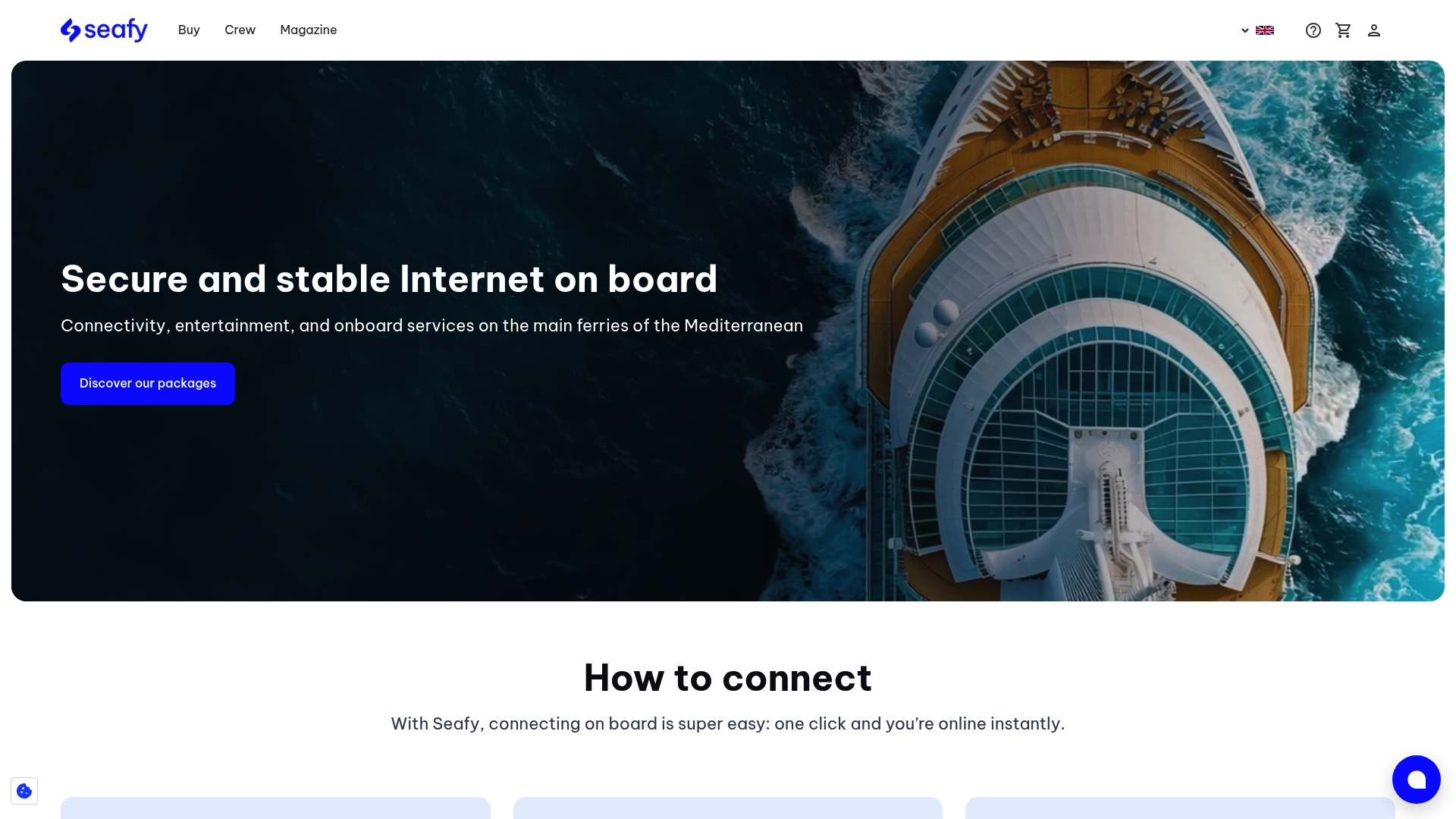
Seafy reports it uses Starlink to deliver onboard internet, which lets passengers and crew reach higher throughput in many Mediterranean ferry routes than traditional satellite links. The platform pairs that connection with quick voucher activation and a content hub for news, guides, and entertainment.
Core Features
Seafy packages are built around practical boarding needs and onboard life.
- Multiple Wi-Fi packages tailored for light browsing up to heavier streaming sessions.
- One-click connection and voucher-based activation that get a device online without staff intervention.
- Onboard services including news, radio, games, travel guides, and blog content to keep passengers engaged.
- Dedicated Crew Wi-Fi with membership benefits and a points program for crew communication and welfare.
Key Differentiator
The technical edge is the Starlink-backed link mentioned above. Seafy routes ferry Wi-Fi through that satellite technology to prioritize speed and stability on routes where shore-based cellular is sparse. That focus on a higher-capacity maritime backbone separates it from ferry portals that rely only on coastal towers.
Pros
- Fast, higher-capacity links for many routes. The Starlink connection claim above means passengers can stream and join video calls more often than with legacy maritime systems.
- Flexible packages let you buy a short browsing session or a longer bundle for work or entertainment without a complicated subscription.
- Quick guest onboarding. Voucher activation and one-click login cut queue times at check-in desks and avoid manual voucher entry by crew.
- Extra content that matters on a ferry. Local travel guides and radio keep passengers occupied during longer crossings.
- Crew-focused options and a points program make it practical for operators who must provide both passenger and staff connectivity.
Cons
- Reliance on Starlink coverage means speeds and latency can change with satellite availability and maritime conditions, which may affect heavy streaming on some routes.
Who It’s For
Passengers who want reliable internet for messaging, light streaming, or remote work on Mediterranean ferry routes. Crew members who need a dedicated channel for communication and benefits. Ferry operators seeking an onboard portal that bundles connectivity with passenger content.
Unique Value Proposition
One-click voucher activation is the immediate operational win. For ferries handling hundreds of daily boardings, that shortcut reduces staff workload and passenger friction. The workflow impact is direct: less time at kiosks, fewer support tickets, and faster access for remote workers who need a predictable connection window.
Real World Use Case
A passenger selects Seafy’s mid-tier package for a four-hour crossing, uses video calls to hit a work deadline, and streams a movie while approaching port. Meanwhile a crew member uses a dedicated crew package to send ship logs and claim loyalty points for repeat shifts.
Pricing
Seafy lists packages from €4.99 to €30, depending on the selected plan and session length. Crew packages and loyalty benefits are offered separately through the platform’s crew portal.
Website: https://seafy.com
Starlink
At a Glance
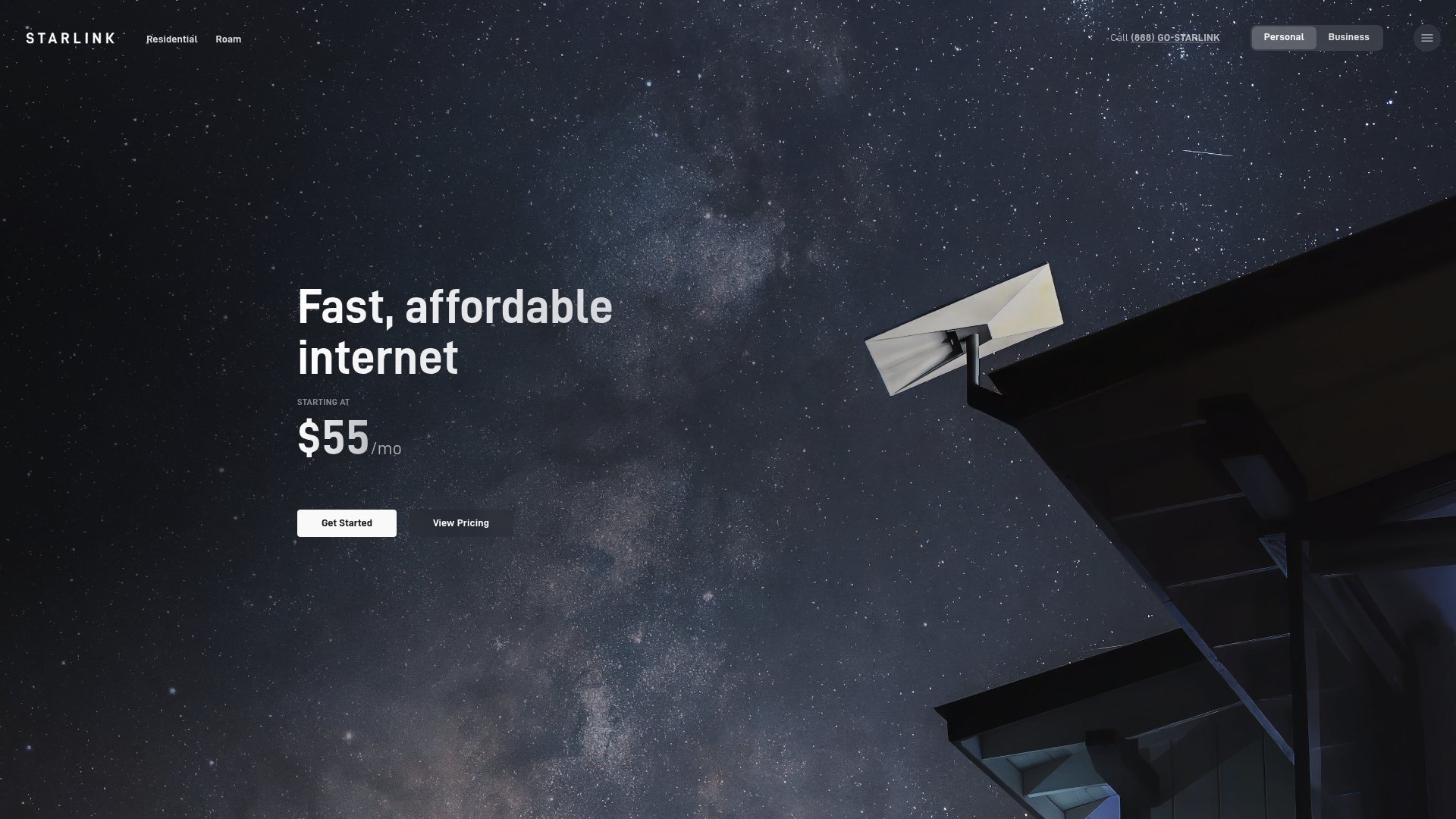
Starlink’s marketing materials state coverage in over 160 countries and territories, a claim that immediately frames it as a global option for places traditional ISPs do not reach. The vendor and some technical reviews also praise its high-speed, low-latency performance, a point I reference below as the performance claim.
Core Features
- Wide solution set for residential, mobile, maritime, aviation, fixed sites, and community gateways.
- Self-installation via a guided app and plug-and-play hardware kit that lets nontechnical users get online quickly.
- Weather-resistant antennas and kits designed for in-motion use on boats, RVs, and aircraft.
- Plans that include prioritized network access in higher tiers and options aimed at commercial or maritime operations.
Key Differentiator
Starlink relies on a dense constellation of Low Earth Orbit satellites rather than geostationary birds, which is why the company emphasizes lower latency and higher sustained throughput for remote links. That architecture is the core reason operators pick Starlink where fiber and cellular are unavailable.
Pros
- High raw throughput and latency characteristics are consistent with the performance claim above, making real-time work and video calling possible where other satellite links struggle.
- Global reach lets you place an internet endpoint in locations with no wired alternative, useful for remote rural homes and isolated business sites.
- Hardware and packages offer in-motion and maritime-ready options, so ferries and yachts can use the same technology as fixed households.
- Self-install workflow reduces installation overhead for small teams; the app walks you through mounting, alignment, and activation.
- The vendor’s ecosystem includes community gateways and a user community that shares setup and routing tips for unusual sites.
Cons
- Customer support frequently draws criticism for slow, automated responses and limited resolution options, which creates friction when hardware or provisioning fail.
- The up-front hardware cost and monthly plans are often described by users as expensive relative to terrestrial alternatives, especially for commercial-grade tiers.
- Reports of early hardware failures and intermittent instability appear often in user forums and reviews, so plan for spare units or contingency connectivity.
When It May Not Fit
If your installation site has a blocked or obstructed sky view, such as dense tree canopy or narrow urban canyons, Starlink’s service will be unreliable because it depends on line of sight to satellites. Heavy forest or tight port slips are common trouble spots.
If you require white-glove support or an onshore account manager, the reported customer service limitations above make Starlink a poor fit. Operators who need guaranteed local technical assistance should budget for a secondary provider or third-party integrator.
Who It’s For
Rural homeowners, mobile professionals, and maritime operators who prioritize global coverage and lower latency over low cost. Ideal users accept self-installation and can tolerate occasional support delays in exchange for connectivity where none existed before.
Real World Use Case
A small ferry operator fits a passenger lounge and crew area with a maritime kit to offer guest Wi-Fi and a crew comms link. The operator uses the app for installation and treats Starlink as the primary broadband path when dockside fiber is unavailable.
Pricing
The vendor lists residential plans roughly between $55 and $130 per month and commercial or maritime tiers from about $250 to over $2,150 per month. Hardware is advertised at around $1,999, with several plan tiers offering unlimited or prioritized data.
Website: https://starlink.com
GigSky
At a Glance
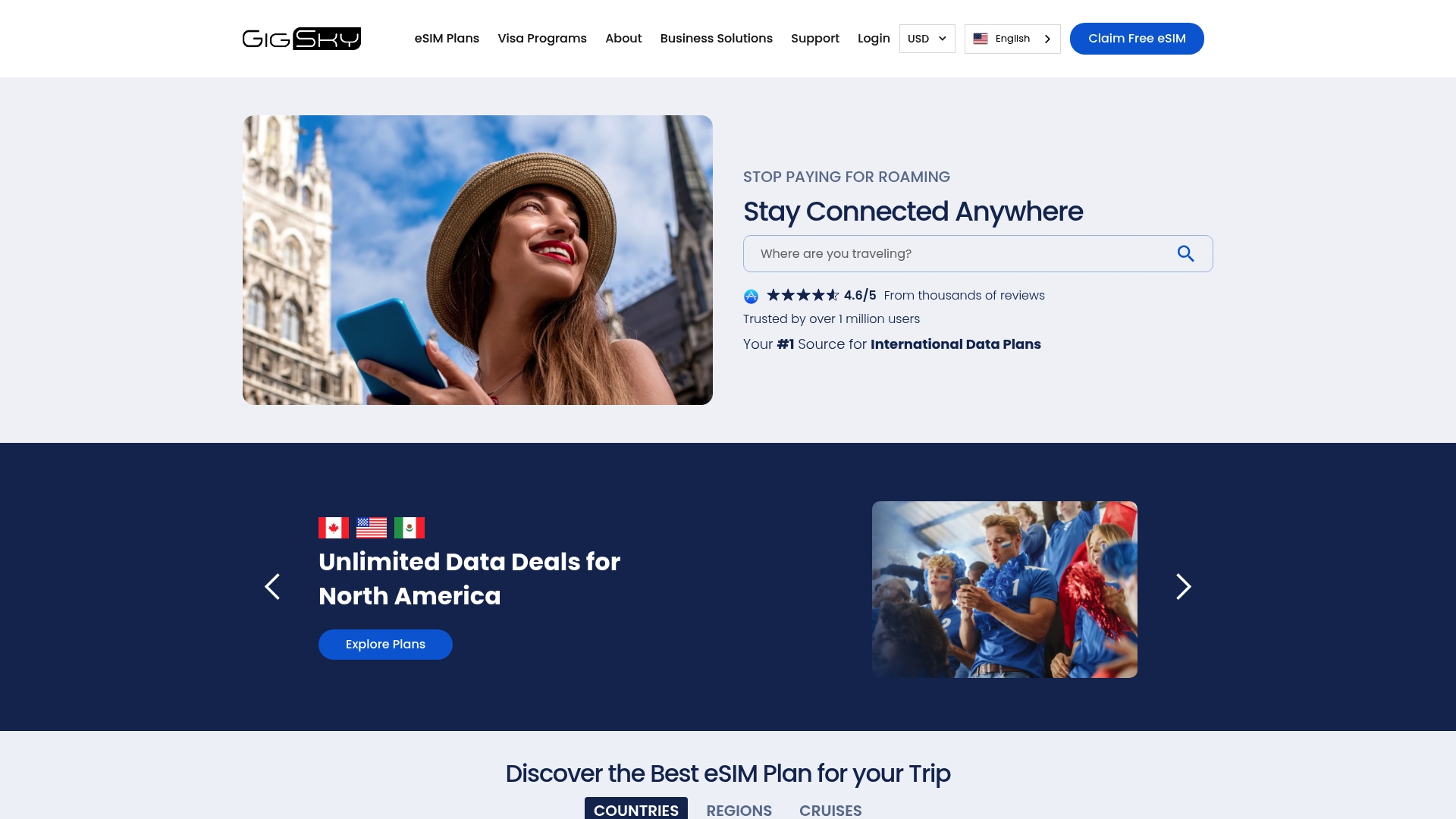
Works on land, at sea, and in the air with plans that activate instantly inside the mobile app. GigSky positions its eSIM service to replace physical SIM swaps for frequent travelers and offers regional plans starting at From $6.99.
Core Features
- Supports eSIM technology across multiple devices so you can keep a single device profile while moving between countries.
- Offers regional and global data plans with both pay as you go and subscription options for continuous coverage.
- Provides connectivity options listed for land travel, cruise and ferry routes, and some inflight scenarios.
Key Differentiator
GigSky’s main distinction is that it advertises coverage for land, sea, and air travel with instant plan activation through the app. That combination targets people who do a lot of border hopping and who want to avoid buying local SIMs or juggling physical cards.
Pros
- Quick setup makes travel days simpler. Install the eSIM profile, buy a plan in the app, and you do not need to visit a store or swap plastic SIMs.
- Flexible plan types let you choose short regional packages or a subscription for steady coverage while on the move.
- Multi device support keeps a phone and tablet connected under one account when hardware supports eSIM profiles.
- Price points start low for regional use which helps when you only need small data buckets for trip essentials.
- The app interface centralizes activation and plan management so changes do not require carrier visits.
Cons
- Coverage reliability varies. Several reports note degraded connectivity on some cruise ships and in remote regions.
- Customer support response times can lag while you are traveling which makes solving live connectivity problems harder.
- The app can behave inconsistently in real travel situations which sometimes forces users to revert to local SIMs or ship Wi Fi.
When It May Not Fit
If you need guaranteed, continuous bandwidth on a cruise or in remote offshore areas this is not the safest primary option. For critical remote work where dropped sessions are unacceptable you should use a proven shipboard Wi Fi provider or a dedicated maritime solution.
Who It’s For
Frequent travelers, digital nomads, and business travelers who prioritize avoiding physical SIM swaps and want on demand regional data. It fits people who can tolerate occasional coverage gaps and who have eSIM capable devices.
Real World Use Case
A digital nomad moves between countries across Europe and Asia. They buy short regional plans in the app and switch profiles as borders change. No local SIM purchases, no long carrier waits, and fewer billing surprises when roaming would otherwise apply.
Pricing
Plans advertise starts From $6.99 for regional packages. The vendor also lists short unlimited windows up to 7 days for certain plans. Pricing mixes pay as you go bundles and subscription options for ongoing coverage.
Website: https://gigsky.com
Comparative Analysis
When evaluating options for maritime internet connectivity, several viable solutions are available, each addressing diverse onboard requirements. While these providers share overlapping competencies, their features and operational focus present significant contrasts.
Performance and Connectivity Reliability
Seafy leverages its partnership with Starlink to deliver high-throughput and low-latency internet to passengers and crew on Mediterranean ferry routes. This setup supports streaming and real-time communication, making it particularly valuable for its operational area. In contrast, Starlink provides broader global coverage, catering to vessels navigating international waters or operating outside the Mediterranean, thanks to its Low Earth Orbit satellite constellation. However, Starlink’s hardware costs and pricing for commercial use may deter small-scale operators or restricted-budget implementations.
Setup and Activation Ease
Seafy’s one-click voucher system and pre-configured portal simplify onboarding, which significantly reduces passenger wait times at boarding kiosks—a critical advantage for high-capacity ferries. Meanwhile, GigSky emphasizes instant eSIM activation through its mobile app, providing versatile connectivity for travelers switching between terrestrial and off-shore regions. While ideal for frequent border-crossers, its coverage reliability in maritime environments may not match the consistency offered by purpose-built maritime systems like Seafy’s.
Best Fit Recommendations
- Seafy: Ideal for Mediterranean ferry operators seeking a blend of high-speed internet, quick activation, and integrated passenger engagement.
- Starlink: Suitable for global operators or vessels in international waters requiring satellite coverage and are capable of managing higher upfront and ongoing costs.
- GigSky: Best for individual travelers or crews looking for a flexible, eSIM-based connectivity solution during mixed-mode travel across land and sea.
Our Pick: Seafy
Seafy’s tailored focus on Mediterranean ferry routes, providing high-speed internet with a user-friendly activation framework, uniquely positions it as the go-to choice for ferry operators prioritizing passenger satisfaction and efficient operations in this region. However, for global or niche connectivity needs beyond Seafy’s operational domain, alternatives like Starlink or GigSky deliver specific advantages better suited to those circumstances.
Maritime Wi-Fi Connectivity Providers Comparison
Choosing the right maritime Wi-Fi provider can make a significant difference in ensuring reliable connectivity and a seamless onboard user experience. Below is a comparison of leading providers tailored to maritime applications.
| Provider | Core Feature or Primary Use Case | Key Differentiator | Best For | Pricing | Notable Limitation |
|---|---|---|---|---|---|
| Seafy | High-speed Wi-Fi and onboard content offerings | Starlink-enabled stable connectivity in maritime contexts | Passengers and crew on Mediterranean ferry routes | €4.99 to €30 | Relies on specific satellite coverage reliability |
| Starlink | Advanced satellite internet solutions | Low Earth Orbit satellites for global coverage | Maritime operators needing global high-performance internet | $55–$2,150/month hardware approx. $1,999 | Limited customer support responsiveness |
| GigSky | eSIM-based connectivity for land, sea, and air | Instant data plan activation through mobile app | Frequent travelers needing flexible short-term data plans | From $6.99 | Inconsistent coverage reliability in maritime situations |
Reliable Ferry Internet Designed for Seamless Connectivity
Choosing the right ferry internet provider can feel overwhelming with options like Starlink, GigSky, and others often falling short on convenience or consistent speed. Seafy focuses on solving the common challenge of unstable connections during Mediterranean crossings by offering fast Starlink-powered Wi-Fi packages that passengers and crew can activate instantly with just one click.
Experience benefits like
- Easy voucher activation without waiting in lines
- Dedicated Wi-Fi plans for both guests and crew
- Engaging onboard content including travel guides and entertainment
Explore how Seafy improves your ferry journey and gain uninterrupted access to the internet that supports remote work, streaming, and staying connected at sea. Don’t let unreliable Wi-Fi slow you down—visit Seafy.com to purchase and activate your onboard package in moments.
Frequently Asked Questions
What Wi-Fi packages does Seafy offer for ferry passengers?
Seafy provides multiple Wi-Fi packages that cater to different browsing needs, from light browsing to heavier streaming sessions. These packages are specifically designed to enhance the onboard internet experience for passengers enjoying Mediterranean ferry routes. You can select a package that fits your needs, making it easy to stay connected during your trip.
How does Seafy compare to Starlink for maritime connectivity?
Starlink is recognized for its high-speed, low-latency satellite internet, which makes it a strong choice for remote links. In contrast, Seafy specifically focuses on ferry routes, offering a one-click voucher activation system that streamlines user access without requiring staff intervention. If you’re a ferry passenger looking for simplicity and reliability in Wi-Fi, Seafy stands out as an ideal option.
Which features make Seafy suitable for crew communication onboard?
Seafy includes a dedicated Crew Wi-Fi option that offers membership benefits and a points program to enhance crew communication and welfare. This feature is designed to ensure that crew members can stay connected while managing their responsibilities, making Seafy a practical choice for ferry operators to support their teams.
Can I rely on Seafy for streaming during ferry crossings?
Yes, Seafy is designed to provide higher-capacity links for many routes, allowing passengers to stream content and participate in video calls more reliably compared to legacy maritime systems. This capability makes it suitable for users who want to stay entertained while traveling across the Mediterranean.
How do Seafy’s activation and connection processes work for passengers?
Passengers can activate their chosen Wi-Fi package quickly with one-click voucher activation, which means they can get online without needing to wait for staff assistance. This easy activation process improves the overall boarding experience, allowing users to focus on enjoying their trip without technical delays.