Tech & Wi-Fi
Onboard Entertainment Wi-Fi: Transforming Sea Travel
Onboard entertainment Wi-Fi lets Mediterranean ferry and cruise travelers stream, work, and connect at sea. Learn types, features, benefits, risks.
11 February 2026
Onboard Entertainment Wi-Fi: Transforming Sea Travel
Finding reliable Wi-Fi at sea can feel like a puzzle for Mediterranean cruise passengers and ferry travelers hoping to catch up on work or stream entertainment. The journey across the Mediterranean is no longer a digital blackout thanks to advances in maritime Wi-Fi using radio wave transmission and satellite technologies. This article cuts through common myths about onboard entertainment Wi-Fi and gives you the clarity you need to choose the best digital solutions for your next voyage.
Table of Contents
- Onboard Entertainment Wi-Fi Defined And Debunked
- Types Of Maritime Wi-Fi And Entertainment Access
- How Onboard Wi-Fi Functions For Passengers And Crew
- Benefits For Leisure, Work, And Crew Welfare
- Costs, Risks, And Connectivity Challenges At Sea
- Choosing The Best Wi-Fi Solution For Your Journey
Key Takeaways
| Point | Details |
|---|---|
| Onboard Wi-Fi is Multifaceted | It is not just internet access but a digital platform providing entertainment, work-related services, and navigation information. |
| Types of Maritime Wi-Fi | Satellite, shore-based, and hybrid networks each offer distinct advantages and limitations depending on maritime conditions. |
| Connectivity Preparation is Essential | Passengers should verify their device compatibility and Wi-Fi package before traveling to ensure optimal connectivity. |
| Consider Security and Costs | Evaluate the potential cybersecurity risks and financial implications when selecting maritime Wi-Fi solutions. |
Onboard entertainment Wi-Fi defined and debunked
Onboard entertainment Wi-Fi represents a sophisticated digital ecosystem enabling passengers to stay connected and entertained during maritime journeys. Wireless connectivity technologies have transformed sea travel from isolated experiences to seamlessly connected adventures.
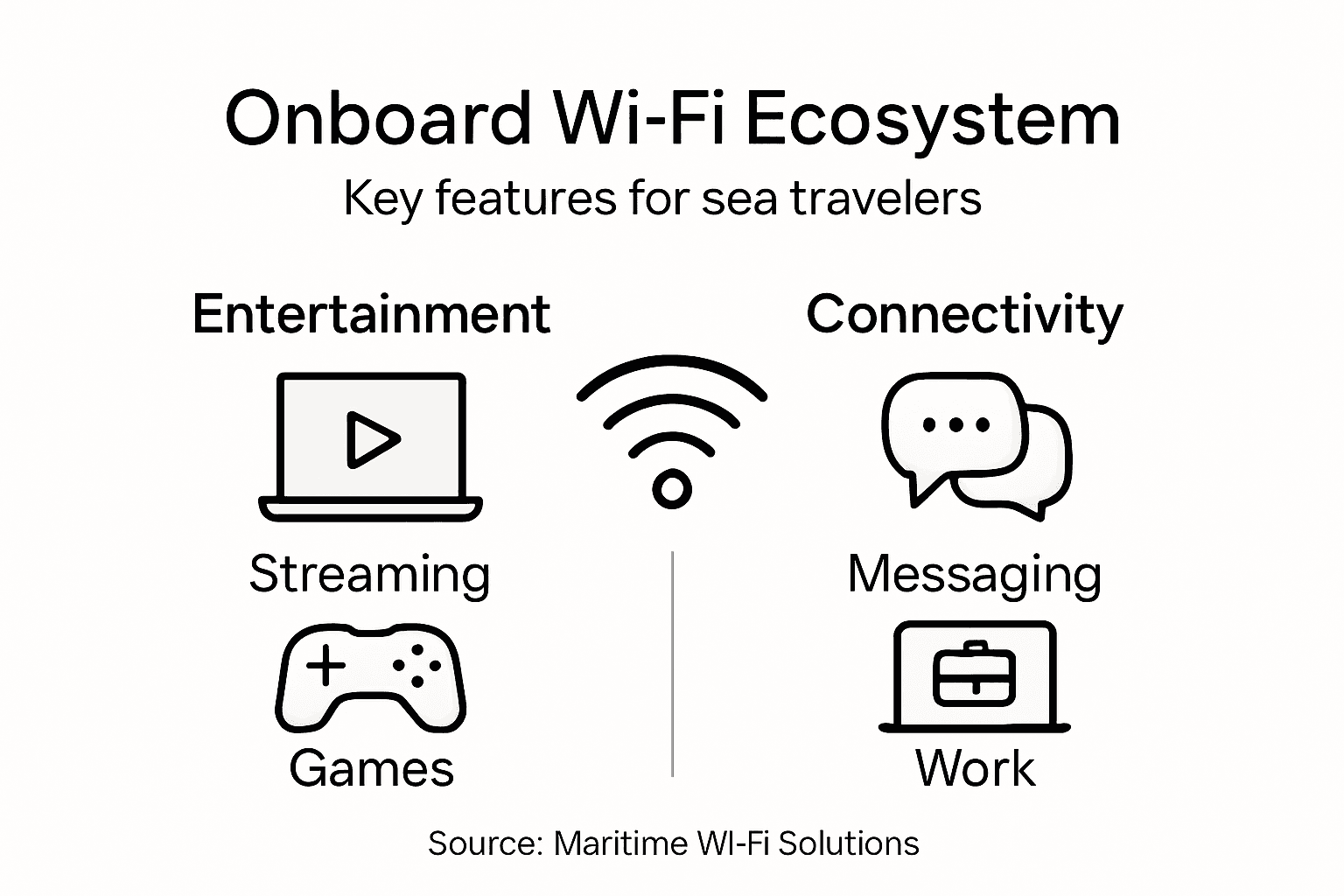
Contrary to common misconceptions, onboard Wi-Fi isn’t simply internet access - it’s a comprehensive digital platform integrating multiple services. Wi-Fi technologies utilize radio wave transmission protocols to provide high-speed internet connectivity in challenging maritime environments. Key features typically include:
- Streaming entertainment platforms
- Social media connectivity
- Work-related internet access
- Messaging and communication services
- Real-time navigation information
Maritime Wi-Fi operates differently from land-based networks, requiring specialized satellite technologies to maintain stable connections across vast oceanic regions. Radio wave transmission standards enable devices to connect through complex satellite communication networks, overcoming traditional connectivity limitations.
The core technological infrastructure supporting onboard entertainment Wi-Fi involves sophisticated satellite systems, specialized transmission protocols, and robust onboard networking equipment. These components work together to create a seamless digital experience that transforms sea travel from isolated journeys into connected, engaging adventures.
Pro tip: Always confirm Wi-Fi package details and coverage areas before purchasing to ensure optimal connectivity during your maritime journey.
Types of maritime Wi-Fi and entertainment access
Maritime Wi-Fi encompasses multiple technological approaches designed to keep passengers connected during sea travel. Satellite and shore-based communication systems provide diverse connectivity options that transform the traditional maritime experience.
The primary types of maritime Wi-Fi access include:
- Satellite Wi-Fi: Uses geostationary or low-earth orbit satellites
- Provides wide geographic coverage
- Higher latency compared to land-based networks
- More expensive infrastructure
- Shore-based Wi-Fi: Relies on coastal radio towers
- Limited maritime zone coverage
- Lower transmission costs
- Strongest near coastal regions
- Hybrid Networks: Combine multiple transmission technologies
- Seamless connectivity across different maritime zones
- Redundant communication paths
- Improved reliability
Onboard entertainment access typically integrates multiple technological approaches to deliver a comprehensive digital experience. Maritime connectivity technologies support various service models, including embedded systems, streaming platforms, and bring-your-own-device (BYOD) options.
Advanced maritime networks now support sophisticated entertainment ecosystems, enabling passengers to stream media, communicate globally, and maintain productivity during their maritime journeys. These systems represent a significant technological leap, transforming sea travel from isolated experiences to connected digital environments.
Pro tip: Research your specific vessel’s Wi-Fi capabilities before traveling to understand available entertainment and connectivity options.
Here’s a comparison of the main maritime Wi-Fi types and their best-use scenarios:
| Wi-Fi Type | Optimal Use Case | Strengths | Limitations |
|---|---|---|---|
| Satellite | Open sea, global voyages | Wide coverage, remote access | Higher latency, costly setup |
| Shore-based | Near coasts, short trips | Affordable, low latency | Range limited to coastlines |
| Hybrid Networks | Long cruises, variable routes | Seamless transition, reliability | Complex implementation |
How onboard Wi-Fi functions for passengers and crew
Maritime connectivity transforms sea travel through sophisticated wireless networking technologies. Onboard Wi-Fi networks enable passengers and crew to stay connected across vast oceanic regions using complex communication infrastructures.
The connection process involves several critical steps:
- Device Preparation
- Switch device to airplane mode
- Enable Wi-Fi functionality
- Select onboard network
- Network Authentication
- Accept service terms
- Choose access package
- Complete login process
- Connectivity Levels
- Basic messaging
- Limited web browsing
- Full internet access
Connectivity mechanisms vary depending on the vessel’s technological capabilities. Maritime communication systems utilize satellite and coastal network technologies to provide seamless internet access, supporting both passenger entertainment and critical crew operational requirements.
Advanced onboard networks now support multiple simultaneous users, offering differentiated service levels that accommodate diverse passenger needs. From streaming media to conducting business communications, these systems represent a significant technological evolution in maritime travel, bridging digital connectivity across previously isolated maritime environments.
Pro tip: Always verify your device’s compatibility and purchase appropriate Wi-Fi packages before embarking on your maritime journey.
Benefits for leisure, work, and crew welfare
Onboard Wi-Fi transforms maritime travel by creating a comprehensive digital ecosystem that serves multiple stakeholders simultaneously. Connectivity technologies enhance passenger experiences by providing unprecedented access to entertainment, work resources, and communication channels.
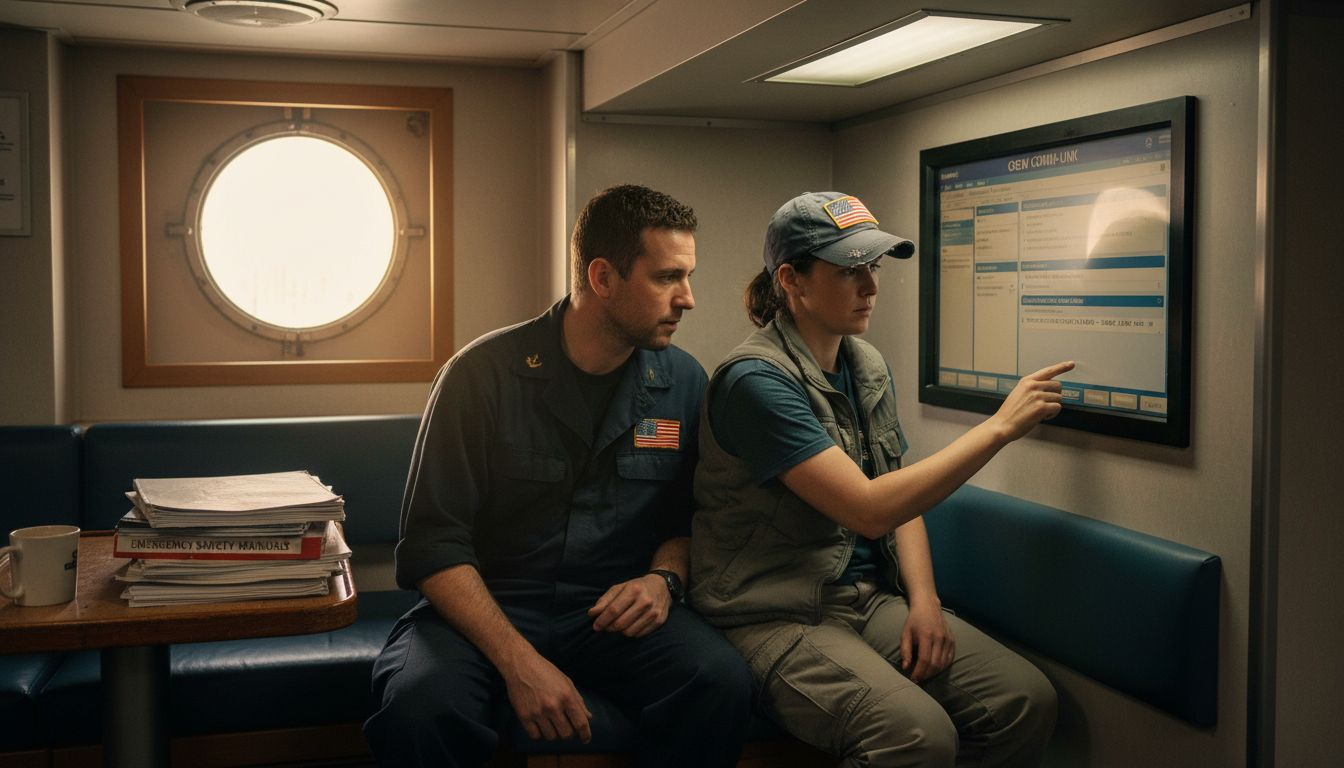
The key benefits for different user groups include:
For Passengers:
- Unlimited entertainment streaming
- Social media connectivity
- Remote work capabilities
- Personal communication channels
- Entertainment platform access
For Crew Members:
- Professional communication systems
- Family contact opportunities
- Operational information access
- Mental health support
- Professional development resources
Technological advantages extend beyond simple internet access. Onboard Wi-Fi systems create integrated digital environments that improve overall voyage satisfaction, productivity, and personal well-being for everyone on board.
Modern maritime connectivity represents more than a technological upgrade - it’s a fundamental reimagining of sea travel. By bridging digital divides and creating flexible, responsive communication networks, these systems transform maritime journeys from isolated experiences into connected, dynamic environments that meet diverse human needs.
Pro tip: Select Wi-Fi packages that match your specific communication and entertainment requirements before embarking on your maritime journey.
Costs, risks, and connectivity challenges at sea
Maritime Wi-Fi connectivity presents a complex technological landscape with significant challenges for operators and users. Satellite communication infrastructure involves substantial financial investments and intricate technical considerations that impact overall service quality.
Key connectivity challenges include:
Technical Limitations:
- High satellite bandwidth charges
- Signal interference from maritime environments
- Limited coverage zones
- Fluctuating connection stability
- High hardware installation costs
Security and Risk Factors:
- Potential cybersecurity vulnerabilities
- Data breach risks
- Network interruption possibilities
- Signal latency issues
- Complex network management requirements
Financial Considerations play a critical role in maritime connectivity strategies. Connectivity management approaches require sophisticated technological solutions that balance performance, security, and cost-effectiveness.
Effective maritime communication demands comprehensive strategies that integrate multiple technologies, anticipate environmental challenges, and provide robust redundancy mechanisms. This approach transforms potential connectivity limitations into manageable technical challenges, ensuring reliable digital experiences for passengers and crew.
Pro tip: Always verify your maritime Wi-Fi provider’s redundancy and security protocols before selecting a service package.
Choosing the best Wi-Fi solution for your journey
Maritime internet solutions demand careful consideration of multiple technological and practical factors. Optimal connectivity selection requires a comprehensive evaluation of your specific travel needs and technological infrastructure.
Key selection criteria include:
Technical Considerations:
- Vessel size and route complexity
- Bandwidth requirements
- Coverage area limitations
- Network redundancy options
- Budget constraints
Connectivity Assessment Factors:
- Satellite transmission technologies
- Shore-based network availability
- Hybrid connectivity potential
- Entertainment and work requirements
- Security protocol robustness
Passenger and Crew Needs represent critical decision-making elements. Onboard connectivity strategies must balance technological capabilities with user expectations, ensuring comprehensive digital experiences across different maritime environments.
Successful maritime Wi-Fi solutions integrate multiple technological approaches, anticipating potential connectivity challenges and providing flexible, scalable network architectures. The most effective systems combine satellite, coastal, and onboard infrastructure to create seamless, reliable internet access that adapts to changing maritime conditions.
Pro tip: Request a detailed connectivity performance report from your maritime Wi-Fi provider before finalizing your service package.
The following table summarizes key factors when evaluating a maritime Wi-Fi solution for travel or work:
| Selection Factor | Why It Matters | Example Consideration |
|---|---|---|
| Coverage Area | Ensures internet on your route | Will you sail near coasts or offshore? |
| Bandwidth Needs | Supports intended device activity | Streaming video vs. email only |
| Security Protocols | Protects data and privacy | Data encryption, firewall availability |
| Package Flexibility | Matches trip duration and budget | Per-day, per-trip, or unlimited plans |
Elevate Your Sea Travel Experience with Reliable Onboard Wi-Fi Solutions
The challenges of staying connected at sea are clear from the article Onboard Entertainment Wi-Fi. Passengers and crew face issues like fluctuating connection stability, high latency, and limited coverage that impact their ability to stream entertainment, communicate with loved ones, and work remotely. Understanding these pain points makes it essential to have a dependable digital platform designed specifically for maritime connectivity. Terms like maritime Wi-Fi, satellite technologies, and hybrid networks emphasize the complexity of providing consistent internet access while cruising through open seas or near coasts.
Seafy meets these challenges head-on by partnering with major ferry lines such as Corsica Ferries, Grimaldi Lines, and GNV to deliver stable high-speed internet tailored to the unique needs of maritime journeys. Powered by advanced satellite systems including Starlink, Seafy offers seamless onboard entertainment, work-friendly connectivity, and secure communication channels all accessible through an intuitive portal where you can easily select and activate Wi-Fi packages. Whether you are sailing across the Mediterranean or embarking on longer cruises, Seafy transforms isolated sea travel into a connected, engaging digital adventure.
Ready to enjoy uninterrupted internet access during your next maritime journey?
Discover how you can stay connected effortlessly with Seafy’s digital platform. Explore our services, purchase your ideal Wi-Fi package, and make every moment at sea count with uninterrupted entertainment, communication, and work capabilities. Don’t let unreliable connections hold you back. Visit Seafy today and redefine your onboard experience.
Learn more about onboard internet services and how Seafy’s connectivity solutions can support your maritime travel needs.
Frequently Asked Questions
What is onboard entertainment Wi-Fi?
Onboard entertainment Wi-Fi is a comprehensive digital platform that provides passengers with high-speed internet connectivity and access to various services, including streaming entertainment, social media, messaging, and real-time navigation information during maritime journeys.
How does maritime Wi-Fi differ from traditional internet connections?
Maritime Wi-Fi operates using specialized satellite technologies to maintain stable connections across vast oceanic regions, unlike traditional land-based networks that rely on terrestrial infrastructure. This results in variations in latency, coverage, and cost.
What types of maritime Wi-Fi are available for passengers?
There are three primary types of maritime Wi-Fi: Satellite Wi-Fi, which offers wide geographic coverage but has higher latency; Shore-based Wi-Fi, which is cost-effective and provides lower latency but is limited to coastal areas; and Hybrid Networks, which combine multiple technologies for seamless connectivity in varying maritime zones.
What are the main benefits of using onboard Wi-Fi during maritime travel?
The main benefits of onboard Wi-Fi include unlimited entertainment streaming, social media access, remote work capabilities, and improved communication for both passengers and crew members. This connectivity enhances the overall experience, productivity, and well-being on board.