Tech & Wi-Fi
Why Entertainment Streaming at Sea Matters in 2026
Discover why entertainment streaming at sea is essential in 2026. Learn how to enhance your travel experience with seamless access to shows!
03 June 2026
Why Entertainment Streaming at Sea Matters in 2026
TL;DR:
- Entertainment streaming at sea is now a core part of onboard experiences, enabled by satellite internet and tiered Wi-Fi packages.
- Reliable connectivity allows travelers and digital nomads to access on-demand content, make video calls, and work remotely during sea days.
Entertainment streaming at sea is the real-time access to digital video and audio content onboard ships, made possible by satellite internet technologies like Starlink and tiered Wi-Fi packages designed for passenger use. Modern cruise ships and ferries now treat streaming as a core part of the onboard experience, not an afterthought. Services like Netflix, Disney+, and YouTube are fully accessible at sea when you choose the right connectivity plan. This article explains how it works, why it benefits travelers and digital nomads, and how to get the most out of your screen time between ports.
Why entertainment streaming at sea has become a standard expectation
Cruise lines now consider streaming part of their entertainment ecosystem, integrating on-demand content alongside live shows, onboard apps, and digital booking tools. This shift reflects a real change in passenger expectations. Travelers in 2026 arrive onboard already subscribed to Netflix, Disney+, and Spotify. They expect those services to work at sea just as they do at home.
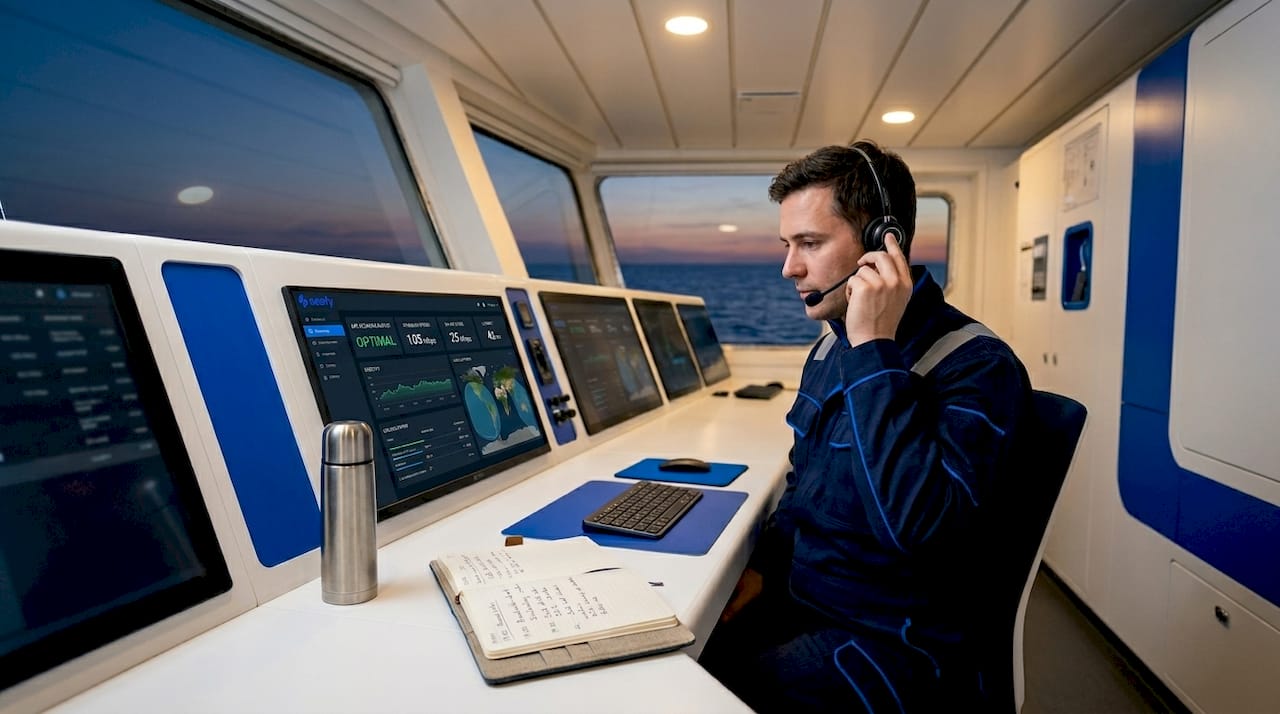
The technology making this possible is primarily satellite internet. Starlink-equipped ships can deliver download speeds up to 77 Mbps, with passengers typically experiencing 15 to 30 Mbps on sea days. That range is more than sufficient for HD streaming and video calls. The satellite internet role at sea has moved from a convenience to a genuine infrastructure priority for ferry operators and cruise lines alike.
For digital nomads especially, this matters beyond entertainment. Reliable streaming means video calls with clients, access to cloud-based work tools, and the ability to decompress with a favorite show after a productive work session at sea.
How do streaming services work on ships?
Streaming on a ship works through satellite internet as the primary connection method, with some vessels switching to land-based towers when sailing close to shore. The connection quality depends heavily on which Wi-Fi package you purchase.
Premium Wi-Fi tiers allow Netflix, YouTube, and FaceTime, while social or basic packages intentionally throttle or block video traffic. This tiering is not accidental. Cruise lines manage limited bandwidth across hundreds or thousands of passengers, so video streaming is reserved for higher-paying plans. Expect to pay in the range of $25 to $40 per day for a package that genuinely supports streaming.
Key factors that shape your streaming experience onboard:
- Satellite coverage: Connectivity is good but not guaranteed 100%, with gaps possible due to satellite footprints and network congestion near ports.
- Device compatibility: You can stream on personal smartphones, tablets, and laptops. Many ships now include cabin smart TVs with built-in app support.
- Onboard apps: Cabin tablets and smart TV apps on modern ships blend curated digital content with onboard service bookings, giving you a single interface for entertainment and logistics.
- Time of day: Speeds vary based on how many passengers are online simultaneously.
Pro Tip: Check whether your ship uses Starlink before boarding. Starlink-equipped vessels consistently deliver faster, more stable connections than older satellite systems, making HD streaming far more reliable.
What are the benefits of streaming while sailing?
The benefits of streaming entertainment at sea go well beyond having something to watch. Here is what streaming actually delivers for travelers and digital nomads:
- Instant access to familiar content. Your existing Netflix or Disney+ subscription works onboard. You do not need to learn a new platform or pay for separate ship-provided content.
- Mental recovery during sea days. Long stretches at sea without port stops can feel monotonous. Streaming a series or listening to Spotify gives you a genuine way to recharge.
- Work-life balance for digital nomads. Remote workers onboard use streaming during breaks to separate work time from downtime, which supports focus and productivity.
- Social connection. Video calls via FaceTime or WhatsApp keep you connected to family and friends. Shared streaming sessions over platforms like Netflix Party extend that social dimension.
- Gap-filling entertainment. Live onboard shows are scheduled and limited in variety. Streaming fills every other hour with content matched to your personal taste.
- Cost efficiency. Streaming via a premium Wi-Fi package is more affordable than purchasing satellite TV access or physical media for a multi-day voyage.
The importance of entertainment at sea is backed by how cruise lines invest in their digital infrastructure. Ships that offer reliable streaming report stronger passenger satisfaction scores. That data point alone explains why operators like Corsica Ferries and GNV continue expanding their onboard connectivity offerings.
How to optimize your streaming experience while at sea
Getting smooth streaming at sea requires a few deliberate choices before and during your voyage.
- Buy the premium Wi-Fi package. There is no workaround. Lower tiers block video traffic by design. The premium tier is the only option that reliably supports Netflix, YouTube, and video calls.
- Download content before boarding. Offline viewing before boarding removes your dependency on ship internet entirely for those moments when connectivity drops. Netflix and Disney+ both support offline downloads.
- Stream during sea days and off-peak hours. Speeds improve on sea days in the morning and daytime when fewer passengers are competing for bandwidth. Avoid peak hours like evenings and port arrivals.
- Use port-day Wi-Fi strategically. When docked, use free local Wi-Fi to update apps, download new content, and sync cloud services so you are fully stocked for the next sea day.
- Share a premium plan across devices. Many plans allow multiple device connections. Traveling with a partner or family means you can split the cost while everyone streams independently.
- Set realistic expectations. Occasional buffering happens. It is not a platform failure. It reflects the physical reality of satellite internet over open water.
Pro Tip: Lower your default streaming quality to 720p instead of 4K in your Netflix or Disney+ settings. You will barely notice the visual difference on a tablet or phone, but your stream will load faster and buffer far less on a shared ship network. ⚡
How does streaming compare to traditional entertainment options at sea?
Streaming and traditional onboard entertainment each have a place, but they serve different needs.
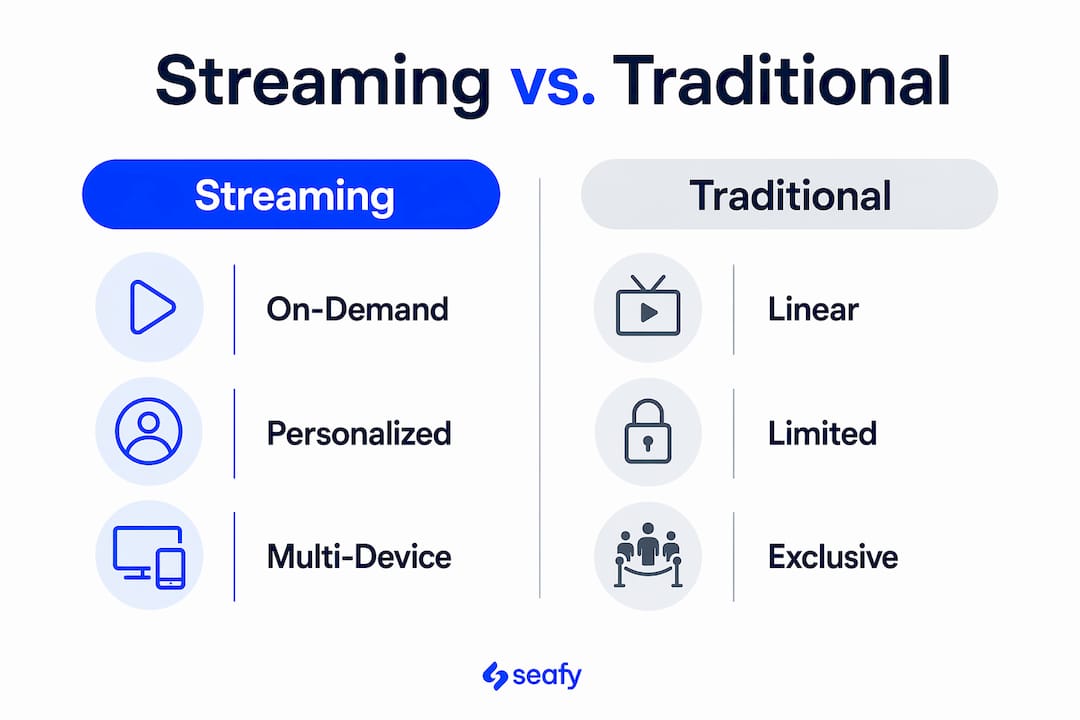
Satellite TV offers live programming without consuming your data package, but it is linear, less flexible, and more costly to operate. You watch what is scheduled, not what you want. Live shows onboard are genuinely memorable experiences, but they run once per night and cover a narrow range of genres.
Streaming wins on personalization, availability, and variety. You access thousands of titles on demand, from any location onboard, at any hour. The tradeoff is that streaming depends on a stable internet connection, while satellite TV and live shows function independently of passenger Wi-Fi.
| Feature | Streaming (Netflix, Disney+) | Satellite TV | Live onboard shows |
|---|---|---|---|
| Content variety | Very high, on-demand | Limited, scheduled | Limited, scheduled |
| Personalization | Full control | None | None |
| Requires Wi-Fi | Yes, premium tier | No | No |
| Cost to passenger | Included in Wi-Fi plan | Often included | Included in fare |
| Availability | 24/7 | 24/7 | Scheduled only |
The advantages of satellite internet for travelers extend beyond entertainment. When you pay for a premium Wi-Fi package, you get streaming, video calls, remote work access, and social media all in one plan. Satellite TV gives you none of that.
Key takeaways
Entertainment streaming at sea works best when you combine a premium Wi-Fi package with offline downloads and smart timing around sea days and off-peak hours.
| Point | Details |
|---|---|
| Premium Wi-Fi is required | Basic and social packages block video traffic; only premium tiers support Netflix and YouTube. |
| Starlink improves reliability | Starlink-equipped ships deliver up to 77 Mbps, making HD streaming consistently achievable. |
| Download offline content | Saving shows before boarding removes dependency on ship internet during connectivity gaps. |
| Stream during off-peak hours | Sea days and morning hours offer faster speeds with less passenger competition for bandwidth. |
| Streaming beats satellite TV | On-demand access, personalization, and multi-use value make streaming the stronger choice for most travelers. |
The future of onboard streaming is already here
I have spent enough time tracking maritime connectivity trends to say this clearly: the ships that have invested in Starlink and tiered Wi-Fi infrastructure are not just keeping up with passenger expectations. They are redefining what a sea voyage feels like.
What surprises most travelers is how quickly they adapt to streaming at sea once the connection is solid. The hesitation disappears. A digital nomad on a Grimaldi Lines ferry working through the Mediterranean does not think of streaming as a luxury. It is part of the rhythm of the day, the same way it is at home or in a hotel.
My honest caution is this: do not let streaming become a substitute for the experience itself. The best moments at sea happen on deck, in port, and at the dinner table. Streaming fills the gaps. It should not fill the whole trip. Plan your connectivity intentionally, download your backup content, buy the right package, and then put the phone down when the coastline appears.
The connection quality at sea will only improve from here. Operators are investing, satellite coverage is expanding, and passenger expectations are pulling the industry forward faster than most people realize.
— Raffaele
Stream confidently at sea with Seafy

Seafy is the maritime Wi-Fi platform that makes streaming, video calls, and remote work genuinely reliable at sea. Available on major ferry lines including Corsica Ferries, Grimaldi Lines, and GNV, Seafy offers Wi-Fi packages you can purchase and activate directly onboard through the seafy.com portal. Whether you are a traveler catching up on Netflix during a sea day or a digital nomad staying productive between ports, Seafy delivers the connectivity you need. Visit seafy.com to explore available packages and get connected before your next voyage.
FAQ
What Wi-Fi package do I need to stream on a cruise ship?
You need the premium or highest-tier Wi-Fi package, typically priced around $25 to $40 per day. Lower tiers intentionally throttle or block video streaming traffic.
Can I use Netflix and Disney+ on a ship?
Yes. Both Netflix and Disney+ work onboard when you have a premium Wi-Fi package. Downloading content offline before boarding is also strongly recommended as a backup.
Why is streaming slower at certain times on a ship?
Network congestion is the main cause. When many passengers are online simultaneously, especially during port arrivals and evenings, available bandwidth per user drops. Streaming during sea days and morning hours delivers noticeably better performance.
Is streaming at sea better than satellite TV?
Streaming offers on-demand access, full personalization, and multi-use value within a single Wi-Fi plan. Satellite TV is scheduled and inflexible, though it does not consume your data allowance.
How does Seafy support streaming at sea?
Seafy provides high-speed maritime Wi-Fi on ferries and cruise ships across the Mediterranean, integrating with satellite technologies like Starlink. Passengers can purchase and activate streaming-capable Wi-Fi packages directly through the seafy.com portal onboard.