Tech & Wi-Fi
Digital services at sea: Your 2026 guide to reliable Wi-Fi
Discover how maritime Wi-Fi transformed in 2026. Learn about Starlink speeds, costs, and practical tips for staying connected on ferries and cruise ships.
17 March 2026
Digital services at sea: Your 2026 guide to reliable Wi-Fi
Forget everything you thought you knew about internet at sea. Maritime connectivity has transformed from a frustrating afterthought into a seamless digital experience rivaling land networks. Over 70% of Mediterranean ferry passengers now consider reliable Wi-Fi essential, not optional. Whether you’re catching up on work emails, streaming your favorite shows, or video calling family during a cruise, today’s digital services at sea deliver speeds and stability that would have seemed impossible just five years ago. This guide explains how maritime internet works in 2026, what technologies power your connection, and how to maximize your onboard digital experience.
Table of Contents
- The Evolution Of Digital Services On Ferries And Cruise Ships
- How Satellite Internet And Starlink Revolutionize Sea Connectivity
- Comparing Onboard Wi-Fi Solutions: What Travelers Should Know In 2026
- Tips For Maximizing Your Digital Experience On Board
- Explore Seafy’s Onboard Wi-Fi Solutions For Your Next Voyage
- FAQ
Key takeaways
| Point | Details |
|---|---|
| Wi-Fi is now standard | Over 70% of Mediterranean ferry passengers expect reliable onboard internet for work and leisure |
| Starlink revolutionizes speeds | Cruise ships with Starlink deliver approximately 10Mbps per passenger, a massive improvement over traditional satellite |
| Costs remain higher | Maritime internet infrastructure and bandwidth rental create premium pricing compared to land networks |
| Buy plans early | Purchasing Wi-Fi packages before boarding typically offers significant discounts over onboard rates |
| Peak times affect performance | Shared bandwidth models mean speeds drop during high-usage periods when many passengers connect simultaneously |
The evolution of digital services on ferries and cruise ships
Maritime internet used to mean painfully slow connections, dropped signals, and astronomical costs. Early satellite systems struggled with high latency and limited bandwidth, making even basic email a frustrating ordeal. Ships relied on expensive VSAT technology that couldn’t keep pace with passenger expectations shaped by high-speed home and mobile networks.
Everything changed when platforms recognized that having Wi-Fi on board ferries and ships is no longer a luxury, it’s an expectation. Modern travelers and remote workers demand continuous connectivity for multiple purposes. The shift reflects broader changes in how we work and travel.
Today’s maritime digital services support diverse needs:
- Remote professionals conducting video conferences from ferry lounges
- Families streaming entertainment during long crossings
- Business travelers accessing cloud documents and collaborative platforms
- Social media enthusiasts sharing real-time travel experiences
- Crew members maintaining contact with loved ones during extended voyages
The technology enabling this transformation combines advanced satellite networks, improved onboard hardware, and sophisticated bandwidth management systems. Ships now deploy multiple connectivity solutions simultaneously, creating redundancy and reliability that older single-system approaches couldn’t match.
Pro Tip: Check your ferry or cruise line’s specific Wi-Fi technology before booking. Ships equipped with newer systems deliver dramatically better experiences than vessels still relying on legacy satellite connections.
Passenger surveys consistently show that boosting travel and work with ferry Wi-Fi ranks among top priorities when choosing maritime routes. Ferry operators and cruise lines recognize this demand, investing heavily in connectivity upgrades to remain competitive. The result is a maritime digital landscape that finally matches passenger expectations shaped by ubiquitous land-based internet access.
How satellite internet and Starlink revolutionize sea connectivity
Traditional maritime internet relies on geostationary satellites positioned 22,000 miles above Earth. This enormous distance creates latency issues that make real-time applications like video calls nearly impossible. Bandwidth limitations mean speeds rarely exceed a few megabits per second, shared among hundreds or thousands of passengers.
Starlink fundamentally changed this equation. The low Earth orbit satellite constellation operates just 340 miles up, slashing latency and enabling genuinely responsive connections. Starlink’s 10Gbps Community Gateway provides dramatically improved speeds compared to traditional systems.
The technology works through a mesh laser network connecting satellites to specialized ground stations called gateways. Ships equipped with Starlink terminals communicate with multiple satellites simultaneously, maintaining connection even as individual satellites move across the sky. This creates reliability that older single-satellite systems couldn’t achieve.
| Technology | Typical Speed | Latency | Coverage | Cost |
|---|---|---|---|---|
| Traditional VSAT | 1-5 Mbps shared | 500-800ms | Global | High |
| Starlink Maritime | 10Mbps per passenger | 20-40ms | Most seas | Premium |
| Cellular (near coast) | Varies widely | 30-100ms | Coastal only | Moderate |
| Hybrid Systems | 5-15 Mbps shared | 50-200ms | Regional | Variable |
The Star of the Seas cruise ship employs equipment capable of delivering up to 10Gbps in total satellite bandwidth. This massive capacity gets distributed among passengers through sophisticated network management, ensuring everyone gets usable speeds rather than a few users hogging all available bandwidth.

Ships without Starlink face significant disadvantages. Older vessels still using traditional satellite systems struggle to support modern applications. Passengers attempting video calls experience frozen screens and dropped connections. Even basic web browsing feels sluggish compared to the responsive experience Starlink-equipped ships deliver.
Cost remains a barrier to universal adoption. Installing Starlink maritime terminals requires substantial capital investment, sometimes exceeding $150,000 per ship. Monthly bandwidth costs add another $5,000 to $25,000 depending on usage levels. Ferry operators and cruise lines must weigh these expenses against passenger satisfaction and competitive positioning.
Pro Tip: When booking maritime travel, specifically ask whether the vessel uses Starlink or similar low Earth orbit satellite technology. The difference in user experience between old and new systems is dramatic enough to influence your route choice.
Understanding types of onboard Wi-Fi helps you set realistic expectations and choose the right connectivity plan for your needs.
Comparing onboard Wi-Fi solutions: what travelers should know in 2026
Maritime Wi-Fi isn’t one-size-fits-all. Different ships deploy different technologies based on routes, budgets, and passenger demographics. Understanding these variations helps you make informed decisions about connectivity plans and manage expectations.
VSAT represents the traditional approach, using geostationary satellites for global coverage. While reliable in terms of availability, VSAT suffers from high latency and limited bandwidth. Expect speeds between 1-5 Mbps shared among all passengers, adequate for email and basic browsing but frustrating for video or large file transfers.
Cellular solutions work only near coastlines, using standard mobile networks through powerful onboard antennas. When available, cellular offers excellent speeds and low latency at moderate costs. The catch is coverage, cellular becomes useless once ships venture more than 20-30 miles from shore.
Starlink and similar low Earth orbit systems deliver the best performance but at premium prices. Ships equipped with this technology can support bandwidth-intensive applications like streaming and video conferencing. The shared bandwidth model means individual speeds hover around 10Mbps per passenger during normal usage.
Hybrid systems combine multiple technologies, automatically switching between cellular, VSAT, and newer satellite networks based on availability and cost. This approach maximizes reliability and performance while managing expenses. Passengers benefit from seamless connectivity as the ship moves between coastal and open-sea environments.
| Solution Type | Best For | Speed Range | Primary Limitation | Typical Cost |
|---|---|---|---|---|
| VSAT Only | Basic email, browsing | 1-5 Mbps shared | High latency | $15-30/day |
| Cellular Only | Coastal routes | 10-50 Mbps | Coverage gaps | $10-20/day |
| Starlink | Streaming, video calls | 10Mbps per user | Premium pricing | $25-50/day |
| Hybrid | Balanced performance | 5-15 Mbps shared | Complexity | $20-35/day |
Smart travelers follow these steps to optimize their connectivity investment:
- Research your specific ship’s Wi-Fi technology before booking
- Purchase plans in advance, as buying WiFi plans before boarding often results in discounts
- Choose plan tiers matching your actual usage needs rather than over-purchasing
- Download content offline as backup for entertainment and work needs
- Monitor your data consumption to avoid surprise overage charges
Shared bandwidth creates predictable patterns. Early morning and late evening typically offer better speeds as fewer passengers actively use connections. Midday and early evening see peak usage when everyone checks email, streams content, or makes video calls simultaneously.
Pro Tip: If remote work is essential during your voyage, invest in the highest tier plan available and schedule critical video meetings during off-peak hours. The performance difference during low-usage periods can mean the difference between a successful call and a frustrating experience.
The reality is that older ships without Starlink lag behind in speed and consistency compared to vessels with modern satellite systems. If connectivity matters for your trip, factor this into your booking decision. Some travelers specifically choose newer ships or routes known for superior digital services.
Exploring onboard Wi-Fi solutions for ferry travelers reveals additional options and considerations specific to shorter maritime journeys versus extended cruises.
Tips for maximizing your digital experience on board
Getting the most from maritime Wi-Fi requires strategy. Simple adjustments to your habits and device settings can dramatically improve your connectivity experience without additional costs.
Purchase Wi-Fi packages before departure whenever possible. Advance booking typically saves 20-40% compared to onboard rates while guaranteeing access during high-demand periods. Some ships even offer early-bird specials for passengers who commit weeks ahead.
Timing matters enormously with shared bandwidth systems. Schedule important video calls or large downloads during early morning hours when most passengers are sleeping or at meals. Avoid peak periods between 8-10 PM when entertainment streaming peaks across the ship.
Limit simultaneous device connections. Each active device consumes bandwidth even when idle, as background apps constantly sync and update. Connect only the device you’re actively using and disable automatic updates, cloud backups, and app refresh features.
Secure your work data properly when accessing sensitive information. Maritime Wi-Fi networks, like any public network, pose security risks. Use VPN connections for business applications and avoid accessing banking or confidential systems unless absolutely necessary.
Prepare offline alternatives for entertainment and productivity:
- Download movies, shows, and music before boarding
- Save work documents locally rather than relying on cloud access
- Use offline map applications for port destinations
- Download reading materials and podcasts for backup entertainment
- Prepare presentation files and materials without assuming internet availability
Device settings optimization makes a measurable difference. Disable automatic photo uploads, turn off video autoplay in social media apps, and use data-saving modes in browsers and streaming services. These small changes reduce bandwidth consumption and improve speeds for active tasks.
Pro Tip: Avoid streaming video on multiple devices simultaneously, even if your plan allows it. The shared bandwidth model means individual speeds are lower than land-based Starlink, so concentrating your usage on one device at a time delivers better results.
When connectivity issues arise, systematic troubleshooting usually resolves problems quickly. Restart your device, forget and rejoin the network, or move to different areas of the ship where signal strength might be better. Many ships have designated connectivity zones with stronger signals and better performance.
Understand fair use policies that many maritime Wi-Fi plans enforce. Unlimited plans often throttle speeds after reaching certain thresholds, typically 1-5 GB depending on the tier. Monitor your usage to avoid unexpected slowdowns during critical work periods.
For persistent problems, troubleshooting Wi-Fi connection onboard provides detailed steps to diagnose and resolve common connectivity issues without requiring technical support.
Explore Seafy’s onboard Wi-Fi solutions for your next voyage
Reliable maritime connectivity shouldn’t be a luxury or a gamble. Seafy delivers purpose-built Wi-Fi on board designed specifically for the unique challenges of ferry and cruise ship environments. Their advanced systems integrate seamlessly with Starlink and other cutting-edge satellite technologies, ensuring you stay connected whether working remotely or streaming entertainment.
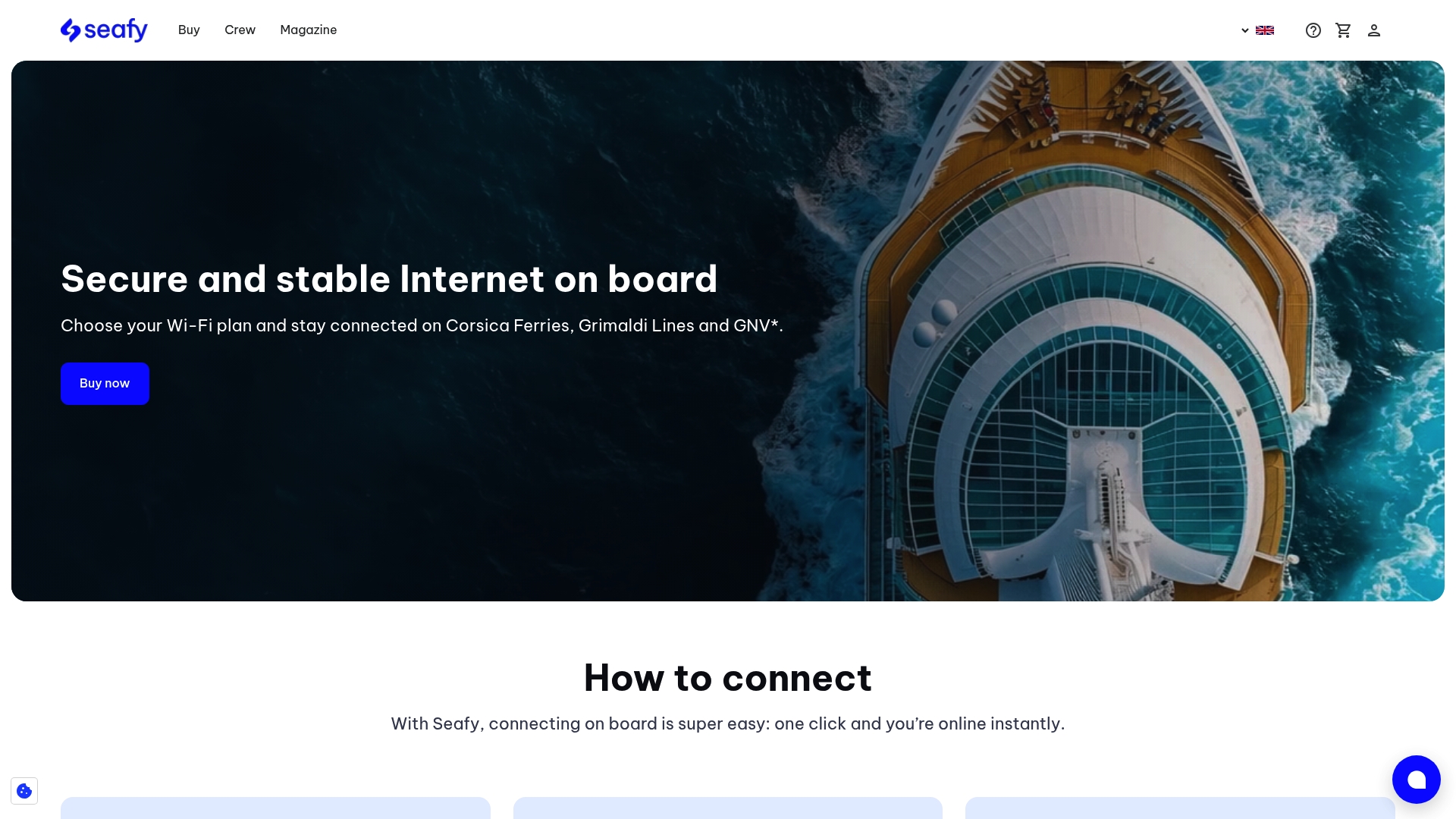
Seafy’s platform addresses the bandwidth sharing challenges that plague many maritime networks, optimizing performance across hundreds of simultaneous users. Booking your connectivity package through Seafy before departure guarantees access and typically unlocks substantial savings compared to last-minute onboard purchases. Their solutions support everything from casual browsing to bandwidth-intensive video conferencing, adapting to your specific needs.
Explore onboard Wi-Fi solutions for ferry travelers to understand which plan matches your usage patterns. If you encounter any issues during your voyage, their troubleshooting Wi-Fi connection resources provide quick solutions to common problems.
FAQ
How fast is internet on a cruise ship in 2026?
Ships equipped with Starlink satellite technology deliver approximately 10Mbps speeds per passenger under normal usage conditions. This represents a massive improvement over traditional maritime internet, enabling video streaming and conferencing. Actual speeds vary based on total passenger load and whether the ship uses newer low Earth orbit satellites or older geostationary systems.
Are Wi-Fi plans cheaper if bought before boarding?
Yes, advance purchase consistently offers better value. Buying WiFi plans before boarding often results in discounts ranging from 20-40% compared to onboard rates. Early booking also guarantees availability during peak travel seasons when connectivity packages can sell out. Planning ahead improves your overall experience while protecting your budget.
Why is maritime internet more expensive than on land?
Satellite infrastructure requires massive capital investment and ongoing bandwidth rental costs that dwarf land-based network expenses. The high cost of maritime internet is due to infrastructure challenges including specialized hardware, limited satellite capacity, and complex logistics. Ships must install and maintain expensive terminals while paying premium rates for bandwidth that remains scarce compared to terrestrial fiber networks.
Can I work remotely full-time from a cruise ship?
Modern cruise ships with Starlink make remote work feasible for many professionals. Expect speeds sufficient for email, cloud applications, and video calls during off-peak hours. However, reliability still lags behind home office connections, so maintain backup plans for critical deadlines. Consider time zone differences, meeting schedules around optimal connectivity windows, and have offline work alternatives ready for inevitable service interruptions.
What happens to my connection when the ship is far from land?
Ships using satellite systems maintain connectivity regardless of distance from shore, though performance varies by technology. Starlink and similar low Earth orbit networks deliver consistent speeds even in mid-ocean. Traditional VSAT systems work globally but with higher latency and slower speeds. Cellular-only solutions lose connection entirely once ships move beyond coastal range, typically 20-30 miles from land.