Tech & Wi-Fi
Essential features of satellite Wi-Fi for seamless travel
Discover the essential satellite Wi-Fi features that keep you connected on Mediterranean ferries and cruise ships, for work, streaming, and beyond.
13 April 2026
Essential features of satellite Wi-Fi for seamless travel
TL;DR:
- Reliable satellite Wi-Fi requires high speed, coverage, security, and seamless device support at sea.
- Top onboard Wi-Fi solutions prioritize bandwidth, auto switching, security, scalability, and user-friendly management.
- Choosing systems with LEO satellites and robust features ensures steady connection for remote work, streaming, and family use.
Travelers boarding Mediterranean ferries and cruise ships in 2026 expect the same internet quality they enjoy at home. But the reality at sea is often frustrating: slow speeds, dropped connections, and Wi-Fi that barely handles a text message, let alone a video call. Whether you’re a remote worker trying to close a deal mid-voyage or a family streaming movies in your cabin, the difference between a great trip and a miserable one can come down to the satellite Wi-Fi system on board. This guide breaks down the essential features you need to evaluate before you sail, so you can connect with confidence from port to open water. 🌐
Table of Contents
- Key criteria for evaluating satellite Wi-Fi on ships
- Top features of satellite Wi-Fi for travelers and crew
- Comparing top satellite Wi-Fi solutions for seagoing travelers
- Situational recommendations: Choosing the right setup for your trip
- Why most travelers overlook the hidden power of satellite Wi-Fi features
- Get the most from your next voyage with Seafy
- Frequently asked questions
Key Takeaways
| Point | Details |
|---|---|
| Core feature checklist | Prioritize reliability, coverage, and speed when evaluating satellite Wi-Fi options for sea voyages. |
| Match needs to setup | Choose a satellite Wi-Fi solution optimized for your travel profile, whether for work calls or family streaming. |
| Use comparison insights | Reference solution comparison tables to quickly spot strengths and trade-offs between leading providers. |
| Security is a must | Always select networks with strong encryption and privacy tools when using Wi-Fi at sea. |
Key criteria for evaluating satellite Wi-Fi on ships
Before diving into individual features, let’s define the essentials that set excellent satellite Wi-Fi apart from the rest. Not all onboard internet is created equal, and knowing what to look for saves you from unpleasant surprises once you’re out at sea.
Wi-Fi reliability at sea is critical for remote work and daily life on board, and it’s the first thing you should check before booking. Here are the core criteria that matter most:
- Reliability: Consistent connectivity in open waters, near coastlines, and in port. No sudden dropouts during important moments.
- Speed: Enough bandwidth to support streaming, video calls, and cloud-based work tools simultaneously.
- Coverage: Signal reach across cabins, sun decks, restaurants, and public lounges, not just the main lobby.
- Device support: How many devices can connect at once per user, and how the system handles peak demand.
- Price transparency: Clear package options without hidden fees or surprise data caps.
- Security: Encrypted connections that protect your personal data and business information.
- Customer support: Accessible help when something goes wrong, whether you’re docking in Genoa or sailing toward Sardinia.
These criteria work together. A system with blazing speed but poor coverage is useless in your cabin. A cheap package with no security puts your data at risk. Look at the full picture, not just the headline number.
Pro Tip: Before boarding, check whether the ferry or cruise line partners with a dedicated maritime Wi-Fi provider. Providers built specifically for ships, like those listed among the best onboard Wi-Fi solutions, tend to outperform generic ship-to-shore setups because they’re optimized for maritime conditions.
Top features of satellite Wi-Fi for travelers and crew
Now, let’s break down the standout features every passenger or crew member should look for when evaluating a satellite Wi-Fi system. Satellite internet enhances onboard connectivity, enabling both leisure and work in ways that older ship-to-shore systems simply cannot match.
Here are the seven features that separate a great system from a frustrating one:
- Bandwidth capacity: The system must handle many users at once without slowing to a crawl. Look for solutions that manage traffic intelligently, prioritizing video calls and work tools over background app updates.
- Multi-device connection: You likely carry a phone, tablet, and laptop. A good system lets you connect all of them under a single package without extra charges.
- Automatic network switching: The best systems switch seamlessly between satellite coverage and 4G/5G signals when the ship is near shore, keeping your connection fast and uninterrupted.
- Easy-to-use portal: You should be able to check your data usage, buy a package, and troubleshoot from a simple web interface, no tech expertise required.
- Emergency priority access: Safety-critical communications always get bandwidth first. This is a non-negotiable feature for any responsible maritime provider.
- Network security and privacy: Public Wi-Fi on ships is a real target for data theft. Look for systems that use encryption and offer private network options for sensitive tasks.
- Scalability: Whether you’re on a small ferry with 50 passengers or a cruise ship with 2,000, the system should adapt without degrading performance.
“The right satellite Wi-Fi system feels invisible, you just stay connected, work, stream, and communicate without thinking about the technology behind it.”
The advantages of satellite internet go well beyond simple browsing. When these features work together, you get an experience that genuinely rivals land-based broadband.
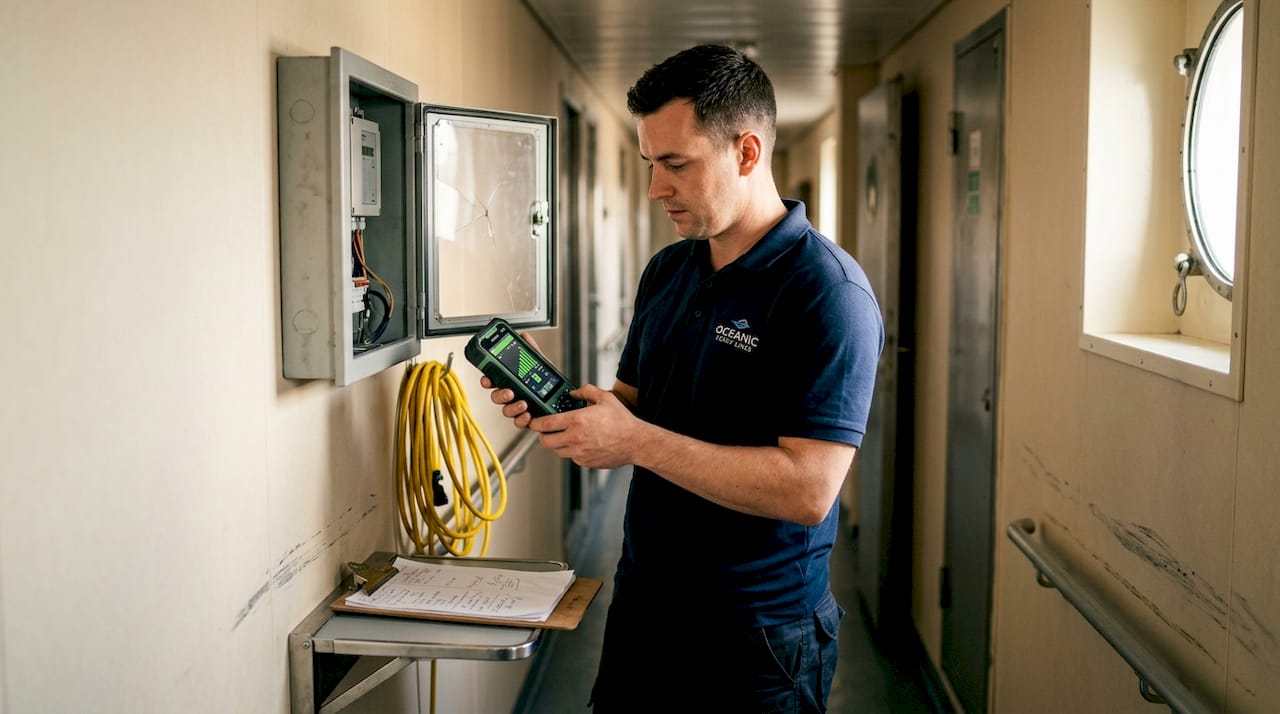
Pro Tip: Ask specifically whether the system uses Low Earth Orbit (LEO) satellites, like Starlink. LEO satellites orbit much closer to Earth than traditional ones, which means lower latency and faster response times. This makes a real difference for video calls and online gaming.
Comparing top satellite Wi-Fi solutions for seagoing travelers
Understanding the features is one thing. Comparing real-world solutions makes your choice even clearer. Different solutions offer varying reliability, speed, and device support, so a side-by-side look helps you cut through the marketing and focus on what actually matters for your voyage.
| Feature | Seafy (LEO Satellite) | Ship-to-Shore Wi-Fi | Traditional Satellite Only |
|---|---|---|---|
| Speed | High (50+ Mbps) | Low to Medium | Medium |
| Coverage at sea | Excellent | Limited | Good |
| Multi-device support | Yes | Limited | Varies |
| Auto network switching | Yes | No | No |
| User portal | Yes, easy | Basic | Basic |
| Security | Encrypted | Basic | Basic |
| Cost transparency | Clear packages | Often unclear | Often unclear |
| Best for | All traveler types | Light browsing only | Moderate use |
Here’s how the options stack up for specific traveler types:
- Families: Need multi-device support and coverage throughout the ship, including cabins. LEO-based solutions like Seafy handle this best.
- Remote workers: Require stable bandwidth for video calls and cloud tools. Auto-switching and high-speed LEO satellite coverage are non-negotiable.
- Crew members: Need reliable access for both personal communication and work-related tasks. Scalable systems with crew-specific portals are the smart choice.
- Light travelers: If you only need to check email and social media, a basic ship-to-shore option may work, but expect limitations.
You can explore the full range of types of Wi-Fi for travelers to understand which architecture fits your specific needs before you board.
Situational recommendations: Choosing the right setup for your trip
Armed with the comparison insights, here’s how you can match the right satellite Wi-Fi setup to your voyage and profile. Optimal Wi-Fi setups vary by personal needs and travel scenarios, so a one-size-fits-all approach rarely works at sea.
For remote workers:
- Choose a high-bandwidth LEO satellite plan with multi-device support.
- Schedule important video calls during off-peak hours, typically early morning or late evening.
- Always use HTTPS connections and consider a VPN for sensitive business data.
- Position yourself in a central area of the ship for the strongest signal.
For families:
- Look for packages that allow multiple simultaneous connections.
- Download movies and shows before boarding to reduce bandwidth pressure.
- Use the onboard portal to monitor data usage and avoid overage charges.
For crew members:
- Prioritize systems with dedicated crew portals that separate personal and work usage.
- Check whether the provider offers long-term or subscription-based plans for extended voyages.
Troubleshooting slow speeds:
- Move away from crowded areas like the main lounge during peak hours.
- Disconnect devices you’re not actively using.
- Pause background app updates and cloud syncing while on board.
Pro Tip: Following reliable ferry internet tips like connecting during off-peak hours and limiting streaming resolution can dramatically improve your experience, even on a mid-tier plan. Small habits make a big difference when hundreds of passengers are sharing the same network.
For a deeper look at what remote workers specifically need, the Wi-Fi needs for remote work guide is worth reading before you book your package.
Why most travelers overlook the hidden power of satellite Wi-Fi features
Here’s an honest observation: most travelers pick a Wi-Fi package based on price or advertised speed. That’s understandable, but it’s also why so many people end up frustrated mid-voyage.
The real differentiators are the features that don’t appear in the headline. Scalable device management, for example, determines whether your connection holds up when 400 passengers all try to stream at the same time. Robust privacy controls decide whether your banking session stays secure on a shared network. Automatic network switching is what keeps your video call alive as the ship moves between satellite and coastal 4G coverage.
We’ve seen this pattern repeatedly: travelers who focus only on the cheapest or fastest-sounding option often end up with a system that works fine in calm conditions but falls apart under real-world shipboard pressure. Understanding the importance of maritime Wi-Fi at a deeper level, beyond the marketing, is what separates a smooth voyage from a disconnected one. Look behind the numbers. Ask about scalability, security architecture, and how the system handles peak demand. Those are the features that will actually keep you connected when it counts. ⚡
Get the most from your next voyage with Seafy
Ready to put these features to work? Seafy brings together everything covered in this guide into one seamless platform built specifically for Mediterranean ferry and cruise travelers.
With Wi-Fi on board with Seafy, you get LEO satellite-powered connectivity through partnerships with Corsica Ferries, Grimaldi Lines, GNV, and more. Booking a package takes minutes through Seafy’s easy portal, and support is available from the moment you board to the moment you dock. Whether you’re streaming, video calling, or managing a remote workload, Seafy delivers the reliability and speed you need, without the guesswork. Buon surf! 🌐
Frequently asked questions
What is the main difference between satellite Wi-Fi and regular onboard Wi-Fi?
Satellite Wi-Fi uses orbiting satellites to deliver internet access far beyond shore coverage, while regular onboard Wi-Fi typically relies on ship-to-shore connections that weaken quickly in open water. You can learn more about the 7 types of onboard Wi-Fi to see how each compares.
Will my video calls and streaming work reliably on satellite Wi-Fi?
Yes, but only if the system has sufficient bandwidth and smart traffic management to handle multiple users at once. Bandwidth and network management directly determine which activities the network can support without degrading quality.
How can I stay secure when using Wi-Fi on a ferry or cruise ship?
Always use HTTPS websites, avoid logging into sensitive accounts on unsecured networks, and prioritize platforms that offer encryption. Security for shipboard internet use is especially important for remote workers handling confidential data.
Are there ways to get better performance if Wi-Fi seems slow?
Move to a less crowded area of the ship, limit high-bandwidth apps like 4K streaming, and connect during non-peak hours. Following best practices for ferry internet consistently makes a noticeable difference in speed and stability.