Tech & Wi-Fi
Onboard Wi-Fi safety tips for secure sea travel 2026
Protect your data with essential onboard Wi-Fi safety tips for ferries and cruise ships. Learn to avoid fake hotspots, use VPNs, and connect securely at sea.
19 March 2026
Onboard Wi-Fi safety tips for secure sea travel 2026
Connecting to Wi-Fi on ferries and cruise ships exposes you to risks like fake hotspots and data interception, especially near ports where malicious devices can mimic legitimate networks. Whether you’re a leisure traveler staying in touch with home or a remote worker managing projects at sea, protecting your data requires practical safety measures. This guide provides verified onboard Wi-Fi safety tips to help you connect securely, recognize threats, and maintain privacy during maritime travel without sacrificing the convenience of staying online.
Table of Contents
- Understanding Wi-Fi Risks Onboard Ferries And Cruise Ships
- Preparing For Safe Onboard Wi-Fi Use: What You Need To Know And Have
- Step-By-Step Guide: Connecting And Using Onboard Wi-Fi Safely
- Troubleshooting And Verifying Your Onboard Wi-Fi Safety
- Explore Secure Wi-Fi Options With Seafy On Your Next Voyage
Key takeaways
| Point | Details |
|---|---|
| Official networks only | Connect exclusively to verified ship Wi-Fi to avoid rogue access points and evil twin attacks |
| VPN protection | Encrypt your traffic with a reputable VPN to prevent data interception and eavesdropping |
| Port vigilance | Exercise extra caution near ports where threat levels increase due to proximity of malicious devices |
| Sensitive data limits | Avoid banking and confidential account access on onboard networks |
| Device preparation | Update software, disable auto-connect, and verify network credentials before connecting |
Understanding Wi-Fi risks onboard ferries and cruise ships
Wi-Fi security threats vary significantly between port areas and open sea. Ports present higher risk levels because malicious actors can position devices close enough to create fake networks that mimic legitimate ship Wi-Fi. These rogue access points and evil twin hotspots are designed to trick your device into connecting, enabling attackers to intercept passwords, emails, and browsing activity.
Man-in-the-middle attacks represent another serious concern. In these scenarios, attackers position themselves between your device and the internet connection, allowing them to eavesdrop on communications or alter data in transit. Seafaring data communications risks demonstrate that devices can be lured to fake Wi-Fi networks in ports, where traffic interception becomes straightforward for determined attackers.
Your device might automatically connect to networks with familiar names, making it vulnerable without your knowledge. Attackers exploit this behavior by creating networks named similarly to popular ship Wi-Fi services. Once connected, your unencrypted traffic becomes visible to anyone monitoring the network.
Understanding these specific maritime threats helps you recognize why standard home Wi-Fi habits won’t protect you at sea. The combination of shared networks, transient users, and proximity to ports creates unique vulnerabilities that require deliberate protective measures.
Pro Tip: Before boarding, research your ferry line’s official Wi-Fi network name and save it in your notes app for quick reference when connecting.
Key risk factors include:
- Network congestion making it harder to detect suspicious activity
- Multiple passengers connecting simultaneously, providing cover for attackers
- Limited IT security monitoring compared to land-based networks
- Passengers unfamiliar with maritime-specific threats
These vulnerabilities make it essential to verify every connection and use protective tools like VPNs. The open nature of ship networks means you’re sharing digital space with hundreds of strangers, and not all connections labeled as official are legitimate. Exploring onboard Wi-Fi solutions helps you understand what legitimate maritime connectivity looks like and how modern systems attempt to address these security challenges.
Preparing for safe onboard Wi-Fi use: What you need to know and have
Successful Wi-Fi security starts before you board. Contact your ferry or cruise line directly to confirm the exact network name and connection process. This simple step prevents you from falling for networks with similar names created by attackers. Write down or screenshot the official network details so you’re not guessing when dozens of Wi-Fi options appear on your device.
Installing a reputable VPN application is non-negotiable for maritime travel. Primary risks are rogue APs and MitM, higher in ports; VPN mitigates most threats for both leisure travelers and remote workers. Choose a VPN with strong encryption, a no-logs policy, and reliable performance on mobile devices. Test it at home before departure to ensure you understand the interface and connection process.
Device software updates close security vulnerabilities that attackers exploit. Update your operating system, browsers, and all apps before traveling. Enable automatic security updates if your device supports them, but verify they’re working rather than assuming protection.

Disable automatic Wi-Fi connections in your device settings. This feature, designed for convenience at home, becomes a liability on ships where fake networks proliferate. Manual network selection gives you control over every connection and forces you to verify network legitimacy each time.
Pro Tip: Create a dedicated email account for travel confirmations and non-sensitive communications, keeping your primary accounts off ship networks entirely.
| Protective Measure | Effectiveness | Implementation Difficulty | Cost |
|---|---|---|---|
| VPN encryption | Very High | Low | $3-10/month |
| Manual network selection | High | Very Low | Free |
| Software updates | High | Low | Free |
| Two-factor authentication | Medium | Low | Free |
| Avoiding sensitive transactions | Very High | Very Low | Free |
Consider these additional preparations:
- Download offline maps, entertainment, and work files before boarding
- Enable two-factor authentication on critical accounts using app-based codes rather than SMS
- Backup important data before travel
- Configure email clients to use encrypted connections only
Review the secure online communication guide for detailed setup instructions specific to maritime environments. Following the onboard internet checklist ensures you haven’t overlooked critical preparation steps that could compromise your security once at sea.
Step-by-step guide: Connecting and using onboard Wi-Fi safely
Follow these specific actions to maximize your security when connecting to ship Wi-Fi:
-
Locate ship staff at the information desk or guest services and ask for the official Wi-Fi network name, password, and connection instructions. Verify spelling carefully, as attackers create networks with slight variations.
-
Open your device’s Wi-Fi settings and disable automatic connection features. Manually select the verified network name from the available options, ignoring all other networks even if they appear stronger or more convenient.
-
Launch your VPN application and establish a connection before opening any browser or app. Wait for VPN confirmation that your connection is encrypted and active. This step is critical because practical experiments show devices can be lured to fake Wi-Fi networks in ports, enabling traffic interception.
-
Limit your online activities to non-sensitive browsing, communication, and entertainment. Avoid accessing banking websites, entering credit card information, or logging into accounts containing personal financial data. If you must access work systems, ensure your VPN is active and consider using your mobile data hotspot instead for critical transactions.
-
Log out of all accounts when finished browsing, close sensitive apps completely, and disconnect from the ship Wi-Fi when not actively using it. This prevents background apps from transmitting data over potentially compromised networks.
-
Monitor your device for unusual behavior like unexpected pop-ups, slow performance, or apps opening without your input. These signs may indicate your connection has been compromised.
Pro Tip: Set a reminder to disconnect Wi-Fi before sleeping each night, preventing overnight background data transmission over ship networks.
Additional safety practices include:
- Use HTTPS websites only, indicated by the padlock icon in your browser
- Avoid downloading files or software while connected to ship Wi-Fi
- Clear browser cache and cookies after each session
- Keep your device screen locked when not in use
The best practices ferry internet guide provides additional context for maintaining both security and connection quality during maritime travel. Remember that convenience should never override security when using shared networks at sea.
Troubleshooting and verifying your onboard Wi-Fi safety
Recognizing compromised connections requires attention to specific warning signs. Unexpected disconnections followed by automatic reconnections to similarly named networks often indicate evil twin attacks. SSL certificate warnings appearing on previously trusted websites suggest man-in-the-middle interference. Browser redirects to unfamiliar login pages or unexpected captive portals may signal rogue access points.
Network diagnostic apps help detect suspicious activity. Applications like Fing or Network Analyzer show all devices connected to your network and can reveal unauthorized access points. While these tools require some technical knowledge, they provide concrete evidence when something feels wrong about your connection.

| Real Ship Wi-Fi | Fake Wi-Fi Network |
|---|---|
| Consistent connection quality | Frequent disconnections and reconnections |
| Official captive portal with ship branding | Generic or poorly designed login pages |
| HTTPS encryption on ship portal | HTTP only or certificate warnings |
| Staff can verify network name | Network name slightly misspelled |
| Stable performance across ship areas | Performance varies dramatically by location |
Adjusting device settings resolves many connection issues without compromising security. Forgetting the network and reconnecting fresh often solves authentication problems. Toggling airplane mode resets network interfaces without exposing you to automatic connections. Restarting your device clears temporary conflicts that might prevent proper VPN operation.
When suspicious activity appears, take immediate action:
- Disconnect from Wi-Fi immediately and disable Wi-Fi radio
- Close all open applications and browsers
- Change passwords for any accounts accessed during the session using mobile data
- Run antivirus scans if available
- Report the suspicious network name to ship security staff
Contrasting views exist between practical guides emphasizing user habits and peer-reviewed research highlighting network misconfigurations and rogue access points as primary enablers of attacks. Both perspectives matter because security requires addressing technical vulnerabilities and human behavior simultaneously.
The troubleshooting onboard Wi-Fi resource provides detailed solutions for common connectivity problems that don’t involve security compromises. Learning to distinguish between legitimate technical issues and security threats helps you respond appropriately without overreacting to normal connection challenges.
Verify your VPN is working by visiting a website that displays your IP address and location. If it shows your actual location rather than your VPN server location, your traffic isn’t encrypted. Disconnect immediately and troubleshoot your VPN before continuing.
Explore secure Wi-Fi options with Seafy on your next voyage
Protecting yourself on public ship Wi-Fi requires constant vigilance and technical knowledge that can detract from enjoying your journey. Seafy offers reliable, secure Wi-Fi solutions specifically designed for ferry and cruise travelers who want worry-free internet access at sea. Their technology addresses common onboard Wi-Fi risks through enterprise-grade security measures and stable connectivity.
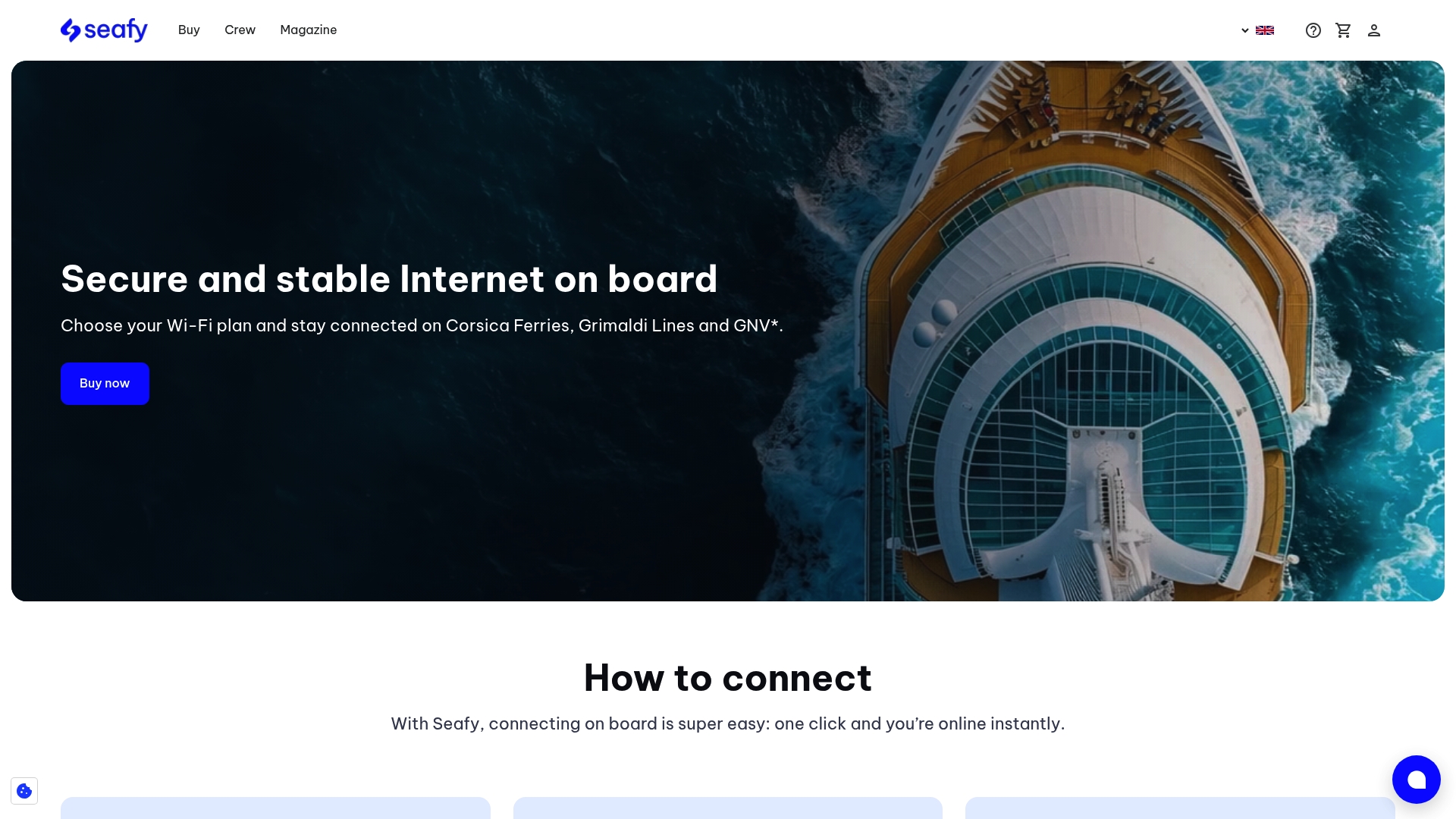
Seafy’s partnerships with major ferry lines ensure their networks meet rigorous security standards while delivering the speeds remote workers and streaming enthusiasts need. Their systems integrate advanced satellite technology like Starlink to maintain consistent performance from port to open sea, eliminating the connection quality issues that plague many ship networks.
Visit Seafy.com to explore their onboard internet services, learn about coverage on your preferred ferry routes, and discover how their platform enhances your maritime travel experience with secure, dependable connectivity you can trust.
FAQ
Is it safe to use public Wi-Fi on a cruise ship or ferry?
Using public Wi-Fi on ships carries risks like fake hotspots and data interception, especially near ports where malicious devices operate more easily. However, you can use these networks safely by connecting only to official ship Wi-Fi, activating a VPN before browsing, and avoiding sensitive transactions. The key is treating ship Wi-Fi as untrusted by default and layering multiple protective measures rather than relying on the network’s security alone.
How can a VPN protect me when using Wi-Fi at sea?
A VPN encrypts all internet traffic between your device and the VPN server, making it unreadable to anyone monitoring the ship’s network. This prevents eavesdropping and man-in-the-middle attacks that would otherwise expose your passwords, emails, and browsing activity. VPN mitigates most threats for both leisure and remote work, making it essential for secure online communication during maritime travel.
What should I do if I suspect the Wi-Fi network is unsafe?
Disconnect from the network immediately and disable your device’s Wi-Fi radio to prevent automatic reconnection. Notify ship staff about the suspicious network name and behavior so they can investigate and warn other passengers. Avoid entering personal or financial information until you’ve connected to a verified network, and consider using your mobile data instead for critical communications.
Can I do online banking while connected to ship Wi-Fi?
Avoid online banking on ship Wi-Fi whenever possible, even with a VPN active. The combination of shared networks, potential security vulnerabilities, and high-value targets makes banking transactions particularly risky. If you must access financial accounts, use your mobile carrier’s data connection instead, which provides better security than any shared Wi-Fi network. Wait until you’re back on land with a trusted connection for non-urgent banking needs.
How do I verify I’m connected to the real ship Wi-Fi and not a fake network?
Confirm the exact network name with ship staff before connecting, paying attention to spelling and capitalization. The official network should have a professional captive portal displaying ship branding and proper HTTPS encryption. Check that the login page URL matches the ship’s official domain. If you notice SSL warnings, generic login pages, or network names with slight misspellings, disconnect immediately and report the suspicious network to crew members.