Tech & Wi-Fi
Top maritime connectivity tips for effortless Wi-Fi at sea
Get expert tips to maximize onboard Wi-Fi reliability for cruise and ferry travel. Learn how to choose the right package, set up devices, and stay connected at sea.
15 April 2026
Top maritime connectivity tips for effortless Wi-Fi at sea
TL;DR:
- Modern maritime internet, powered mainly by Starlink, offers speeds supporting video calls and streaming.
- Pre-book Wi-Fi packages online before boarding to save money and ensure reliable connection.
- Optimize device setup by downloading offline content and choosing central access points onboard.
Staying connected at sea used to mean slow, expensive, and frustrating internet that barely loaded a webpage. That reality has shifted dramatically. Satellite technology like Starlink now powers most modern cruise ships and ferries, delivering speeds that actually support video calls, streaming, and remote work. But even with better hardware onboard, choosing the right package and setting up your devices correctly still makes a huge difference. This guide gives you precise, practical tips to get the most reliable connection possible, whether you’re catching up on work emails or streaming your favorite show between ports. 🌐
Table of Contents
- Understand your connectivity options at sea
- Compare Wi-Fi packages and pricing for your voyage
- Set up your devices for optimal onboard Wi-Fi
- Troubleshoot common connectivity issues while onboard
- Leverage expert strategies for remote work and leisure
- Our take: Why maritime Wi-Fi is better (and still imperfect)
- Connect smarter with Seafy Wi-Fi solutions
- Frequently asked questions
Key Takeaways
| Point | Details |
|---|---|
| Satellite is king | Most ships rely on Starlink or similar low-earth-orbit satellites for their fastest Wi-Fi. |
| Pre-book for value | Buying your Wi-Fi package before departure can save up to 40 percent and guarantee availability. |
| Plan for device prep | Download apps and entertainment ahead of time, and know how to find the strongest signals onboard. |
| Match plan to purpose | Choose your plan based on whether you need simple browsing or video calls and streaming for work. |
| Adjust expectations | Even the best maritime Wi-Fi is less reliable than at home—flexibility and preparation are key. |
Understand your connectivity options at sea
Before you board, it helps to know exactly what kind of internet infrastructure you’re dealing with. Not all ships are created equal, and the technology underneath your Wi-Fi signal shapes everything from speed to reliability.
Most modern cruise ships and ferries rely on low-earth-orbit (LEO) satellite systems like Starlink as their primary connection. LEO satellites orbit much closer to Earth than older geostationary satellites, which means lower latency and faster response times. Think of it like the difference between calling someone next door versus across the country. Satellite technology like Starlink is now the standard for high-speed onboard internet, and it’s a genuine upgrade over what passengers experienced even five years ago.
Many ships also use a hybrid approach: satellite connectivity is the backbone, but when the ship is close to shore, it switches to or combines with cellular (4G/5G) networks. This hybrid setup is especially common on ferry routes that hug coastlines, and it often delivers noticeably faster speeds near port.
Here’s a quick look at what you can realistically expect:
| Vessel type | Download speed | Upload speed | Latency |
|---|---|---|---|
| Cruise ship (Starlink) | 50–150 Mbps | 10–30 Mbps | Under 100ms |
| Ferry (equipped routes) | 50–70 Mbps | 5–15 Mbps | 80–150ms |
| Older satellite systems | 5–20 Mbps | 1–5 Mbps | 500ms+ |
Key factors that affect your actual experience:
- Location on the ship: Signal strength drops in lower decks and interior cabins far from access points.
- Time of day: Peak hours (evenings, port days) can slow speeds significantly as more passengers connect.
- Weather conditions: Heavy storms can disrupt satellite links temporarily.
- Route geography: Open ocean stretches may rely solely on satellite, while coastal routes benefit from cellular boosts.
“Hybrid satellite-cellular systems are becoming the new standard for maritime connectivity, offering the best of both worlds depending on your ship’s position.”
For a deeper look at how satellite internet at sea shapes your onboard experience, it’s worth understanding the full picture before you book.
Compare Wi-Fi packages and pricing for your voyage
Armed with knowledge about the tech on your ship, let’s explore how to pick the right Wi-Fi package for your trip. Most cruise lines and ferry operators now offer tiered plans, and picking the wrong one is one of the most common (and avoidable) mistakes travelers make.
Typical tiers look something like this:
| Plan tier | Best for | Typical features | Relative cost |
|---|---|---|---|
| Basic | Social media, email | Limited bandwidth, slower speeds | Low |
| Premium | Video calls, browsing | Higher speeds, more bandwidth | Medium |
| Streaming/Work | Netflix, Zoom, file transfers | Priority bandwidth, fastest speeds | High |
Here’s the single most important tip in this section: pre-purchase your package online before you board. Buying Wi-Fi directly through the cruise line or ferry operator’s website typically saves you 20 to 40 percent compared to purchasing it onboard. That’s real money, especially on longer voyages.
Choosing the right tier comes down to how you actually plan to use the internet:
- Social media and email only? A basic plan is fine. You don’t need to overpay.
- Video calls or Zoom meetings? Go premium. Basic plans often throttle video traffic.
- Streaming or heavy file transfers? Only a top-tier plan will handle this reliably.
- Remote work with multiple devices? Look for multi-device plans or bundle options.
Pro Tip: Check whether your cruise line offers a “work from sea” bundle. Some operators now package premium Wi-Fi with priority bandwidth specifically designed for remote workers, and these can be better value than standard premium plans.
For a full breakdown of best practices for ferry internet, including how to compare ferry-specific packages, that resource goes into useful detail on Mediterranean routes in particular.
Set up your devices for optimal onboard Wi-Fi
Once you’ve chosen your plan, it’s time to optimize your devices for the best possible experience at sea. A little preparation before you board saves a lot of frustration once you’re out on the water.
Follow these steps for a smoother connection:
- Download everything you might need offline. Before boarding, download Netflix shows, Spotify playlists, Google Maps offline areas, and any work documents you’ll need. Bandwidth is shared onboard, so using offline content saves your connection for things that actually require live internet.
- Enable airplane mode, then turn Wi-Fi back on. This prevents your phone from accidentally connecting to roaming cellular networks, which can rack up charges fast. Download content offline and use Wi-Fi only mode as your default setting at sea.
- Position yourself near access points. Most ships have Wi-Fi access points in public areas like lounges, restaurants, and pool decks. These spots consistently deliver stronger signals than cabins, especially interior ones on lower decks.
- Test your speed at different times and locations. Use a free speed test app to check your connection in the morning versus evening, and in your cabin versus a public lounge. You’ll quickly find the sweet spots.
- Close background apps. Apps that auto-sync in the background (cloud backups, app updates, email) quietly eat up your bandwidth. Turn off auto-updates and background refresh before connecting.
- Use one device at a time when possible. If your plan covers one device, stick to your most important one. Switching between devices wastes time and sometimes requires re-logging into the portal.
Pro Tip: Bring a small travel router if you have a multi-device household. Some plans allow one connection that you can then share locally, effectively multiplying your access without paying for extra device slots.

For a full onboard internet checklist, including what to prepare the night before boarding, that guide covers every step in detail.
Troubleshoot common connectivity issues while onboard
Preparation helps, but even the best plans can hit rough waters. Here’s how to troubleshoot the most stubborn connectivity issues you’re likely to encounter.
The most common problems and their fixes:
- Sudden disconnection: Restart your device completely and rejoin the ship’s Wi-Fi network from scratch. Sometimes the portal session expires and a fresh login is all it takes.
- Very slow speeds: Move to a different location on the ship. Dead zones in cabins and some outdoor decks are real. A lounge one deck up can make a dramatic difference.
- VPN issues: VPNs are useful for security but can slow your connection significantly on satellite networks. Some plans actively block VPN traffic. If your connection drops when your VPN is active, try disabling it temporarily to see if that’s the cause.
- Outages during storms: Weather disrupts satellite signals, and there’s not much you can do except wait it out. These outages are usually brief.
- Portal login loops: Clear your browser cache or try a different browser. The onboard portal sometimes has compatibility issues with certain browsers or apps.
“The most underrated fix for onboard Wi-Fi problems is simply changing where you’re sitting. Signal strength varies dramatically across the same ship.”
For more detailed guidance, the Wi-Fi troubleshooting onboard resource covers edge cases and advanced fixes. If you’re specifically on a ferry route, ferry Wi-Fi best practices offers route-specific advice worth reading.
Leverage expert strategies for remote work and leisure
Finally, let’s elevate your connectivity with proven expert strategies that make a real difference for both remote work and entertainment.
Not all ships are equal when it comes to remote work viability. Royal Caribbean’s Voom service, powered by Starlink, consistently ranks as the most reliable option for working remotely at sea. Viking also offers free Wi-Fi that performs well for basic work tasks. On the ferry side, Seafy-equipped Mediterranean routes using Starlink deliver solid performance for both leisure and professional use.
Smart strategies that actually work:
- Schedule critical tasks for off-peak hours. Early mornings (before 8am) and late nights are when network congestion is lowest. Save your Zoom calls and large file uploads for these windows.
- Use shorter ferry routes for cellular-boosted speeds. Shorter routes with cellular hybrid connectivity near coastlines often outperform longer open-ocean cruise routes for raw speed.
- Pre-book for discounts and guaranteed access. On popular routes and peak-season sailings, Wi-Fi packages can sell out or increase in price. Booking early locks in both availability and savings.
- Keep a backup plan. Download a local SIM card app or have an international data plan ready for port stops. Some tasks are better handled on land.
- Use lightweight apps. Swap video-heavy platforms for audio-only calls when bandwidth is tight. Google Docs works better than large desktop software for onboard editing.
For travelers working remotely on Mediterranean routes, Mediterranean ferry Wi-Fi tips covers route-specific performance data. And if you want a broader view of technology options, onboard Wi-Fi solutions breaks down the full range of systems available today.
Our take: Why maritime Wi-Fi is better (and still imperfect)
Having covered the top practical tips, here’s our candid take on what to really expect when you connect at sea.
Maritime Wi-Fi has genuinely transformed. Starlink has made connections 20 to 30 times faster than older satellite systems, and that’s not marketing spin. For most travelers, the internet onboard is now good enough to do real work, stream video, and stay in touch with family without constant frustration.
But it will never fully rival home broadband. Environmental variables, shared bandwidth, and the physics of satellite communication mean you’ll always be working with some constraints. The travelers who get the most out of maritime Wi-Fi are the ones who prepare, stay flexible, and set realistic expectations.
Our honest advice: stop hoping for a perfect connection and start transforming travel at sea by working with what’s available. Strategic timing, smart device setup, and the right package tier will take you further than any single piece of hardware ever could. ⚡
Connect smarter with Seafy Wi-Fi solutions
Ready to make ocean connectivity effortless? Here’s how Seafy can streamline your experience.
Seafy specializes in hybrid and satellite Wi-Fi packages built specifically for ferry and cruise travel across the Mediterranean and beyond. Whether you’re hopping between islands for a weekend or working remotely on a longer voyage, Seafy’s plans are designed to match your actual needs.
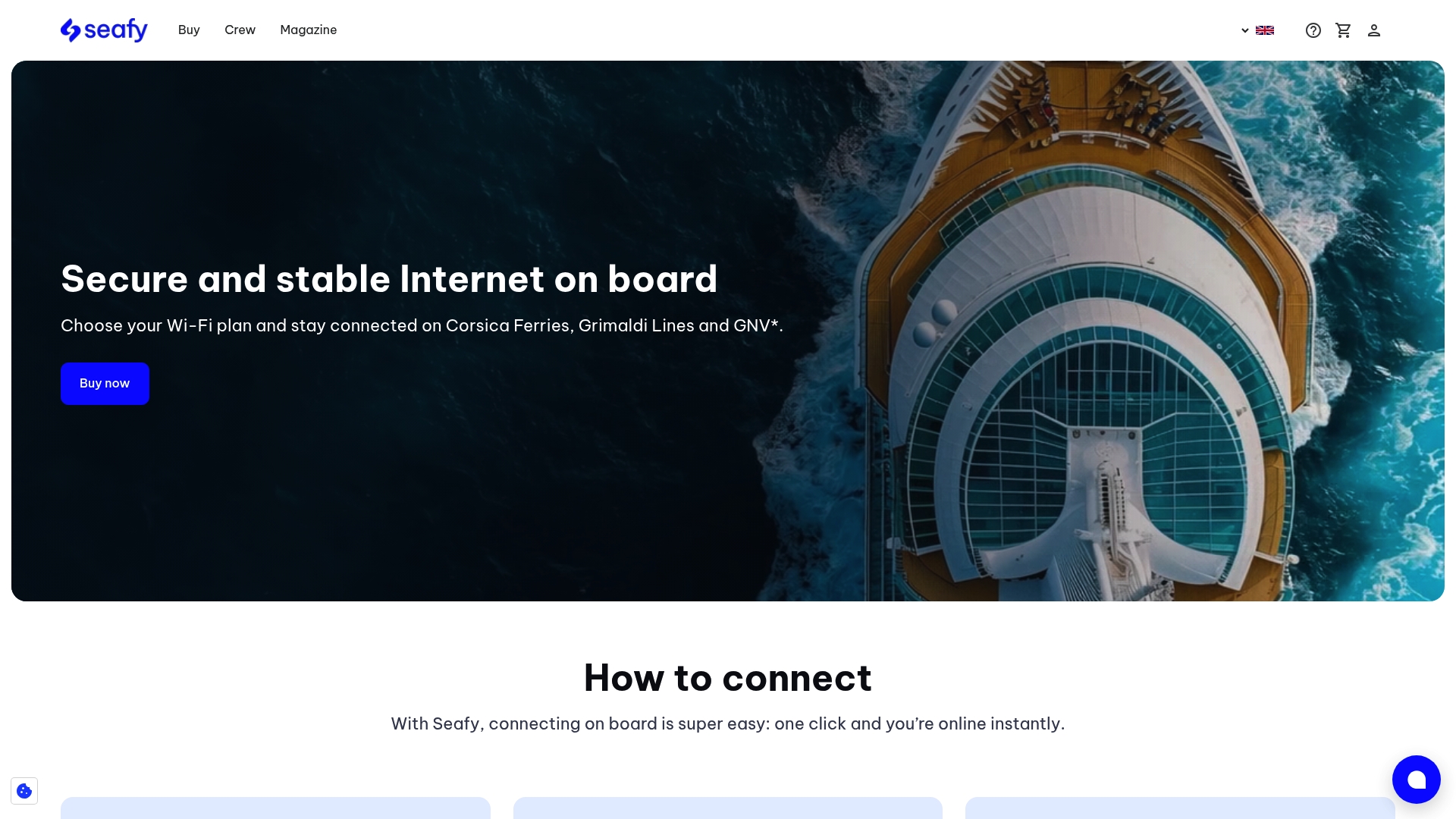
With partnerships across major ferry lines including Corsica Ferries, Grimaldi Lines, and GNV, plus Starlink integration for stable open-water performance, Seafy makes it easy to pre-book your connection and save up to 40 percent compared to onboard pricing. Explore Seafy onboard Wi-Fi packages and find the right plan for your next voyage. Buon surf! 🌐
Frequently asked questions
How fast is Wi-Fi on cruise ships and ferries?
Top cruise ships deliver 50–150 Mbps download speeds via Starlink, while well-equipped ferries reach 50–70 Mbps, though both vary based on time of day, location onboard, and weather conditions.
Can I use video calls and streaming with onboard Wi-Fi?
Yes, but you’ll need a premium-tier plan. Premium plans support Zoom and Netflix off-peak, though performance won’t match what you’re used to at home, especially for heavy uploads or large file transfers.
Will weather or my ship location affect internet reliability?
Weather disrupts satellite signals and open-ocean stretches can reduce speeds. Staying near indoor access points and avoiding peak hours helps minimize the impact of these variables.
Is it cheaper to pre-book my Wi-Fi package?
Absolutely. Pre-purchasing saves 20–40 percent compared to buying onboard, and it guarantees you have access from the moment you step on the ship.
What’s the best way to prepare devices for internet at sea?
Download content offline, switch to airplane mode with Wi-Fi only enabled, and position yourself near public access points. These three steps alone will noticeably improve your onboard experience.